
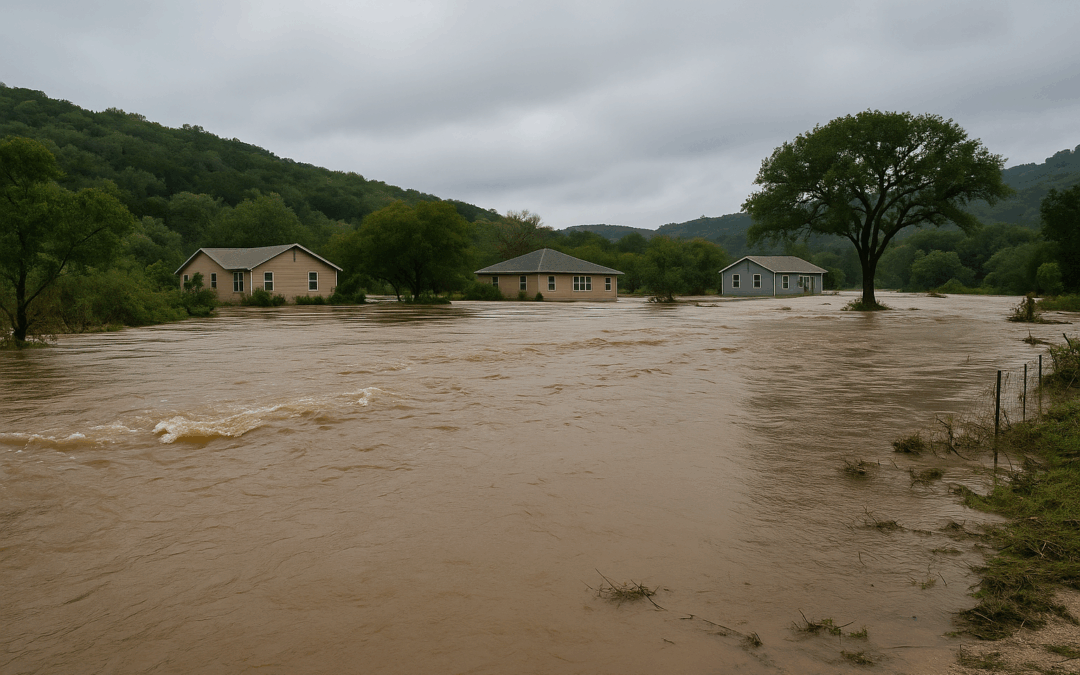
Floods in Texas - a Terrible Disaster!
More than 120 people have died so far and a significant number are still missing after catastrophic flash floods swept through central Texas, USA, on the morning of July 4. Communities along the Guadalupe River, particularly in Kerr County, in the heart of a region known as the Hill Country, have been hardest hit by the flooding.
A terrible tragedy struck Camp Mystic, a summer camp for girls near Hunt, Texas. Located directly on the banks of the Guadalupe River, the camp was overwhelmed early on July 4th when the river rose more than 26 feet in less than an hour. The cabins were submerged before staff could put evacuation plans into effect in time. Not only were the old cabins not moved from the banks of the Guadalupe, but during a 2019 expansion, new cabins were allowed to be built in other areas of the camp, some in areas that were still at risk of flooding. The cabins closest to the river remained in place, despite being located in areas known as “floodways,” areas that are off-limits in many other states. No relocation strategy was devised. The most at-risk buildings were still in use when the disaster struck.
As of July 8, at least 27 campers and counselors have been confirmed dead, including the camp’s longtime director, Richard “Dick” Eastland. 10 other girls and one staff member are still missing.
While some people believe that little could be done given the speed of the flood, the story at Camp Mystic tells a different story. Some cabins were located on slightly higher ground, about 400 meters from the lower ones. The girls in the upper cabins survived. Only those in the lower cabins were lost. If they had had even five minutes of warning, they might have been able to initiate a partial evacuation, or at least alert the staff. The people did not fail. The system failed.
We extend our heartfelt condolences to all the families affected in any way. This is a time of grief and sorrow. Still, we must ask and answer hard questions openly, if we are to be better prepared for the next such disaster.
The Case of Kerr County: No Sirens, No Warning
Like much of the Hill Country, the people of Kerr County have a long history of flash floods. The area is so prone to flooding that it has been nicknamed "Flash Flood Alley." With steep limestone terrain, shallow soils and narrow rivers, it is susceptible to sudden bursts of water, especially when moist air moves in from the Gulf of Mexico, as happened with the recent Barry storm.
But despite the ongoing risk, Kerr County still doesn't have a siren. "We don't have a warning system," County Judge Rob Kelly said bluntly at a press conference. Nearby counties, such as Comal and Guadalupe, have had sirens installed for years. In New Braunfels, about 60 miles away, the warning system is tested monthly. A similar system was considered in Kerr County back in 2016, but Commissioner Buster Baldwin rejected a $50,000 engineering study, saying: “I see the word ‘sirens’ and all that stuff here.” Now, families are asking why that decision was never revisited, especially after the floods in 2018 and 2021 that exposed the same vulnerability. An online petition on Change.org is demanding a modern warning system. Nicole Wilson, who lives in San Antonio and grew up in Kentucky, said: “They know it’s needed. They’ve acknowledged it. They’ve just never been able to implement it.”
Texas Lieutenant Governor Dan Patrick went even further, referring to the upcoming special session of the legislature: “If the city can’t do it, let us do it… If there was a siren, it could make a difference.” For some Camp Mystic families, five minutes could have been the difference between life and death.
Flaws in the response system that saves lives
Lack of Sirens: Kerr County didn’t have a siren system. Many people, including those in Camp Mystic, received no warning before the flood hit.
Weaknesses in Digital Alerts: Warnings were sent via text and apps, but people were asleep or in areas without coverage. Timely warnings weren’t given until water was in homes.
Poor Coordination Between Agencies: There was a breakdown in communication between rescue teams and emergency services. Air rescues were called twice, and some responses were severely delayed.
Failure of Regulation and Planning: Local authorities allowed buildings to remain and new ones to be built in areas at high risk of flooding. They left cabins near the river even though they knew there was a risk of disaster. No steps were taken to protect people.
Steps to be taken
- Warning System: Every county with a history of flooding must have a warning system. If counties don’t have the resources themselves, the state or federal government should pay for one.
- Comprehensive Alert System: Text messages alone aren’t enough. The public needs to receive alerts via sirens, radios, cell phones, and if necessary, person-to-person.
- Shared Tracking and Planning Systems: Emergency agencies need to be able to easily share real-time data and mapping. Everyone needs to be on the same page.
- Stricter Rules: Local and state governments need to tighten building regulations in high-risk areas, especially in “floodways.” Cabins of any kind should not be allowed in the most vulnerable areas without independent review.
Missed Opportunity — or one Still to Be Seized?
Last March, House Bill 13 was introduced in the legislature. It proposed a plan for a statewide warning system and funding for rural counties. It failed. It was said to be too expensive.
But now, the cost is being measured in lives instead of money.
The Test Ahead
This disaster clearly shows what happens when human life is not prioritized. The upcoming special session in Texas can fix this. I urge them: Fund the sirens. Close the communication gaps. Coordinate the response. Enact the right legislation.
Every state and country has a lesson to learn: Prepare for climate disasters in advance, and provide the right funding at all levels. If we ignore this lesson, it will come back again and again – until it is learned.





 English
  Gaeilge