Learn with the article
The Extraordinary Journey of the Carpenter's Son!
John Ireland, Kilkenny Hero on the Minnesota Prairie
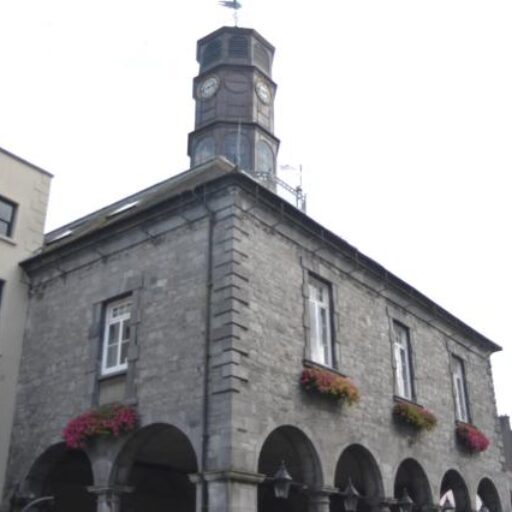
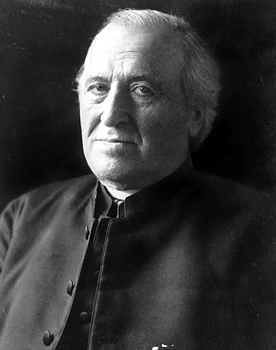
Would you believe that a man from Burnchurch in County Kilkenny achieved fame and renown as far from home as the United States in the 19th century? It happened. It's no surprise for someone who held a tremendous number of important positions during his life - as a brave soldier in the American Civil War, as a priest, as a bishop, as the first archbishop of Minnesota, and as creator of an Irish community numbering in the thousands.
The name of that famous man? His name was John Ireland, a native son of County Kilkenny.
A Boy in the County of the Cats
John Ireland was born on September 11, 1838 in Burnchurch. His father Richard was a carpenter who had six children. We don't have much information about Richard's wife and John's mother - Julia Ireland (née Naughton).
The Catholics of the country, the Ireland family included, were still under the control of the British Empire and had no economic stability. They had to pay punitive taxes for the benefit of the Church of Ireland. Strict land laws were also in force for tenant farmers. That's what led to the Battle of Carrickshock (1831), a nearby place, when tenants ambushed the police—a vivid illustration of the inhumane system that existed for the Catholic population.
Father Theobald Matthew, founder of the Catholic Total Abstinence Union, had a strong influence on young John who served him as an altar boy. His message about abstaining from alcohol as a way to improve workers' lives deeply affected the boy's character.
Emigration and a New Beginning
After the Great Famine, Richard Ireland went to America with a group of emigrants in 1849. His wife and children followed him later that year. They settled first in Vermont, and then in Chicago in 1851.
More exploration lay ahead of them. Richard met John Gorman, another man from Kilkenny. They pooled their resources and brought their families forward to Minnesota, reaching St. Paul in May 1852. By the following year, they had land and houses—a dream that would have been impossible for them in Ireland.
Meanwhile, Bishop Joseph Cretin had a major administrative problem in the large diocese of Minnesota. He recruited John Ireland and Thomas Gorman (John's son) for the priesthood. In 1853, the two young men went for eight years to Meximieux in France, to attend the petit séminaire, the same school that Cretin had attended earlier.
Priest, Soldier, and Entrepreneur
John returned to Minnesota in 1861 and was ordained in St. Paul. Shortly thereafter, he joined the Fifth Minnesota Volunteer Regiment as a chaplain during the Civil War. For two years, he cared for wounded soldiers and celebrated Mass while they were under attack.
By 1875, he was appointed coadjutor bishop of St. Paul. When he saw Irish immigrants packed into urban slums, he strongly believed that they needed farmland to achieve their independence and dignity. Therefore, he established the St. Paul Catholic Colonization Bureau in 1876.
It was a clever plan:
- it provided affordable land to Irish families,
- the railroads got new customers,
- and the Catholic population in the diocese increased.
New towns were founded with Irish names—Clontarf, Avoca, Iona—in the heart of Minnesota.
The Archbishop and National Influence
In 1884, despite having no staff or major resources, John announced that he was going to establish a Catholic high school. St. Thomas Aquinas High School opened in September 1885. Universities and other schools soon followed, including the University of St. Thomas and institutions in Washington DC.
In 1888, the diocese of St. Paul received archdiocese status and John Ireland was appointed its first Archbishop. He promoted progressive views on the national stage—particularly regarding equality for African Americans and against discrimination based on race or religion.
He completed the construction of the great Cathedral of St. Paul on the highest point in the city—publicly announcing that the Catholic population of Minnesota could no longer be ignored.
The Archbishop died on September 25, 1918, with his old friend, Bishop Thomas Gorman, and his sister, Mother Seraphine, present.
A Legacy that would shape Generations
In the end, John Ireland closed the circle of his life. He remained faithful to the values he heard in Burnchurch—land ownership, temperance, and education. From the quiet fields of Kilkenny to the wide frontier of Minnesota, he spent his life fulfilling the promise of his youth, and leaving a rich legacy that would inspire Irish and American generations long after him.


 English
  Gaeilge