
Letter from America – Bending the Rules at Sea
Podcast - Bending the Rules at Sea
Podchraoladh - ag lúbadh na Rialacha ar Muir
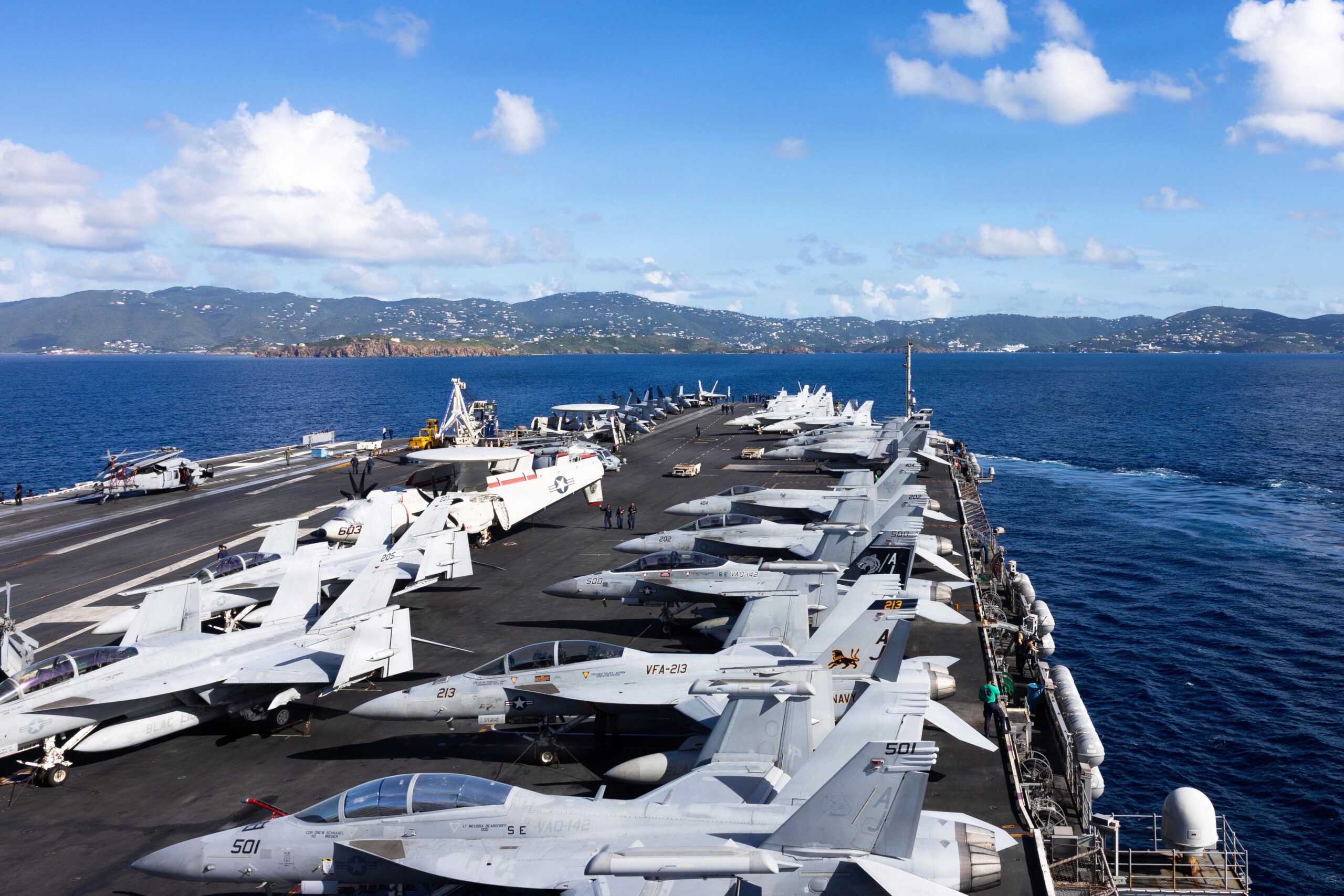
In the azure depths of the southern Caribbean, far from the prying eyes of the public, a fundamental change occurred in the United States’ approach regarding drug smugglers at sea.
On September 2nd, the US military struck its first lethal air strike against a boat suspected of smuggling drugs. A significant new directive was involved: Kill smugglers at sea instead of arresting them. This is not how the rules worked in the past, and a storm of controversy has been whipped up about this in Washington D.C. currently.
The Target
Intelligence reports linked the boat to the Tren de Aragua, a Venezuelan gang recently designated by the US government as a Foreign Terrorist Organization. According to every previous government, it was the US Coast Guard that would deal with a boat like this. They would fire a warning shot across the bow before boarding. They would arrest the smugglers, seize the evidence, and the accused would face trial in a court of law.
But with "Operation Southern Spear," the rules were rewritten. According to the government, led by President Donald Trump and Secretary of Defense Pete Hegseth, drug smuggling is equivalent to an armed invasion, which justifies a military response rather than a law enforcement one.
The First Strike
The operation began with a precision attack. A guided missile struck the vessel in its center to break the hull and detonate the boat's fuel stores. That explosion smashed the fiberglass structure to smithereens, and nine of the eleven men on board were killed instantly.
The destroyed boat capsized. Debris and bales of cocaine were scattered on the water. Immediately after that, surveillance drones flew over the scene transmitting live video back to command centers in Florida and the Pentagon. The footage revealed an unexpected problem: two survivors.
Shirtless and unarmed, the two men managed to climb onto a floating section of the keel. They were adrift in remote international waters, their vessel destroyed and their comrades dead. They were defenseless and helpless.
The Second Strike
Soldiers who are hors de combat—those removed from the fight due to injury or shipwreck—have protection under the Geneva Conventions. Under the terms of the Conventions, there is a duty to rescue them if possible, and it is not permitted to kill them.
Despite this, the operation commander, Navy Admiral Frank "Mitch" Bradley, ordered a second strike to hit the debris where the two were sheltering.
It was reported that drone video showed the two survivors waving their hands beforehand. The interpretation of this signaling would be the basis for a heated political battle later. According to Democratic lawmakers and human rights observers who saw the video, it was clear the men were in distress, making signs of surrender or rescue. They had no radio, no weapons, and no means of movement.
For the government and its defenders, however, the hand waving was interpreted differently. Senator Tom Cotton and military officials claimed the men were signaling to cartel boats in the area, and therefore they were still fighting and trying to salvage the illicit cargo. It was reported that Admiral Bradley assessed that the debris, which possibly still contained cocaine, was a valid military target for destruction.
In any event, on the admiral's orders, a second series of munitions struck the debris. The two survivors were killed instantly.
Legal and Ethical Controversy
"The term we have for a premeditated act like that outside of armed conflict is murder," said Brian Finucane, a former State Department lawyer, in an interview after the incident. "It is patently illegal to kill a person who has suffered a shipwreck."
The government's defense relied on the targets. By designating the crew as "narco-terrorists," the Pentagon claimed that those smugglers were unlawful enemy combatants who posed a continuous threat to US national security. Secretary of Defense Hegseth defended the decision strongly, saying: "If you bring drugs to this country in a boat, we will find you and we will sink you."
But for over a hundred years, since the US made its first opium seizure at sea in 1886, dealing with drugs smuggled at sea was a policing act, not a military one. People were innocent until proven guilty; evidence was gathered; trials were held. But in this case, Hellfire missile attacks replaced due process of law.
The Consequences
In the months that followed this incident, US forces carried out over 20 other attacks like this, killing more than 80 people. Among them were Colombians, Venezuelans, and citizens of Trinidad and Tobago. Although the US claimed they were all terrorists, families of the dead said they were poor fishermen forced to engage in smuggling—temporary workers who had no knowledge of the wider geopolitical war.
A major problem was also the lack of transparency. The names of the dead were not released initially. No bodies were recovered for post-mortem examination. The "evidence" went to the bottom of the Caribbean Sea.
In Washington, investigations began, demanding to find out if an illegal order like "kill them all" had been issued. Although Admiral Bradley testified that he received no such explicit order from Pete Hegseth, at the same time, he himself ordered the second strike. That indicates the kind of culture involved in Operation Southern Spear.
A New Era of Warfare?
What happened on September 2, 2025, serves as a grim milestone in American foreign policy. That is the day the US ignored the Geneva Conventions by killing defenseless survivors.
That horrific behavior also raises uncomfortable questions: Can a government unilaterally declare that criminals are soldiers? And if so, do they then have the right to kill them without due process, especially those who are hors de combat? What is the Geneva Convention worth if it is ignored?
Congressional hearings and lawsuits will take place to deal with this horrific incident and to answer those questions. Although it is presumably clear to us all what the right answers are, will the US government share that view—a government under the control of President Trump, who has absolutely no respect for national or international rules?




 English
  Gaeilge