Back on my own two feet again
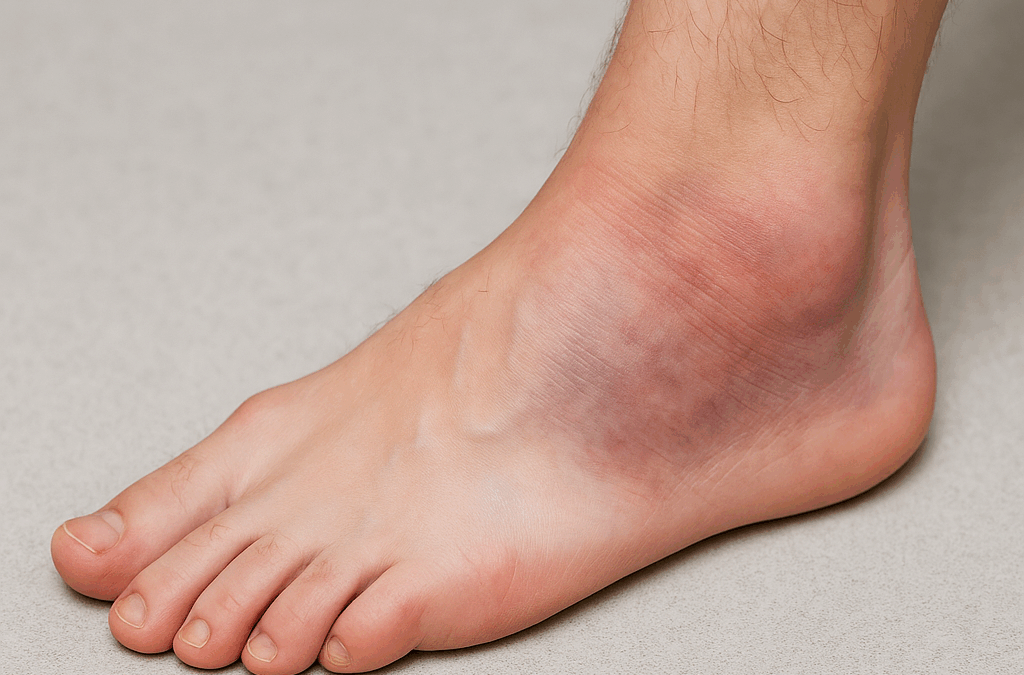
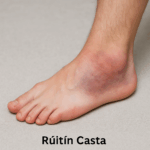
Almost four months ago, I fell while hiking. I fractured my right ankle and leg and damaged the surrounding ligaments. I went home in a large boot to keep the leg immobilised, and onto crutches to keep weight off it. I can finally walk again. Recovery is near complete.
I learned a lot more than I ever expected about what it means to live with a disability.
Steps everywhere
Our house is built on a slope. There are steps outside and more inside. Once indoors, shallow steps separate rooms on the ground floor. The main bedroom is upstairs.
The doctor provided a mobility scooter, but it wasn’t of much use. It couldn’t manage steps, inside or out. It was only of use in the kitchen. I ended up using the crutches all the time.
I could manage the shallow steps between downstairs rooms, but the stairs to the first floor were too dangerous. Because of that, I moved into the guest bedroom downstairs. It was one of many compromises I had to make.
Not allowed to drive
I wasn’t allowed to drive for the first three months. I depended entirely on my wife to get out of the house. I didn’t understand until then how key a car is nowadays.
Even with someone else at the wheel, new problems appeared. Parking was the biggest. I couldn’t go far on crutches, so it was necessary to park close to the door. We applied for and received a temporary disabled parking pass.
Disabled spaces are wider, and there’s a reason for that. You have to open the door fully, swing both legs out, steady yourself, and get the crutches positioned before you stand. Standard spaces don’t allow for that. They don’t have enough space.
What we also learned was how few disabled spaces there are. They were often all taken. When that happened, my wife would drop me at the entrance and go to park. When leaving, she would fetch the car and bring it back to me again.
Doors and ramps
Automatic doors were a blessing. Manual doors were a problem, especially heavy ones that seemed determined to close on you. It was almost impossible to open them while keeping your balance on the crutches, then then keeping them open enough to get through. Often, strangers would come to my assistance.
Steps without ramps were another challenge. I could manage the steps when necessary, but I was not comfortable using them.
People make the difference
One time, we attended a music event in the district. Staff allowed me to enter early. Accessible seating and a table were ready for me, with a clear view of the band. It was handled quietly and well, without any fuss.
Before that concert, there was a queue outside. A man at the front told my wife that I’d be fine waiting like everyone else. She checked with staff. We were allowed in. The man wasn’t pleased. He had no understanding how uncomfortable it was to stand on one foot with crutches for any length of time. And he didn’t ask either.
Begrudgers are part of the landscape. You learn to live with them.
Seeing the world differently
What surprised me most was how quickly your perspective shifts. You start to notice kerbs, steps and doors. You notice which places are easy to enter, and which are not.
You begin to see the world as something designed for a particular body, moving at a particular pace. And you realise that body isn’t always yours.
When we are not disabled, we expect easy access everywhere. When we don’t have it, we are unhappy. When other people don’t have it, we rarely notice.
My injury fell into just one category: mobility disability. In the United States, fourteen broad categories of disability are recognised, ranging from sensory or cognitive disability to neurological and mental health conditions. It was enough for me to experience just one, even temporarily, in order to understand how layered and complex the issue is.
In Ireland, the legal framework around disability is extensive. It covers access to public buildings and services, education, employment, Irish Sign Language, and digital accessibility under EU law. It helps, though experience on the ground still definitely varies.
I didn’t travel by public transport or by air during those months, but I could easily imagine how important support is in those settings. How essential it is to be seen not as a problem to be managed, but as a person moving through the world in a different way and at a different pace.
Conclusion
I learned other things too. I learned how many people are quietly helpful. How often support comes without being asked. I learned to slow down. You can’t rush anywhere on crutches.
Around a quarter of the population lives with some form of disability. Many more of us will, temporarily or permanently, at some point in their lives.
We are lucky when we are able-bodied. But the measure of a society is how it treats all its members, including those who have different needs than ours.
The biggest lesson that stuck with me was this: It is worth our while making the effort to serve the needs of everyone, not just the needs of the able-bodied.


 English
  Gaeilge