Tuairisc ó Mheiriceá: An Rabharta Dearg ar iarraidh i gcomhrac!

Report from America: The Red Wave MIA!

Bad Hair Day!

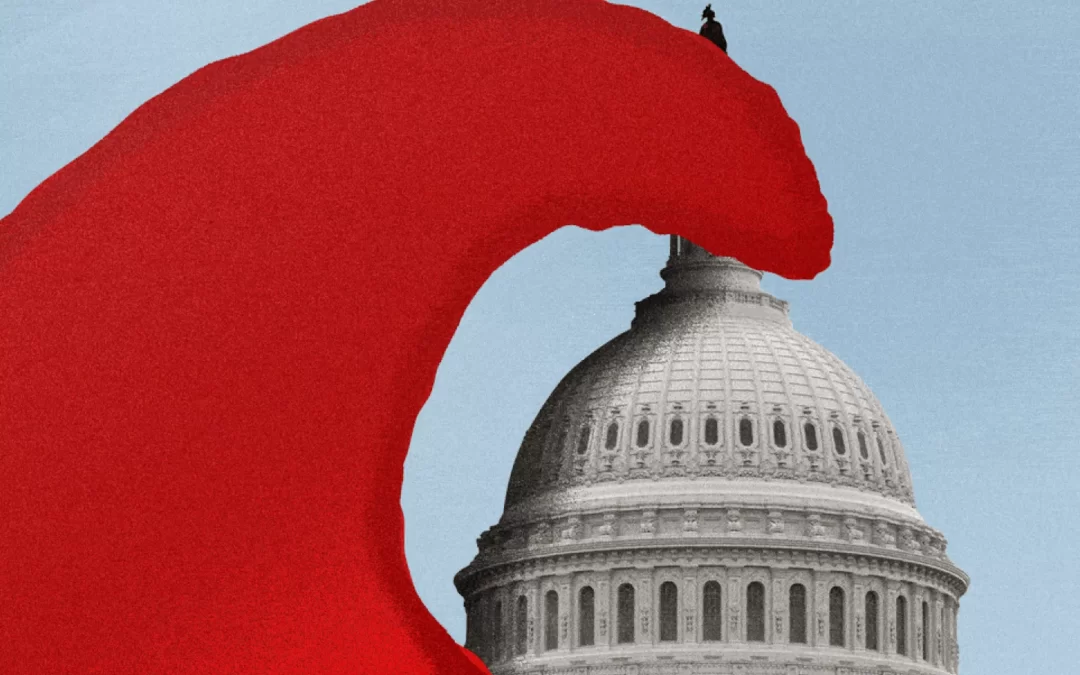
President Trump had a bad hair day after the mid-term election on November 8, 2022 in the United States. The analysts thought that the election would be a 'slam dunk' in favor of the Republicans, so the term 'red wave' was used in the media. Red is the color associated with the Republicans, and it was thought that they would have a landslide victory in the House of Representatives and the Senate. But thinking it does not make it so, and the red wave did not materialize. This is surprising because a new President's party usually loses quite a few seats in its first mid-term election. This has not happened this time, and as I write this, almost a week later, the Democrats will retain their majority in the Senate, and the Republicans will have a small majority in the House of Representatives. Historically speaking, this is a terrible result for the Republicans. 

What happened?

Here are a few reasons why the predicted 'red wave' didn't happen:

  • As kingmaker Trump chose candidates who drank the 'Kool Aid', with respect to the 2020 presidential election. They claimed that Trump had won, and that election fraud stole the victory from him. Maybe the American public is sick and tired of their lies.
  • Trump chose three conservative Supreme Court justices: Neil Gorsuch, Brett Kavanaugh and Amy Coney Barrett. That Court overturned abortion legislation, which gave the mother a federal right to demand and obtain an abortion anywhere in the United States. Thus, the court rendered the decision of Roe vs. Wade void as a direct consequence of those appointments. But according to the 'Pew Research Center', 61% of the population (80% Democrats and 38% Republicans) say they mostly agree with the mother's right to obtain an abortion. 
  • The Republicans were arguing strongly that Biden was to blame for the current unrestrained inflation in the United States. But the problem is being handled by both the government and the Federal Reserve Bank, with the inflation rate recently decreasing from 8.1% to 7.7%. But, more importantly, the inflation rate is higher in many other countries – almost 10% in the EU and Great Britain, for example. So, the Republicans do not have a persuasive case.
  • The Jan 6 committee presented irrefutable evidence to blame former president Trump for the uprising that occurred on January 6, 2021. Trump played a major role in all aspects of the uprising, from the big lie that the presidency was stolen from him ( he began casting doubt on the electoral process as far back as the presidential election he won in 2016), through the planning process, up to the attack on the Capitol itself. Prominent Republicans Liz Cheney and Adam Kinzinger were some of the members on the committee, and more importantly, most of the witnesses who appeared before the committee were Republicans. That strong evidence may have influenced a lot of Republicans, so that their trust in Trump and the politicians who strongly support him has eroded.

Tide turning?

Recently, Trump's allies have sharply criticized him. Here are a few examples:

"Almost every one of the candidates that Trump supported lost," Chris Christie, the former Republican governor of New Jersey, said on ABC's "Good Morning America." “It's a big loss for Trump. And, again, it shows that his political intentions are not for his party or for the country and for Trump himself."

"Republicans have followed Donald Trump off the cliff," said David Urban, a longtime Trump adviser with ties to Pennsylvania.

Former senator Peter King, a Long Island Republican who has long supported Trump, said, "I strongly believe that he should no longer be the leader of the Republican Party," adding that the party "cannot be his personal cult!”

Parting Word!

I hope that we have now reached the moment of truth, and it is a sign of hope that the majority of the people in the country are choosing democracy over autocracy and choosing the truth over lies. With respect to democracy (though), we shouldn’t count our chickens before they are hatched. 


.


Día de los Muertos!

Día de los Muertos!

Día De Los Muertos is considered a blend of Meso-American rituals, Spanish culture and European religions. It started as an Aztec festival around 3,000 years ago. The Aztecs used skulls to honor their dead, and the skull is still the main symbol of the Día de los Muertos festival today.

Día de los Muertos is celebrated in Mexico, Central America and in places where there is a large population from those countries – Los Angeles and New York in the United States, for example.

According to Día de los Muertos tradition, the gates of heaven open at midnight on October 31st for 24 hours, and on November 1st the spirits of deceased children can join their loved ones. On November 2, it is the spirits of deceased adults who are in the company of their loved ones. This happens because it is believed that the boundary between the real world and the spiritual world will dissolve at this special time.

.

Ofrendas (Attars)

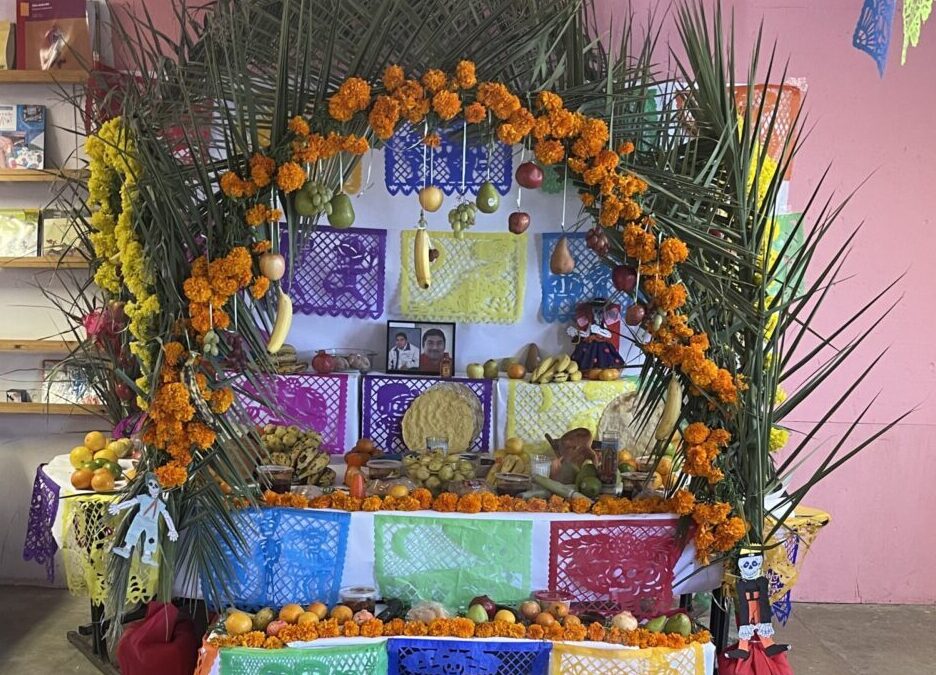
To welcome them, people prepare altars ('ofrendas') for their relatives and friends who have passed away. A soft light from lit candles illuminates the photographs of the deceased, and there are çampasuchil flowers (marigolds) around the altar, as well as burning copal incense, all to guide the spirit home with strong smells. The altar features all kinds of favorite foods and drinks – things like tamales, chiles, tequila and pan de muerto. The names of the dead are written on skulls shaped from clay and decorated with feathers, foil and frosting. There are symbols that represent the four elements: earth, wind, water and fire. Sometimes, a crucified cross or an image of the Virgin of Guadalupe (Mexico's patron saint) can also be seen on the altar. Family members read letters and poems and tell serious stories and jokes about the dead they are commemorating.

Families clean the graves at the cemeteries, and on the night of November 2, people bring food and drink there to attract the spirits and join in the public celebration.

Bands play music and people dance to entertain the visiting souls.

.

Día de los Muertos compared to Halloween

Halloween is celebrated on October 31st, the night before Día de los Muertos begins. The Church has long had festivals on November 1 – All Saints Day, and November 2 – Day of the Dead, and it seems that the Church subsumed Samhain and Día de los Muertos into these, given the similar theme with its emphasis on the dead. In the case of Día de los Muertos, the emphasis used to be on welcoming deceased loved ones and celebrating their lives. In the case of Halloween, on the other hand, the emphasis used to be on ghosts and ways to avoid them. Therefore, there were different customs in both cases.

.

Día de los Muertos in Tijuana

I visited Tijuana in Mexico this year on November 1st, and saw for myself the locals celebrating Día de los Muertos. It's a public holiday in Mexico, and there was a celebratory and friendly atmosphere everywhere. We visited a primary school, and events were held there to celebrate the dead. The pupils and teachers had their faces painted, and all were wearing colorful costumes. The students gave us great performances – singing, dancing, and walking in the festival parade.

There was also an 'ofrenda' in one room in the school, where they celebrated the life of a teacher who died of COVID. It really impressed me.

When we were about to leave, we received a few invitations from families to come with them to see their 'ofrenda'. I felt it was a great privilege, and we received a true welcome everywhere. Those people I met that day didn't have much, and they reminded me of the stories my father told me about his own people in Erris in County Mayo when he was young. They didn't have much either, but there was a strong bond between them, and they were very friendly people. Despite the great challenges in their own lives, they would share what they had with you. Isn't that a good suggestion for all of us – to open our hearts to everyone!

.

.

.

.

.

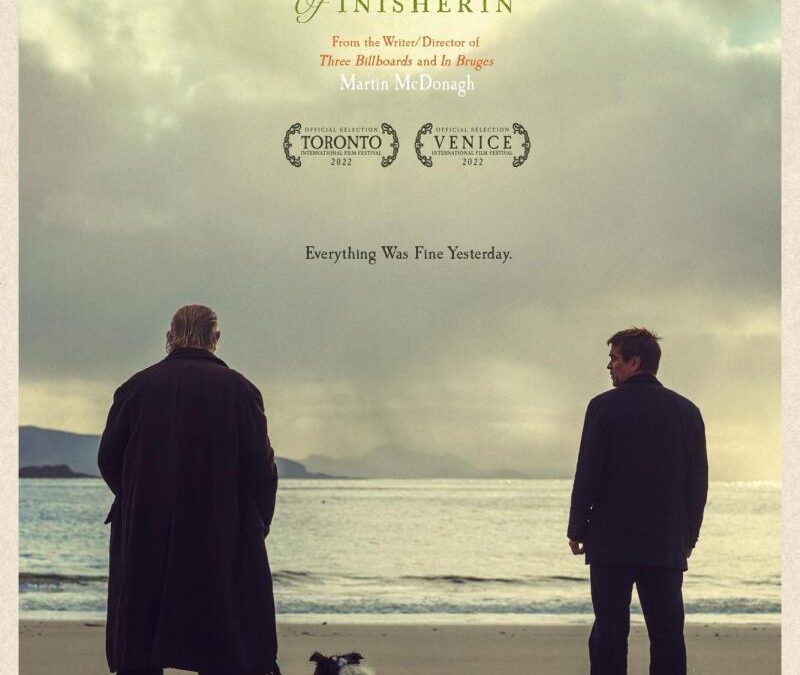
Léirmheas: The Banshees of Inisherin!

Review: The Banshees of Inisherin!

This film is a reunion of the director Martin McDonagh and film stars Colin Farrell and Brendan Gleeson. They worked together on the famous film 'In Bruges' in 2008, a film that was very popular.

.

Background

In Irish folklore, a banshee is the spirit who screams to indicate that a family member will die soon. An old woman (Mrs. McCormack), who reminds us of a banshee, appears quite often in this film, predicting that a family member will die soon.

The film has a rugged landscape as its’ gorgeous backdrop. It was filmed on location on Inishmore and Achill islands.

The Civil war was going on at the time of the story, and bombs were heard exploding and guns being fired from time to time on the mainland. I was waiting for the affairs of the war to be tied into the story, but this did not happen. Maybe it was just a hint to us that the story was a metaphor, but if so, the similarities between the friendship in the film and the war of friends were not very strong.

.

The Story

Pádraic (Farrell) and Colm (Gleeson) have been friends for a long time but suddenly Colm decides to end that friendship. He has grown tired of their conversation in the pub every night, and wants to spend more time composing and playing music.

Therefore, Colm orders Padraic to stay away from him. But it is not easy to avoid anyone, because there is only one pub on the island, where the locals meet all the time. Colm is a musician, and he takes part in the music sessions that take place regularly in the same pub.

Pádraic is a small farmer who lives with his sister in their late parents' house. Colm was Pádraic's only friend, and they would hang out together every night in the pub. Pádraic is a slow-witted man and he does not properly understand what Colm is saying.

Out of loneliness, Colm begins to spend more time with Dominic (Barry Keoghan), a kid who annoys everyone on the island but they feel sorry for him because his father, the island's policeman, is abusive to everyone, his son included.

When Pádraic sees Colm chatting with Dominic in the pub, he is not happy and tries to be friendly with him. Colm becomes cross and threatens that if Pádraic doesn't leave him alone, he will cut off one finger on his left hand every time Pádraic talks to him.

No one knows if he's joking or not, and I'm not going to tell you now what happens after that in the movie in case it would spoil the story!


Direction and Cinematography

Martin McDonagh is a first class director, a man at the top of his game, and this film shows how good he is at his craft. McDonagh found the right balance between comedy and tragedy, and opened the door slightly between true story and fantasy, between friendship and enmity, between love and hatred. McDonough emphasizes the main characters and shows us their characteristics, not only with dialogue but especially with their facial expressions.

.

Acting

Farrell and Gleeson gave us an excellent performance, and it is unlikely that any other actors would be as powerful as they are in the roles of Pádraic and Colm, and they triumphed in this film. Siobhan (Kerry Condon) is also great in her role as Pádraic's sister, a very intelligent person who stayed at home to look after her brother.

.

Conclusion

After seeing the movie, I was kind of uneasy. The film did not have a proper closure, as there were some unanswered questions. I think it would be more difficult for non-Irish people to understand the plot, without knowing the historical context in Ireland at the time. Be that as it may, there is much in the film that is outstanding – the acting, the wild scenes and the cinematography included.

The influence of the director Quentin Tarantino is clearly visible, in my opinion, with the interplay between the gratuitous violence and the burning humor. Although I'm not overly impressed with that genre - it's kind of avant-garde, if you like that genre, you'll enjoy the film. Otherwise, don't bother!

.

.

.

Smaointe Faoi Shamhain!

Thoughts about Halloween!

Halloween!

The Celts believed that the boundary between the world of the living and the world of the dead became blurred on the night of October 31, when they celebrated Samhain, the time when one year would die and a new year would be born.

To commemorate the event, the Druids built huge sacred bonfires, where the people gathered to burn crops and animals as sacrifices to the Celtic gods. During the celebration, the Celts wore costumes, usually with skulls and animal skins, and tried to tell each other's fortunes.

There is no doubt in the world that the bountiful and generous Autumn, which gave us fruits, corn, and numerous crops, for the past three months, has come to an end, and that we have now come to the threatening, troubling brink, the season of cold and hardship . It is not surprising then, that at this time of the year the human being thinks about the mortality of his race, and about his own mysterious destiny as a living being, living in a worldly domain, limited by the gates of time and the space, constantly attracted by the Utopian vision of the other world, a world not limited by the constraints of space or time, but existing as a magnet, to draw us constantly towards eternity. From all that, one would understand that the seasons are there to give us an opportunity to think about the different periods of human life.

In Spring, we see nature waking up from the peaceful, sleepy sleep of Winter. In the beginning of Spring, we have only to notice a cold, wild desert, waking from a cold, long sleep, the frozen flesh, through which the unquenchable flame of life is successfully borne through dark, mortal portals, to a living light the bright sun. That is just the beginning, as from that point on, every plant and flower flourishes and grows until the country is covered with crops, and with colors of every type.

Blooming of Life

That renewed life continues to grow and ripen through the bright, lrestful days of Summer, until all of nature is overflowing, with crops and fruits, until the branches are bowing to the ground with the weight of ripe fruit and perfect flowers, but each day stretches its finger towards the coming Harvest, and a hawk's eye is kept on matters, and in the ripe, fruitful days of the Autumn is performed the reaping, the harvesting, the gathering, and the stacking, so that we have a sufficiently large store of food stored for the Winter.

Féile na Samhna gives a festive start to the season of decay and death. In the old days, eating blackberries was taboo from Halloween onwards. Spades, shovels, scythes, sickles, and other farming implements were put aside, as they would not be needed again until after St. Bridget’s s Day. Bit by bit, leaves, flowers, and vegetation of all kinds decay and decompose, until in the end, only bare limbs and veins, are visible between us and the light.

Silence

A complete silence falls on the stirring, soulful music of the birds, and around us we see only our old friends, the robins, wrens and sparrows, but even in the case of those same birds, their music loses its spirit, the challenge, and the vitality, which they contain during the seasons of growth, flourishing and maturity. This is also the season when humanity is tormented with its stinging, painful cold, a cold that goes to our very core. But, above all, this is the season that reminds humanity that it does not have a permanent city in this Valley of Tears, as they can see how flora and fauna; leaves and flowers all wither and die; yes, and how the weather affects all living beings, slowing them down, silencing them, and weakening them, and even, how nature (itself) is not let sleep during this whole season by some petty folk, so that they can survive far into the future.. But, if Winter is the season of death and sleep, it is also the season of life and hope, as we understand that it will not be long before the creatures of nature will be revived again, in the glorious, colorful resurrection of Spring. Patience and hope is what we need during the Winter season, or as the old saying goes, 'God's grace comes with patience' and 'patience gets strength'.

Filleann an feall ar an bhfeallaire!

What goes around comes around!

The United Kingdom’s nightmare began way back in 2016 when David Cameron, the country’s Prime Minister at the time, announced an election on the question of Brexit. He misread the situation badly, as he did not think there was any chance that the majority of the public would choose to leave the European Union. He wrote the following in his autobiography: “I accept that my approach has failed. The decisions I made contributed to that failure. I failed.” I think he didn’t know at the time how bad that failure was, and how things would unfold afterwards.

By the time the Tories recognized how serious the mistakes were, they were unable to change their tune, and continued with the fallacy, like lemmings approaching the cliff.

In 2019 Jacob Rees-Mogg, who is now business secretary, was talking about the ‘expansive, sunny uplands waiting for us thanks to Brexit.’ But the facts tell their own story – a different story altogether, and it cannot be denied that the pound has fallen steadily against the dollar over the past six years, sliding over 23% during that period. The lack of political stability cannot be denied either. Liz Truss was the fourth Prime Minister in the Brexit era so far, with another coming soon. Worse than that, Jeremy Hunt is the fourth Chancellor of the Exchequer in the last four months. I recently read an interesting article in the ‘Telegraph’ where it said that the UK is more like Italy than France or Germany, in terms of its economy and political stability. For example, gross domestic product (GDP) per capita in the UK has grown by just 10% in the period 2015-2022, compared to 24% in Germany and 18% in France.

Significant Incompetence

Truss and Kwasi Kwarteng (then Chancellor of the Exchequer) put together their mini budget without any consultation stage with their party. That’s a red flag, in my opinion.

That mini-budget contained 45 billion pounds in unfunded tax cuts, which upset financial markets, weakened the value of the pound and increased borrowing costs for the UK government. The Bank of England had to intervene to avoid a wider financial crisis. But the market, the British public, and even Truss” Party itself demanded more. Truss had to sacrifice Kwarteng to save herself, and appointed Jeremy Hunt instead.

Jeremy Hunt immediately canceled the most expensive provisions in the mini budget and in particular the tax cuts for the wealthy. The market was pleased with these actions, and the foreign exchange rate and security prices settled down again.

Truss vs the lettuce

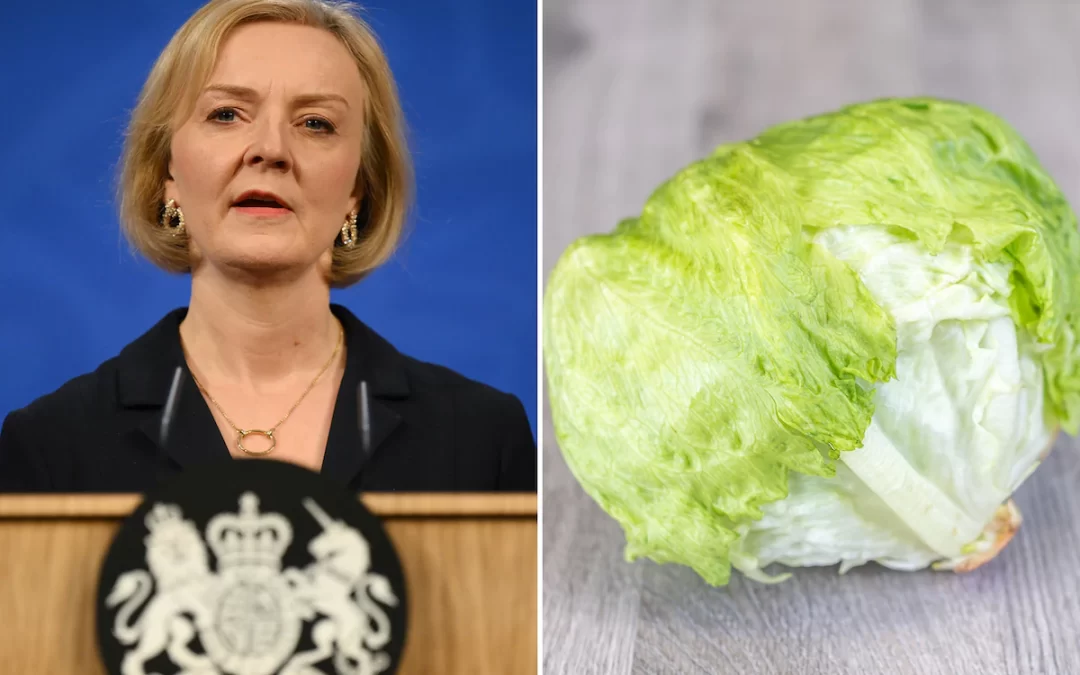
But Prime Minister Truss was still in big trouble as many politicians were demanding that she resign immediately. The UK media made a meal of the story, and the ‘Economist’ and the ‘Daily Star’ put Truss and lettuce side by side, asking which will last longer. When Home Affairs Secretary Suella Braverman sent an official email from her personal account, she had to resign. It was clear that things were quickly falling apart, and a few days later, Truss herself resigned. The lettuce won!

Lesson to learn?

In the coming months, the people of the UK will see brutal spending cuts, strikes in several sectors, power cuts, and under-resourced hospitals struggling to provide care.

One day, the British government will have to tell its citizens that the country must reunite with Europe or continue the Brexit fantasy, committing economic suicide as a result.

It was not right to hold a referendum on Brexit in the first place. That is the duty of the government, and it is a terrible decision to place that important duty on the people of the country, people who do not have enough information to make an informed decision.

This is a master class, showing the ‘domino effect’ that can occur after one bad decision has been made by the Government of the country. As for the UK, although we don’t know what is the next ‘domino’ that will fall, there is no doubt that another one will fall before long!

.

.

.

.

.

en_USEnglish