Daonáireamh 2022!

2022 Census!

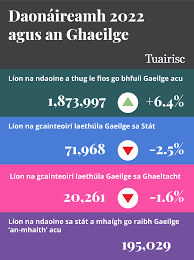
The figures regarding the use of the language were recently published, based on the 2022 Census. There was a 2.55% drop in the number of people speaking the language every day outside the education system, from 73,803 in 2016 to 71,968 in 2022. There was a 2.18% drop in the number of people speaking the language every week, from 111,473 in 2016 to 109,099 in 2022. I see from the government only lip service instead of a comprehensive plan to achieve an increase as opposed to a decrease of Irish speakers. These statistics are eye-opening for us, without a doubt.

I have a few words!!

The number of people who speak Irish rose by 0.6% of the population from 39.8% (1,761,420) in 2016 to 40.4% (1,873,997) in 2022. But of those people, only 10% said that they speak Irish very well , and another third saying that they speak Irish well. The rest (55%) who speak Irish said they are not able to speak it well.

In the Gaeltacht?

The number of people in the Gaeltacht who speak Irish increased, from 63,664 in 2016 to 65,156 in 2022 (an increase of 2.3%). But the number of people in the Gaeltacht who speak Irish every day has decreased from 20,586 in 2016 to 20,261 in 2022 (a 1.6% drop).

Analysis

What is going on at all? On the one hand, things seem to be improving. But on the other hand, the figures say that things are getting worse. Which is correct?

In my opinion, one need not be right and the other wrong. Analysis is necessary to make sense of these figures.

I think that the number of people who speak Irish is increasing because the revival of the language is taking place in the country and people want to improve and practice their Irish if possible. But for the most part people cannot speak Irish in the normal activities of life, because there is not enough infrastructure operating in Irish available to them. And that is the basic reason that there is a decrease in the number of speakers of Irish. Therefore, it is clear that the government's policies regarding the Irish language are not working well, despite the will of the public. What a pity that is!

Recommendations

I was at a loss as to what to do, when I received a 'WhatsApp' message from my loyal friend, Micheál Ó Máirtín. It was a sound bite from the program 'An Saol Ó Deas', with Helen Ní Shé interviewing Irial Mac Murchú. Although the number of speakers of the Gaeltacht decreased overall, the number of speakers of increased in the County Kerry and County Waterford Gaeltachts. Irial is the CEO and director of the television production company, Nemoton, and has a particular insight into the issue of Irish spoken in Gaeltacht na n'Déise in Waterford. Here is a summary of a few points he was discussing. The Gaeltacht na n'Déise was almost on its deathbed in the seventies, said Irial, when a kind of revival came. According to Irial, the cornerstone of that revival was the San Nicolás secondary school. The school was established in the fifties and in the seventies the number of pupils grew significantly. A certain generation, even though they themselves were raised in English, decided to raise their children in Irish, and there was still enough Irish in the environment that it worked out well. After a while, the stain of poverty was no longer on the language, and gradually a new generation could be seen, including teachers, lawyers, nurses and the like, who were brought up with Irish. The support of the local organizations helped with these efforts and especially the Gaelic Athletic Association (GAA), because they made Irish classes available to people and did their business through Irish in the Gaeltacht. Therefore, the GAA fostered a natural environment for people to speak Irish. Gradually there was a comfortable environment for people to be able to do everything through Irish.

Conclusion

We do not need to rely on the government to revive our language. We can do it ourselves! We have already had great success with Irish primary schools, and now it is time for us to establish secondary schools wherever we can. Then, we have to put public pressure on the local bodies to encourage them to be able to use Irish as well as English. We will be able to recreate the success of the Gaeltacht na n'Déise in other places like that, by collaborating together!

.

.

.

.

.

.

.

.

Tuairisc ó Mheiriceá – Teorainn Fiachais!

Report from America - Debt Ceiling!

When the United States Congress put a policy in place regarding the national debt limit long ago, they never intended it to be used as a political bone of contention. But that is exactly what happened! And on account of that, there is great uncertainty about the economic situation in the United States and around the world.

The national debt

Every year, the United States government has to borrow to meet its commitments. There are three spending streams in the country's budget:

Compulsory spending: The government is obliged to pay for social security, health care and retirement pensions for people who are entitled to them by law, including people over 65 and military veterans. The government would have to change the laws to reduce this expenditure. These programs are very popular with the majority of the public, so it would be controversial and politically difficult to make such changes. Compulsory spending is the largest part (63%) of the national budget.

Discretionary spending: Each year, the government (the Appropriations Committee) has to review this spending and then approve it. Half of this spending goes to the American military, and the other half to various programs such as: homeland security, education, transportation, research, food safety, science and space programs, disaster relief, environmental protection, public housing, and enforcement of the federal law. Discretionary spending uses around 30% of the national budget.

Supplementary expenditure: This expenditure (7% of the budget) is used to pay interest on the national debt each year. In the year 2023, it will cost 460 billion dollars to service the debt.

Debt Ceiling

Like many countries, the United States has to borrow money, because the federal government spends more money than it receives. Unlike almost every other country, the government limits the amount of money they are allowed to borrow. Because the annual budget deficit is increasing almost every year, congress has to raise the ceiling frequently. You'd think the government wouldn't be able to spend more money (than the ceiling) in the next budget, and that would be that – wouldn't you? Unfortunately, it's not that easy.

A long time ago, the government had to approve the expenditure associated with each bill, one by one. Therefore, the debt limit was first established in 1917 and with a few changes in 1939, so that the limit applied to the budget as a whole. This was done to make the process simpler and that was all very well until 1995 when unintended consequences occurred that no one had thought of before. I will come back to that point but I have to explain one thing first. The debt limit applies to the past year and the money already spent! That is the fundamental mistake with that approach, because this system can be abused, with one party demanding certain changes to the budget in return for raising the ceiling. Without a new ceiling, the government would not be able to pay the interest on the national loan, and the country would be in default and in trouble.

Things were not like that until Republican Chairman Newt Gingrich started using the debt limit as a weapon in 1995. He said that a new ceiling would not be passed until President Clinton made certain changes in the budget. Although Gingrich eventually backed down, he had done the damage and established the precedent.

Flash forward to today, and you will see Gingrich's legacy clearly! Speaker of the House Kevin McCarthy is using the debt limit as a bargaining chip to demand a major reduction in the new budget.

Russian Roulette!

The Republican Party is playing Russian Roulette, and that is a dangerous game. Without a new debt limit, a global financial crisis would be created. That is an unacceptable risk, without question. Therefore, it is high time for the United States congress to put in place a new strategy and a new system to balance the budget. Let's hope they do the right thing. Otherwise, that debt limit will cause us to lose sleep!

.

Óráid Mitchell!

Mitchell's Speech!

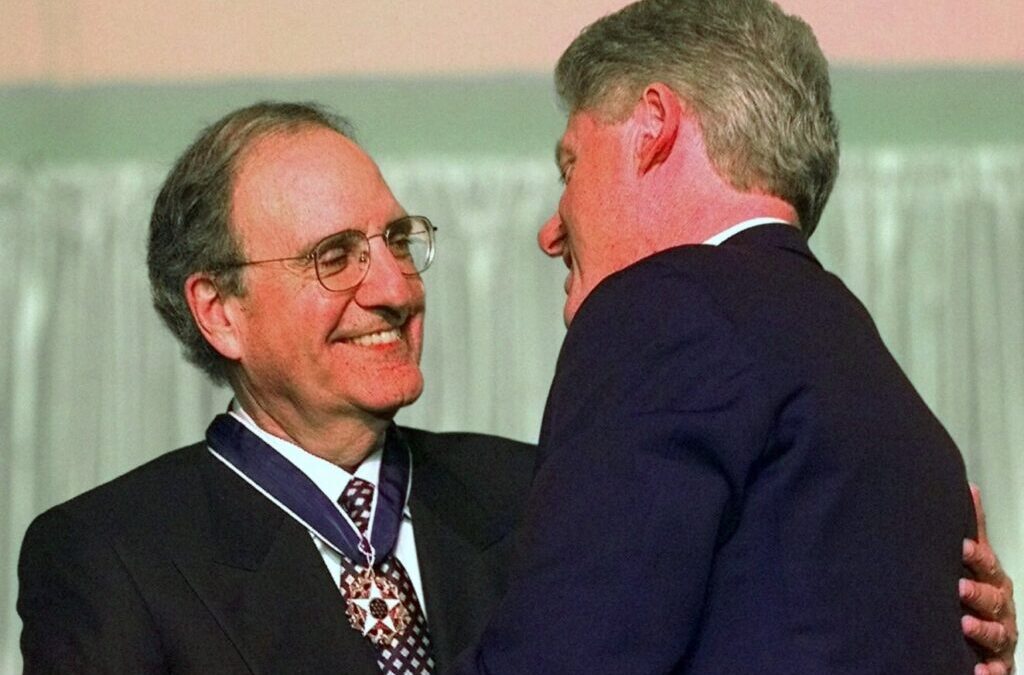
More than 27 years ago, many people began to work hard together for a few years, day after day attempting to find a workable solution to the Troubles in Northern Ireland. It seemed like an impossible task, but they continued despite a long list of difficulties. Despite the different views of the participants in the talks, George Mitchell announced on Good Friday, 10 April 1998, that they had reached an agreement. Although it is not a perfect agreement, it is a practical agreement, which is still in place, which is still alive, and which is a world-class example of what you can do when you cooperate with your enemies to stop the violence between you.

Everyone who was involved in those talks took a chance, and some of them were undoubtedly badly affected for a long time. The Agreement was a very positive thing, concluding a bloody chapter in the history of the North. John Hume and David Trimble received a Nobel peace prize for their work later that year. Although George Mitchell was also nominated for a Nobel prize, he did not receive it. If I had to choose the most central person in the Northern peace process, I would choose George Mitchell. Without it, we would not have the Agreement and we are all greatly indebted to him. The Accord was a miracle.

Commemoration of the Agreement

It is also a miracle that former Senator Mitchell (who is 89) was able to attend the anniversary of the agreement which took place recently at Queen's University in Belfast. He was diagnosed with leukemia three years ago and this is his first major event since his diagnosis. It was a big anniversary, and other famous people attended it too, including: former American President Bill Clinton, former American Secretary of State, Hilary Rodham Clinton, former British Prime Minister Tony Blair and former Taoiseach Bertie Ahern. The President of the United States Joe Biden was also in the North for the anniversary, and he gave an inspiring speech there. Almost everyone mentioned above also gave a speech, but Mitchell's speech was my favorite.

Mitchell's speech

At the conference, recognition was given to the parties who showed courage in dealing with enemies. There was also indirect pressure on the DUP to return to Stormont and put Northern Ireland to work. Over the three days the themes were, 'Reflection, Renewal, Reimagining'. Mitchell kicked off the conference and with his rousing speech, and he set the tone for the rest of the commemoration.

"I say now, to the leaders of Northern Ireland now and in the future: There are many differences between you in your history and your politics. But there is also enough to bring you together, to continue what your predecessors started a quarter of a century ago!” said Mitchell.

He continued: “Resolving your differences in democratic and peaceful ways is not a sign of weakness. On the contrary, it is a sign that shows strength and wisdom. And it clearly reflects the will of the vast majority of the people of Northern Ireland."

Recalling the day the parties agreed to the measure, he said: “On that day history opened itself to hope. The people of Northern Ireland rejected political violence as the way to resolve their differences. It is clear that they do not want to return to violence. Not now. Not ever,” he insisted.

"There are those who are never willing to compromise. For them, making any compromise is a sign of weakness. But I tell you that a principled compromise is necessary in divided societies, and that it shows faith in democratic values. Like it or not, we're all in this together. It takes strength, courage and vision to face the truth of the future, rather than clinging to the myths of the past. From the start of the Troubles to 1998, over 3,500 people were killed and 50,000 injured in sectarian violence. In the 25 years since the agreement was reached there have been about 164 deaths related to security,” the Senator said before asking his audience to stand in silence to remember all the victims.

Conclusion

Senator Mitchell and the conference itself had a clear message that the Good Friday Agreement was a historic ceasefire, but it was also made clear how much work needed to be done politically to ensure that there is no return to the dark days. It will be more difficult now without George Mitchell!

.

.

.

.

Tá mise sa bhaile

I'm home


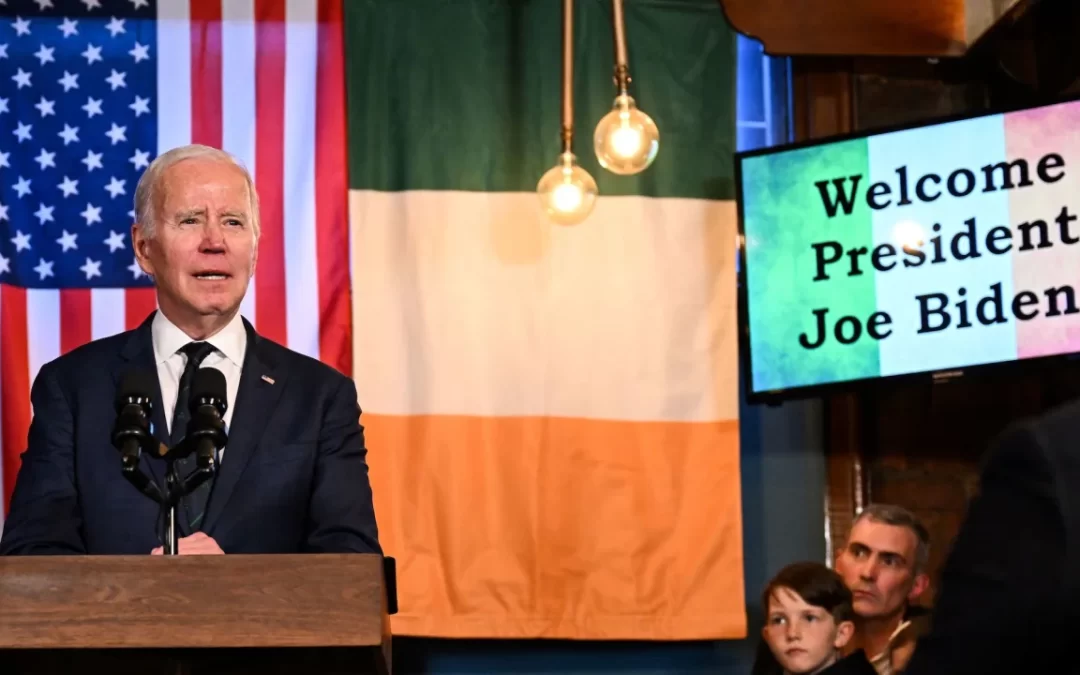
The story of the President of the United States, Joe Biden, is the story of thousands of Irish-Americans, and he articulated that story with passion and love for his motherland on his visit to Ireland. When Irish-Americans say they are Irish, we ignore them because it is clear to us that they are not Irish at all. They are not referring to the bare facts, as it is clear that the majority of them are not Irish according to those criteria. But they are referring to a primal instinct that they feel strongly due to the genetic and cultural connection they have with their motherland. Their true love for Ireland was passed down from generation to generation. They are always proud of their Irish heritage. Joe Biden is the epitome of an Irish-American, without question. He expressed his solidarity with the people of Ireland and proudly revealed the truth to the people of Ireland and the world for that matter. "Tá mé sa bhaile” (I'm home), he said, and no one had any doubts about his authenticity. There is no doubt that Joe Biden is the most Irish American President we have ever seen!

Biden as President

Biden has done a lot to make his democratic vision a reality, and in the process he has also done a lot to correct Trump's terrible mistakes. Biden is not America's most charismatic President, nor the best orator either. Presidents like Reagan and Obama were far more capable in those respective fields, for example. Biden is an ordinary person like us, struggling his way through life. He is an honest and enthusiastic politician, rare traits for politicians to have. But don't be fooled by his unhurried style, as he has achieved many great things. There is not space to discuss them all here, but I will mention a couple. In 2021, Biden signed a $1 trillion infrastructure bill to rebuild America's infrastructure – including roads, bridges and railroads. It is one of the biggest packages ever signed by a president and it was high time to invest like that in the country's infrastructure. Trump promised a bill like this hundreds of times, but all he was all mouth! Last year, Biden signed the Inflation Reduction Act. It will provide a total of $739 billion, about half for health care and the other half ($369 billion) for funding in renewable energy resources and to reduce pollution of all kinds. This is the most expensive climate law ever enacted in the history of the world! It was not easy for Biden to pass those acts, because there were dissenters even in his own party (especially Senator Joe Manchin in West Virginia). But it did the job, and that's the most important thing!

‘Till I stand in the middle of County Mayo!

Although I do not agree with all the views of the President, I mostly agree with his democratic vision which is in complete contrast to the refpublican vision - and it is an exaggeration to use the term vision in this case! In particular, I agree with the few acts I mentioned earlier. As with Biden, Mayo has a special place in my heart! I was born in Ballina, and my family is originally from Mayo going back hundreds of years. I have close relatives in Bangor-Erris on the Mulllet Peninsula in County Mayo, where my father is from. Edward Blewitt, Biden's great-great-great-grandfather, is a native of Ballina in County Mayo. Patrick Blewitt left Ballina to emigrate from Ireland in 1850 and went to Scranton, Pennsylvania, the same place where Biden was born 90 years later. Blewitt sold 27 thousand bricks to St Mary's Cathedral in 1827 and they were used to build the cathedral. Consequently, Blewitt was able to buy tickets for his family to be sent to America.

My parents were married in the same cathedral in 1955, and a few years later I was baptized there! When my parents were still alive, our whole family went on road trips to Ballina a few times, and we were able to see St. Muradech's Cathedral from our hotel. And recently, Biden was outside the same cathedral, giving a great speech. The strong ties between America and Ireland were very clear to me right there on a personal level.

Strange life, isn't it?

.

.

.

.

.

.

.

Séasúr an Dóchais

A Season of Hope

A reawakening is happening everywhere we look. The plants are recovering from the long winter sleep. Fresh leaves are sprouting vibrantly on the trees and bushes. And the birds that were gone from us during the cold season, are here again now, full of heart and hope. The birds that stayed throughout the bad weather are singing loudly as they announce the arrival of the new season. Spring is undoubtedly a season of hope and revival. The blind poet Antoine Ó Raifteirí succeeded in expressing the spirit of Spring in the poem 'Cill Aodán'...

“Now with the coming of spring the days will be getting longer,

And after the feast of Bridget I will raise my sail,

Since I got it into my head I will not settle

Until I’m standing down in the middle of County Mayo

The coming of Spring brought energy and excitement to the heart of the poet while he was in exile in County Galway. A desire to travel and a longing for home were awakened in the heart of the poor blind poet, although it was only an unrealized vision.

All we have to do is look at the history of our country to understand that the spirit and desire for freedom was awakened in our own people with the arrival of Easter, more than a century ago now.

Easter Rising 1916

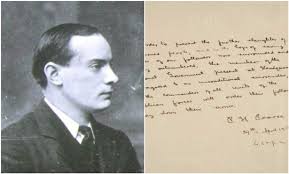
It was no accident that rebel leader Patrick Pearse chose Easter as the best time to declare the Republic of Ireland. After centuries of Gallic domination, Pearse wanted the nation to experience the renewal of Easter in a manner similar to the resurrection itself. At first the people of the country made fun of Pearse’s idea, but before long they understood what he meant and stood bravely for his vision.

The rebellion began on April 24, 1916 and ended on April 29, 1916. Members of the Brotherhood of the Republic of Ireland, members of the Irish Citizen Army and members of the Women's Association rose against British rule in Ireland. It was the first rebellion in Ireland since the rebellion of 1798.

Originally, the Irish planned to have thousands of rebels. But a man called Sir Roger Casement was captured on the way back from Germany with guns and therefore only about 1,250 took part in the rebellion. Of these, around 300 joined the General Post Office (GPO) in Dublin under the leadership of Pádraig Pearse and James Connolly. Other groups occupied different parts of the city, including St. Stephen's Green, the Shelbourne Hotel, Boland's Mills and Jacobs Factory.

The worst fighting took place at Boland’s Mills when Éamon de Valera and his rebels began shooting at British soldiers known as Sherwood Foresters as they landed in the city. That shooting killed around 200 people and injured many more. There was also a great fight in St. Stephen's Green and a good number of Irishmen were lost there. After six days the Irish were exhausted and were being fired upon by huge artillery pieces mounted on a British ship called HMS Helga. The General Post Office was badly hit and the Irish soon surrendered. Sixteen Irish leaders were shot by firing squad after the Rising. This greatly affected the people of the country, as they believed that this was a breach of trust by the British government. From then on, the people of Ireland were not happy to be under the control of the British Empire any more, and it is not surprising that the War of Independence broke out in 1919. The war continued until 1922, when the leaders of Sinn Féin and the British MPs made a peace treaty. Apart from the Six Counties in Ulster (which had a Unionist majority), Ireland became its own country.

Conclusion

A lot has changed in Ireland since Pearse had the national vision and he would no doubt be surprised to see our country today, especially in terms of the wealth of the country today, in stark contrast to the poverty that existed during his own life. It is likely that Pearse would not be too happy with the state of Irish, either! But be that as it may, we have to be grateful to Pierse and many other Irish people too, for their vision of having our own country. And isn't Easter the best time for us to celebrate those heroes and our independence!

.

.

.

.

.

.

.

.

Creat Windsor!

Windsor Framework!

There are many dangers in the DUP's approach to Brexit. Without a doubt, the pressure is on as I write this. The DUP have long announced that they will not return to the Stormont Assembly, regardless of the Executive, unless the post-Brexit protocol is changed to meet their demands. Their main problem is that the same rules would not apply in the North as in Great Britain itself, due to the soft border between the North and Ireland. A soft border is enshrined in the Good Friday Agreement and customs checkpoints cannot be located on the border. Therefore, Brexit contravenes the Agreement, absent a special provision.

Northern Ireland Protocol

Former Prime Minister Boris Johnson agreed the Northern Ireland Protocol with the European Union and it came into effect on January 1, 2021. According to that arrangement, customs checkpoints are located at Northern Ireland ports and Belfast international airport , and all goods checked coming into the North – including goods from Great Britain, even if they are to stay in Northern Ireland. Previously, Johnson promised the DUP that he would not allow a border in the Irish Sea - and then broke his promise to them. No wonder the DUP felt betrayed and then refused to take a role in the Assembly ever since.

Windsor framework

The DUP boycott of Stormont has put pressure on the United Kingdom (UK) government in a number of ways. First of all, it is much more difficult to govern the North, without a devolved Northern government in place. Secondly, any member of the DUP who is a member of the UK Parliament must resign from that role were he/she to take up a role in the Assembly. As members of Parliament, they are able to put more pressure on the UK government in relation to the post-Britain protocol.

On the flip side of that, however, there are a few downsides to that approach. First, the boycott increases political instability and the risk of violence. Secondly, the Stormont boycott is against the will of the people and that is not a good thing. Even among its own followers, only half are in favor of the boycott, and that is a political risk for their own party! Undoubtedly, the DUP members are playing high stakes, not just for themselves, but for the North as well.

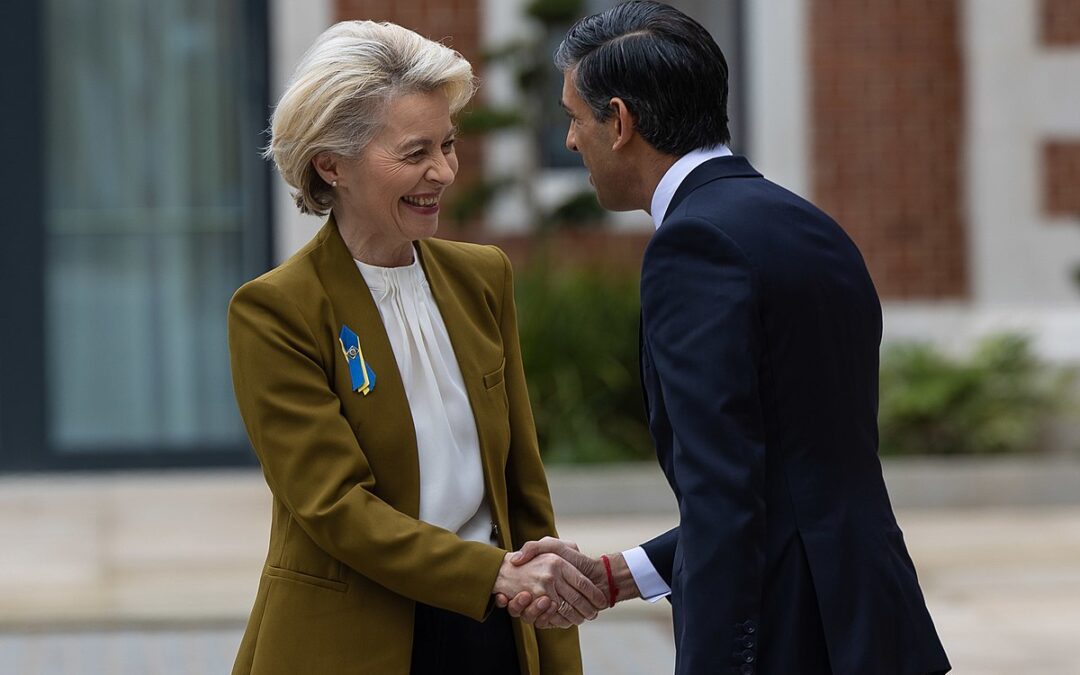
The UK government bowed to pressure, with Prime Minister Rishi Sunak and European Commission President Ursula von der Leyen putting together new trade arrangements - the 'Windsor Framework' - which will reduce customs checks on goods coming into the North from Great Britain. It is a compromise between the two parties and the European Union has undoubtedly conceded to the UK in relation to several points. But it's a good deal for the North, all things considered.

Significant progress but…

DUP leader Jeffrey Donaldson said the Windsor Framework was a significant step forward, but they still had key concerns about the Framework, particularly around the continued application of EU laws. There is still a lot of work to be done, according to Donaldson. But Rishi Sunak said the UK government has no plans to renegotiate the Framework.

In the first vote in parliament on the 'Stormont Brake', a central piece of the Framework, there were 515 members in favor and 29 (including 8 DUP members) against the Brake, and so it was passed.

A clash between the DUP and Sunak is likely to be inevitable, but Sunak currently has the upper hand on the Framework. But what will Jeffrey Donaldson do now?

Choices?

Jeffrey Donaldson and the DUP are now in a dilemma over what to do. It now feels very unlikely that the DUP will succeed in forcing their will on the UK government further with respect to the Framework. At the same time, Northerners are growing impatient since they still don’t have their own government in place, and support for the DUP may well dwindle if its boycott of Stormont continues. Without a doubt, the DUP is in a bit of trouble now.

In my view, it is now time for the DUP to swallow their pride and do the right thing and accept their seats in Stormont. Ultimately, they got a new deal regarding the Protocol, and it's a shame they're not happy with that. Who knows what the end of this story might be, but I have to admit that I am not overly optimistic about it.

.

.

.

.

.

.

.