
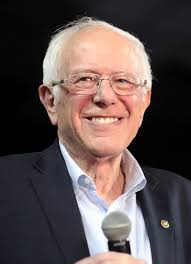
Who Is Bernie Sanders?
Lessons in Equality from America’s Progressive Senator
Bernie Sanders is an independent senator from the state of Vermont, and one of the most influential figures in progressive American politics — and, indeed, across the world. He is often described as a democratic socialist. He was born in Brooklyn, New York, in 1941, into a Jewish family. His father — an immigrant from Poland — came in search of a better life. Sanders has spent more than forty years in politics — from his days as mayor of Burlington to his long service in the U.S. Senate.
He was twice a serious contender for the Democratic Party’s presidential nomination (2016 and 2020), and he transformed America’s political conversation by focusing on economic inequality, corporate power, and social rights. He believes that healthcare, education, housing, and a living wage are basic human rights. His message has always been clear: politics should serve all people, not only the wealthy.
The Politics of Economic Inequality
Throughout his political life, Bernie Sanders has defended one principle, tirelessly and without compromise.
“We have a political system controlled by millionaires and billionaires. Our duty is to build an economy and a government that work for ordinary people, not just the wealthy few.”
He believes that the same trends can be seen across the world — from Russia to China, from Hungary to India. Ordinary citizens must break that grip and return political power to the people. His message is simple but strong: the people of Ireland, Europe, and America alike can challenge how wealth and power are distributed.
How the Voice of the Working Class Was Lost
According to Sanders, the Democratic Party traditionally defended the working class in the United States. But in the 1970s, it turned toward the wealthy and the big corporations. Factories closed, union power declined, and working people were left without protection.
“People — and especially working people — didn’t vote for Donald Trump because they wanted billionaires to get richer,” he says. “They voted for him because he said the system was broken — and that he’d do something about it.”
Sanders’s solution is to place working people once again at the heart of politics: good jobs, fair pay, affordable housing, and governance that serves that public.
Universal Rights
At the heart of Sanders’s views lies a firm belief that certain rights belong to everyone, regardless of status or wealth. Among them:
– Healthcare as a human right through a comprehensive public system
– Free third-level education for all
– Affordable housing for everyone
– A Green New Deal linking climate action with job creation
When told that his goals are too ambitious — especially on healthcare — he replies: “If every other advanced country in the world can provide healthcare for its citizens, why can’t we?”
Tax and Power
According to Sanders, the wealthy and large corporations should pay much higher taxes than they do at present. “They can still live quite comfortably,” he says wryly, “even if they pay their taxes.”
For him, this is both a political and an economic issue — one of power and influence. If the wealthy and corporations can shape elections, then what we have is no longer democracy, but oligarchy.
Climate Change
Sanders sees the climate crisis as part of the same unjust system. The wealthy pursue profit regardless of the damage done to the environment. That is why he supports a Green New Deal that connects carbon reduction with the creation of secure and sustainable jobs.
That idea can also be seen in Europe, but Sanders believes we must act on it with greater urgency — as a moral call rather than merely a policy. Countries seeking to move away from fossil fuel industries could learn from his approach: social justice must be at the heart of climate transition.
Patriotism Without Nationalism
Though opposed to American imperialism, Sanders speaks with genuine love for his own country. He is the son of a Jewish immigrant who came to the United States penniless and seized the opportunity to build a new life for his family.
In his speeches, Sanders often quotes Lincoln at Gettysburg, paying tribute to the soldiers who fell in the Union army during the Civil War: “…to ensure that they shall not have died in vain, and that this nation shall have a new birth of freedom — and that government of the people, by the people, for the people, shall not perish from the earth.”
For Sanders, that is true patriotism: balance, fairness, and the chance for everyone to take part in their own government.
Ireland and the Broader Lesson
Ireland’s open economy has grown impressively, yet still struggles with a housing crisis, healthcare pressures, and the high cost of living. It is worth reflecting on a few important questions:
– Wealth and welfare: What benefit does the ordinary citizen gain from economic growth?
– Tax and fairness: Can we find a balance between foreign investment and tax justice?
– Public participation: Can more voices from the working population be brought into political decision-making?
Ireland has a strong tradition of solidarity and compassion, from trade union movements to rural communities. Sanders would say that on such foundations a stable democracy for the future can be built.
Conclusion
At the end of the day, this is the critical question: who truly holds power — the people as a whole, or the wealthy few? From Washington to Moscow, from Dublin to Budapest, the struggle between democracy and oligarchy is the greatest challenge of our time.
According to Sanders, along with democratic government, we must build economic systems that provide dignity, security, and fairness for everyone. “It isn’t a radical idea,” he says calmly, “to demand that everyone be able to live with dignity. It’s simple common sense.”





 English
  Gaeilge