
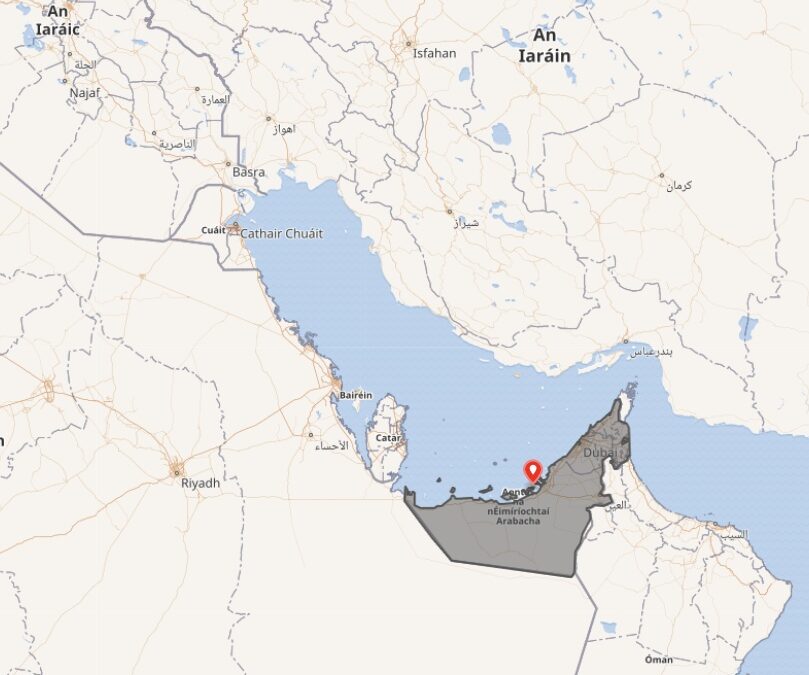
Trapped in the Middle of a War – My Nephew’s Report from Dubai
The situation for Irish citizens living and working in the Middle East, particularly in the UAE, has become far more stressful since the United States and Israel began the war against Iran. Although Iran says it is targeting military bases in the Arab Gulf states, it has been reported that hotels and other civilian sites in the UAE have also been hit. As a result, life has changed dramatically in Dubai, where my nephew and niece have lived with their families for years.
Before the war began, Dubai was widely regarded as one of the safest and most prosperous cities in the world. Now, Iran is launching missiles and drones toward the UAE almost daily. The UAE’s air defenses intercept most of them, but they do not manage to stop them all. This offers only a small amount of comfort to families living there, especially those with young children.
I asked my nephew and niece to describe daily life in Dubai at the moment. I am publishing my nephew’s report today, as it illustrates clearly what life is like there right now:
“Life in Dubai has changed dramatically over the past two weeks. There is a sense of uncertainty and unpredictability, and at times it feels dangerous. There has been a clear shift in day-to-day life.
Sometimes when you are outdoors, you hear missiles overhead or see them crossing the sky, with some being intercepted right in front of you. The sound of those explosions is unlike anything I have ever heard before. The shockwave travels through your entire body, and it is impossible to ignore.
We receive official government alert messages almost every day, instructing us to take shelter when waves of missiles are coming our way. Recently, other messages also arrive an hour or two later confirming that the situation is under control again. At night especially, people are much more alert, checking their phones, watching for alerts, and listening for unusual sounds. This creates a tension that is now part of everyday life. I’ve noticed one thing: every time I go out, I look up at the sky just to be sure. That has become an instinctive habit now—something that would have been quite strange a short time ago.
For families, especially those with young children, this is one of the most difficult aspects. We have two small children, and the sound of those explosions is very frightening for them. They are certainly afraid and don't understand what is happening, so we try to downplay the situation and reassure them, telling them it is a normal occurrence—like police cars or ambulances passing by.
Travel has also been heavily affected. Due to the closure of airspace, flights were not operating for certain periods. On some days, the airspace was reopened for a few hours to allow people who were on holiday here to return home to places like Ireland and England, but many flights were still cancelled. Once, when flights resumed for a short while, civilian aircraft appeared to be flying side-by-side with military jets. I had never seen anything like it before, and it was a surreal experience.
In everyday life, there is much less traffic on the roads, though most people are still trying to carry on with their routines and daily duties. It must be said that the response systems are working very effectively. Despite this, there are still cases where drones or debris have caused damage to buildings.
Overall, people are getting used to the situation as best they can, but the atmosphere is very different now. There is an understanding that things could change suddenly. Daily life continues, but everyone is more alert and more cautious than usual.”
Next week, I will continue this series with a report from my niece in Dubai.




 English
  Gaeilge