
Caught in the middle of a War!
Saturday, February 28, I felt the Iranian war for the first time in a text message from my sister.
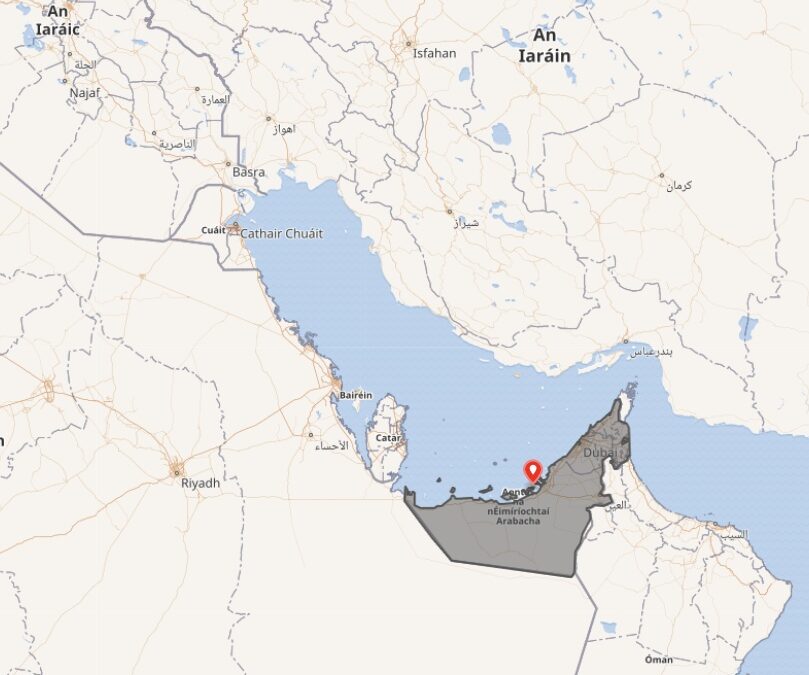
“There are explosions in Dubai,” she wrote. “C. is terrified,” she added, referring to her daughter.
Another message arrived shortly after. “A missile hit The Palm Hotel and Resort in Dubai. It went up in flames.”
Then she sent me a screenshot of an alert her son and daughter had received on their phones: “Due to the current situation and the threat of missiles, take shelter immediately in the nearest secure building, and stay away from windows, doors, and open areas. Await further instructions.”
I called my sister immediately. She was anxious about her son, her daughter, and her three grandchildren in Dubai. I tried to reassure her. We agreed that the threat was "low."
But “low threat” changes its meaning when it concerns your own family. When danger involves strangers, it seems like a measured thing. When it involves the people you love, it no longer feels low. it is a threat, and it feels very close.
By Sunday, March 1, the reports out of Dubai were clearer. Reuters reported damage in Dubai, including at the international airport, Palm Jumeirah, and the Burj Al Arab, after the first wave of Iranian retaliation spread across the Gulf. That same day, another message came from my sister.
“They hit the airport and a missile was intercepted near where C. lives. C.’s nerves are shattered.”
Some of the first messages came in the chaos that accompanies a live attack. That is how it is in those moments. It is the "fog of war." Rumors, fear, and half-facts reach us in a single blur. But the overarching truth was clear enough. Iran was demonstrating that it could strike across the Gulf, terrorize the Arab Gulf states, and cause major disruption to life and the economy. It wasn't just a military message; it had a strong psychological element too. No one in the region was completely safe.
Since the war began on February 28, the United Arab Emirates has attempted to stay out of a wider regional conflict, even as they are forced to defend themselves against repeated attacks. That prudence is important, as it helps keep matters under control rather than expanding them across the region. Despite this, however, much of the danger is beyond their control. On March 9, the UAE envoy to the United Nations in Geneva called for de-escalation and a return to negotiations, while simultaneously stating that the UAE was ready to protect its critical infrastructure.
It is also clear that this war is far from over. Ali Khamenei was killed in a US-Israeli airstrike on Iran on February 28. On Sunday, March 8, Iranian state media reported that his son, Mojtaba Khamenei, had been chosen as the new Supreme Leader. Reuters reported that this appointment indicates continuity and confrontation rather than compromise.
No one can say for sure how this war will proceed, nor what it will mean for families in the UAE in the coming weeks. We hope, of course, that the attacks on the Gulf states will stop soon.
On Monday, March 9, the UAE stated that its air defense network has been under continuous attack since hostilities began on February 28. According to official figures, 253 ballistic missiles from Iran were detected. 233 of them were destroyed, 18 fell into the sea, and 2 landed on the ground. The UAE also said that 1,440 drones were detected, 1,359 of which were intercepted and 81 of which landed within the country. Eight cruise missiles were also detected and destroyed. Despite this, 4 people were killed and 117 others were slightly injured. Those killed were citizens of Pakistan, Nepal, and Bangladesh. Among the injured were residents from more than twenty countries. To our knowledge, no Irish people have been injured so far. The UAE Ministry of Defence said its forces were fully prepared to deal with any further threat.
The UAE's air defense relies heavily on American-made THAAD and Patriot systems, supported by other systems to deal with lower-flying missiles and drones. The UAE says they still have sufficient interceptors.
I recently received a detailed account from my nephew, who has lived in Dubai for several years, about life as it is now with the UAE under attack from Iran. It is clear from his words that ordinary life itself has changed. People are watching their phones, listening for alerts, and even looking up into the sky as a new habit. Due to space constraints, I cannot publish his full account here, but I will return to it in a separate article.
For people far away, war is often a headline, or a map, or a line of official numbers. But for families whose own people are under threat from missiles and drones, it is something else. It becomes personal. It becomes immediate. It becomes the thing you think about when the phone lights up in the middle of the night.





 English
  Gaeilge