Learn with the article
Mr Row Row
More than ten years before the World Cup, Ole Frøystad was at a football match in Rosenborg Stadium in Norway.
One section of the crowd shouted:
“Ro!”
Another answered:
“Sen!”
Then the rest replied:
“Borg!”
The echo filled the stadium.
It left a lasting impression on Ole.
He was a primary school teacher from Leinøy, a small island community on Norway's west coast. Whenever Norway's national team played, he was there among the supporters, singing until his voice gave out.
Norway had not qualified for a World Cup since 1998. As the team edged closer to the 2026 tournament, one question refused to leave his mind.
How could Norwegian supporters create something nobody could ignore?
Iceland already had its Viking Clap.
Norway needed something of its own.
He thought about it every day.
Walking through town, he listened to music and scribbled down ideas. At home he wrote rhymes and verses. He recorded himself singing different ideas so he would not forget them.
One idea followed another.
Then disappeared.
Then the first syllable of Rosenborg came back to him.
Ro.
That was it.
Rowing.
He thought of Iceland's Viking Clap, slow at first, then faster and faster.
Suddenly he saw it.
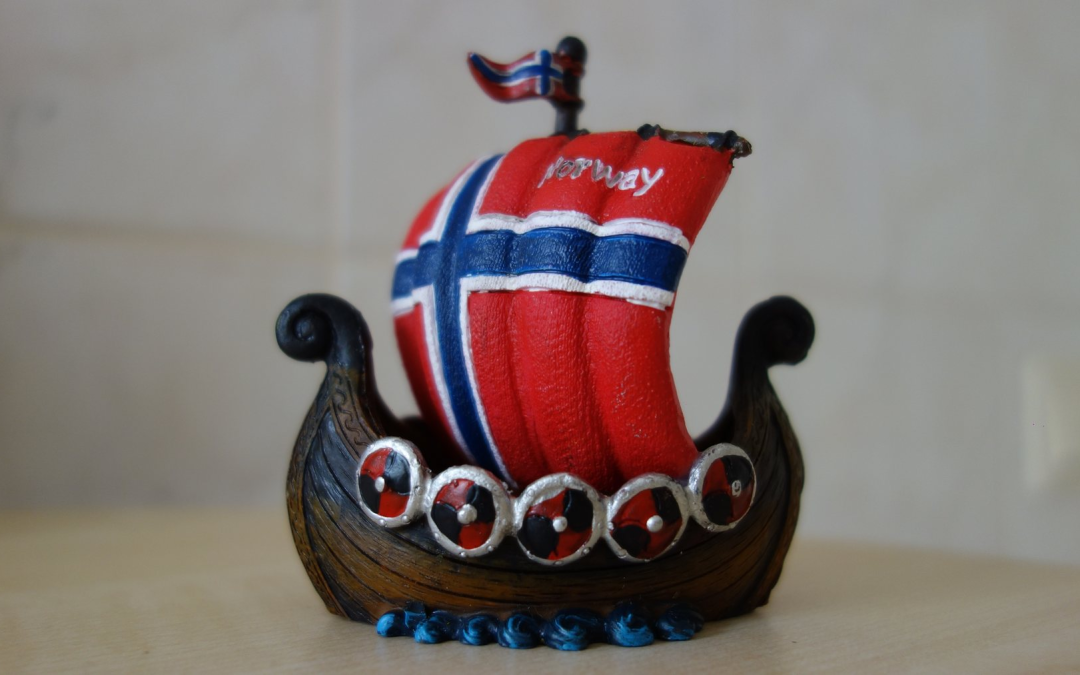
A Viking ship.
Thousands of oars.
An entire stand rowing as one.
“This is it,” he said to himself. “This is what I've been looking for.”
Together with Oljeberget, the Norwegian national supporters' group, he put the idea to the test.
Sit down.
Reach forward.
Pull back.
Again.
Two beats of the drum.
“Ro.”
At first, very few people joined in.
But Ole refused to give up.
He kept at it.
When Norway qualified for the 2026 World Cup, the rowing qualified with them.
It crossed the Atlantic.
People rowed in stadiums and bars. On railway platforms. On escalators. Beneath the lights of Times Square.
Ole stood at the front of the Norwegian supporters wearing a Viking helmet.
“Ro.”
Thousands answered.
After every victory, the players sat down in front of the supporters and rowed with them.
Ole watched an idea that had once lived only in his own mind move through thousands of bodies.
Mr No Row
At one match, a television camera zoomed in on Emil Anners Lappen.
The supporters around him were ready.
Thousands sat shoulder to shoulder.
They leaned forward.
Reached out.
Pulled back.
Again.
Everyone joined in.
Except Emil.
He sat upright.
His arms were folded across his chest.
He stared straight ahead.
The camera stayed with him for only a few seconds.
That was enough.
By breakfast the following morning, millions of people knew the face of the man who had remained seated, motionless in the middle of a sea of movement.
The new tradition reminded Emil of Iceland's Viking Clap.
He did not think it was original.
He said it was wrong to claim that the Vikings had rowed across the Atlantic when, in reality, they had crossed it under sail.
More than anything else, he thought the whole thing was ridiculous.
When the drum sounded, his arms remained folded.
“I have to stand up for myself,” he said.
In this case, standing up meant remaining seated.
At the same time, Ole appeared on American television, happily showing the presenters how to row.
Sit down.
Reach forward.
Pull back.
Emil appeared on television too.
“I don't care what they win,” he said. “I won't row.”
The tradition spread.
Members of parliament rowed.
The royal family rowed.
Air force pilots rowed from their seats.
Residents in nursing homes rowed from their wheelchairs.
One ordinary man became famous by setting a crowd in motion.
Another became famous by refusing to move.
Which one are you?


 English
  Gaeilge