
Learn with the article
It was June 2008 and Ireland was voting on the Lisbon Treaty.
During political campaigns in those days, politicians came to the door. They shook your hand and asked for your vote.
But this time nobody knocked on Dad’s door.
Instead, they were on the internet.
Dad wrote about it in I mBéal an Phobail at the time.
“There is no doubt in the world,” he wrote, “that this will turn the politics of this country completely upside down.”
At almost exactly the same time, far away in the United States, Barack Obama was campaigning for the presidency.
His supporters were watching campaign posts and videos online. They were finding one another on Facebook and other social networks. Organising. Volunteering. Donating money.
All online.
By June 2008, 46 per cent of American adults had already used the internet, email or text messages to get campaign news, share their views or encourage other people to take part.
Eight years later, Donald Trump was running for president.
Twitter gave him a way to speak directly to millions of people, without a newspaper editor or television interviewer standing between them.
Then came Cambridge Analytica.
The company obtained personal information from tens of millions of Facebook users without their knowledge and used it to build voter profiles and target political messages at them.
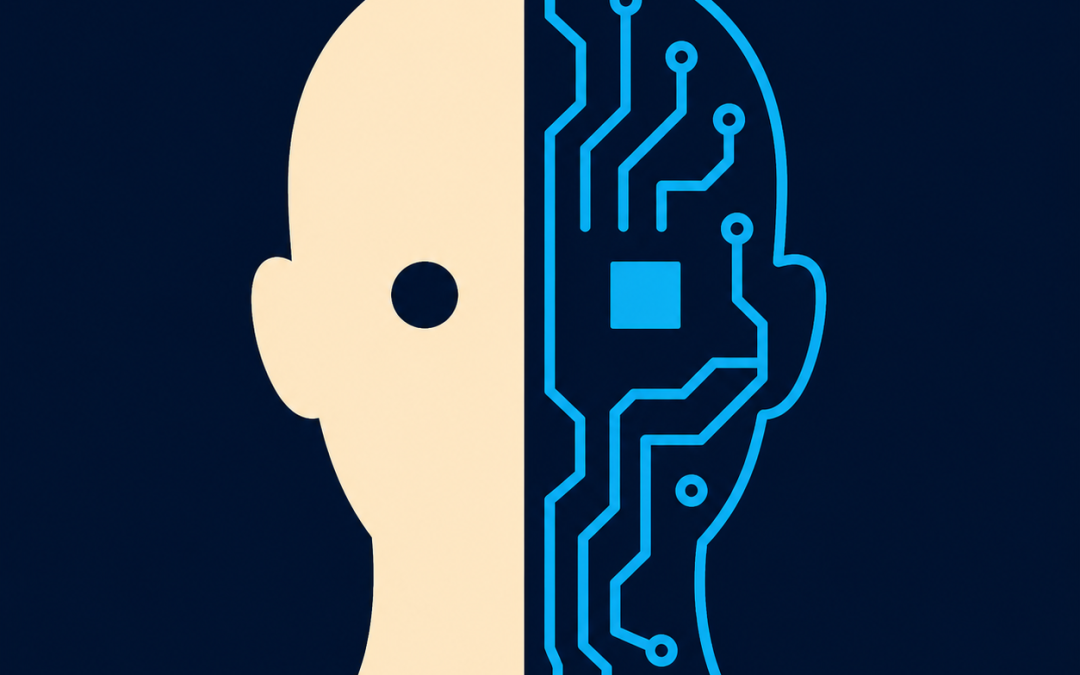
In 2026, another technological revolution is underway.
Artificial intelligence.
Geoffrey Hinton spent decades working on artificial neural networks.
Almost everyone else thought they were a ridiculous subject for research.
Hinton kept going.
His work helped lay the foundations for modern artificial intelligence. In 2024, he shared the Nobel Prize in Physics for fundamental discoveries and inventions that enabled machine learning with artificial neural networks.
But by then Hinton had already left Google.
When he told Google in 2023 that he was leaving, the company offered to let him stay and work on AI safety.
He left anyway.
Then he spoke out about the dangers.
He began warning about mass unemployment.
Political manipulation.
And machines that could become more intelligent than the people who created them.
“You ain’t seen nothing yet,” he told state lawmakers in Chicago this summer.
Then there is Dario Amodei.
Amodei is the chief executive and co-founder of Anthropic, the company behind Claude, one of the world’s most capable artificial intelligence systems.
He talks about what AI might do for science and medicine.
He also has a striking description of where the technology may be heading.
“A country full of geniuses in a datacenter.”
Amodei believes systems approaching that level could emerge within the next few years.
And he is asking governments to prepare.
Earlier this year, Anthropic was in a dispute with the US government.
The company was willing to make its AI systems available for national security work.
But it drew two red lines.
No mass domestic surveillance.
No fully autonomous weapons.
Anthropic said today’s frontier AI systems were not reliable enough to be used in fully autonomous weapons.
It also refused to allow its technology to be used for mass domestic surveillance.
The company did not give way under pressure.
Hinton left Google and spoke out.
Amodei remains in charge of Anthropic, directing the company’s work on AI and drawing red lines.




 English
  Gaeilge