Learn with the article
It is almost one in the morning, and Dr Lucia Strangman is giving warm milk to a dying woman.
Mary has been given morphine. Her pulse is faint. There is little the doctor can do beyond trying to ease her suffering. Five days later, another doctor adds three words to her entry in the casebook, where doctors record each patient’s condition, treatment and progress.
“Died this morning.”
More than a century later, a woman sits reading that account in a Cork archive. She has underlined Mary’s name twice. She is so absorbed that she fails to notice someone approaching to collect the book. The archive is closing.
Then the archivist sees her notes. If she intends to write about these patients, she must change their names. Every one of them.
She agrees. Outside, she sits in her car with the pages spread against the steering wheel. The promise already feels like a betrayal.
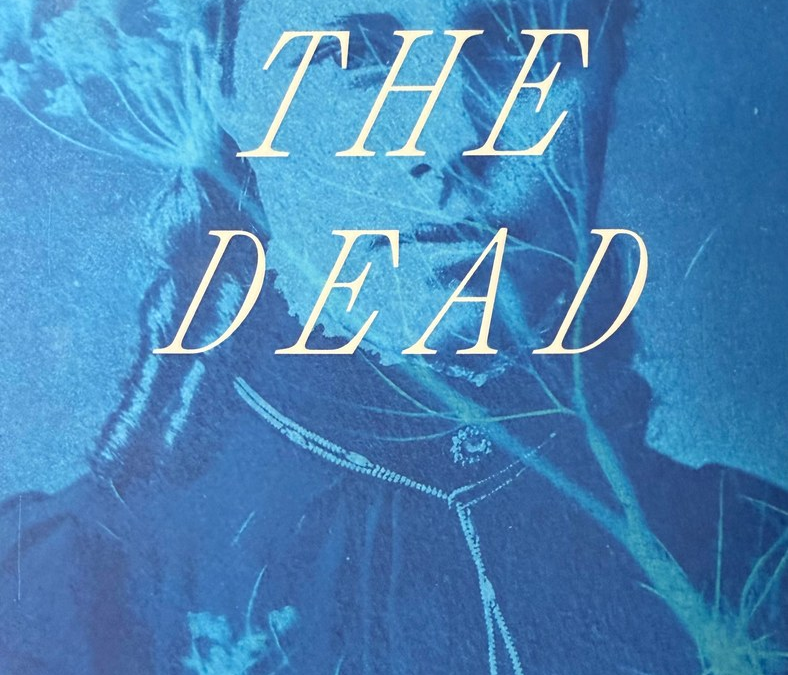
In Said the Dead, Doireann Ní Ghríofa combines archival history, biography and autobiographical elements with imagined scenes and conversations. The book follows the lives she uncovers and the woman searching for them, known as the Reader.
The Reader’s life resembles the author’s: children, laundry, writing, a home in Cork. Above the city stands the old mental hospital, partly converted into apartments. Its chapel is for sale. Her own history of mental distress makes her wonder whether, in another era, she might have been confined within those walls.
She arranges a viewing.
While an estate agent describes the possibilities for turning the chapel into a home, she searches for traces of what was there before. Outside, she gathers fragments of stained glass. On her way back to the car, she trips and drops a panel. The glass breaks, leaving a piece of lead shaped like the letter L.
She takes it as a sign.
Her search draws her into the archives, where the hospital’s casebooks survive. She finds names in the casebooks and follows them. A photograph gives a face to someone she has seen only in her imagination. A few words in a medical record raise questions that send her looking elsewhere.
This investigation gives the book its forward movement. We follow her as she finds clues and encounters obstacles. The question of what happened to a patient or doctor can hold our attention through pages of research. Ní Ghríofa makes finding a document feel like an event.
Lucia Strangman, who arrives at the asylum in 1896, provides a continuing thread through the patients’ stories. We gradually come to know her through her work, family relationships and professional ambitions. In the wards, her competence and compassion are not always enough to bring her patients relief.
The other doctors also resist easy judgment. Lucia is disappointed by Dr Scanlan’s brief casebook entries. Again and again, he writes “No change.” Yet she has watched him care for patients through seizures, mania and sudden outbreaks of violence. In his spare time, he also plays piano for those too ill to leave their beds. The notes focus on the patients’ condition and progress. By themselves, they tell us little about the doctors who wrote them.
The doctors sometimes record the patients’ own words. One woman insists that her enemies are preventing her release. Another speaks of the joy she finds in life. Ní Ghríofa builds on these fragments, using research and imagination to portray the patients’ personalities and their lives inside and outside the asylum.
The archive wants to protect the patients’ privacy by concealing their names. The Reader wants the women themselves to be remembered. That is why the promise troubles her: as she brings their stories to light, she must leave out their real names.
Ní Ghríofa is also a poet, and her poetic voice is often evident in her prose. In the stripped chapel, she writes: “No candle, no statue, no altar, no pew.” The repetition gives rhythm to the losses. Elsewhere, flowers grow in the raised bucket of an abandoned digger. Her attention moves easily between a broad history and a small, telling detail.
The writing can also be physically unsettling. Illness, injury and the examination of a body are brought close. Ní Ghríofa’s prose is beautiful even when what she describes is painful.
Ní Ghríofa moves between the archive and the lives recorded there. One moment, the Reader is studying a doctor’s notes. The next, we are in the ward, watching an imagined scene drawn from those notes. The spare language of the records sits beside prose full of movement, sound and physical sensation.
These shifts between past and present give the book the atmosphere of a ghost story. The dead occupy the Reader’s thoughts, but she also enters their world as a ghostly visitor. She stands in their rooms, follows their movements and sometimes seems close enough to disturb them. They haunt one another.
The Reader herself is also being observed.
Short passages against the right-hand edge of the page assess her behaviour in clinical terms. We understand her excitement at finding the stained glass. The accompanying notes, however, describe collected rubbish and possible delusions.
I wanted to know more about the Reader herself. In A Ghost in the Throat, Ní Ghríofa’s search for an eighteenth-century poet is closely bound up with her own life as a mother. Here, we learn a great deal about Lucia and the women she treats, but receive fewer glimpses of the Reader’s own history. Her distress helps us understand her connection to the patients, and we see her research competing with the demands of family life. Yet questions remain about what these discoveries meant to her personally. What did she recognise of herself in the notes? How did the experience change her?
The achievement of Said the Dead lies in the way Ní Ghríofa brings the people in the casebooks to life. Through her research and imagination, we come to know the women, the lives they led and the doctors who tried to help them. The more we learn about them, the more we understand how much the brief medical notes could not tell us.
In the casebook, Mary’s death is recorded in three words. Ní Ghríofa enables us to imagine the living, breathing woman behind those words.




 English
 Gaeilge