Léirmheas Scannáin: Oppenheimer!

Film Review: Oppenheimer!

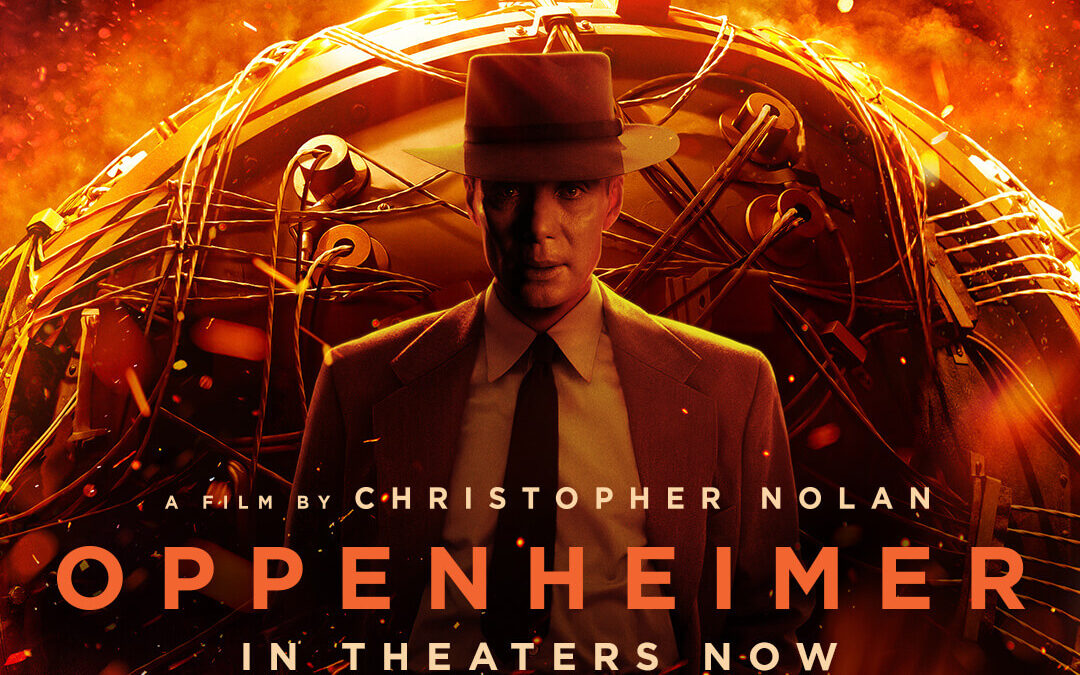
I thought I would really like the movie 'Oppenheimer'. A rich source of talent participated in the film: the famous director and writer Christopher Nolan, the usual ensemble of actors – including Cillian Murphy, Emily Blunt, Matt Damon and Robert Downey Jr. 'Oppenheimer' was one of the films that brought in the most money last year - around a billion dollars, which put this film in third place, behind 'Barbie' and 'The Super Mario Bros. Movie'. The film is based on a book that Nolan read about Robert J. Oppenheimer, called 'American Prometheus'. Nolan studied Oppenheimer in depth and was deeply moved by his story.

“What I wanted to do was to put the audience into the mind and experience of the person who sat at the center of the biggest transition in history. J. Robert Oppenheimer is the most important person who ever lived. He shaped the world we live in, be it good or bad,” Nolan said, explaining what he had in mind in the creative process.

Undoubtedly, Oppenheimer was an important person, who was the director of the Los Alamos Laboratory during the development of the atomic bomb from 1943-1945, and is called "the father of the atomic bomb". Undoubtedly, as Oppenheimer himself said,, there was 'blood on his hands' when atomic bombs were dropped on Hiroshima and Nagasaki in Japan.

The Movie

At the beginning of the film, you see the title: "Prometheus stole from the gods and gave it to mankind. As a result, he was tied to a rock and tortured for eternity." This passage was taken from Greek mythology, and is a premonition of what would happen in Japan, as a consequence of the work done by Oppenheimer and his team in Los Alamos.

The advertising suggests that it is a film about Oppenheimer and his role in the development of the atomic bomb at Los Alamos. Although we get glimpses of that story from time to time – mainly when they detonate the first atomic bomb in New Mexico in 1945, the emphasis is not strongly on the story of the bomb. Los Alamos is the backdrop in which the film's three main stories are told: Oppenheimer's romantic life, the attempts of Oppenheimer's enemies to revoke his security clearance after the war, and the United States Congressional hearings about Lewis Strauss's candidacy for the post of presidential joint secretary, and the impact that the connection between Strauss and Oppenheimer played on that process. I have to say that I was lured in expecting one thing but was given another, which I was not very interested in.

Because there were three stories told in the film, and they were told to us like a jigsaw puzzle, in terms of story, place and time, I suffered a sort of whiplash, and so I was sometimes confused about what was going on. Tempo and comprehensibility were consequently also lost. In my opinion, it would be much better to tell one story – the story of Oppenheimer and the development of the atomic bomb, and tell it in chronological order. Half the time, I had no clue what year it was, or who people were either. The film featured famous scientists whose identity we didn't know until later.

Conclusion

In my opinion, 'Oppenheimer' is not a great film but there is the occasional gem. It is a movie for movie makers, but it fails with the ordinary person. In addition to everything mentioned above, there was not enough respect or attention given to the thousands of innocent civilians who were vaporized by the bombs. Of course, many in Japan are still suffering from those bombs. All of those, both living and dead, are a big part of the story. Any film purporting to be about Oppenheimer, which contains only a passing reference to the poor people who were subjected to terrible, deadly violence, is a film short on truth.
.

.

.

Boeing!

Boeing!

We were excited and I booked everything for our holiday, including the flights. This year, my wife and I made the decision to go to Hawaii to celebrate our birthdays. We love the big island as we have had great holidays there a few times before. The Island of Hawaii is not as crowded with people as the other islands in the State. Although we also like the island of Maui very much, unfortunately there are big problems to solve after the big fire that destroyed Lahaina, the historic Town of that island. Anyway, the ink wasn't even dry on our tickets when a Boeing 737 Max 9 plane had an accident.

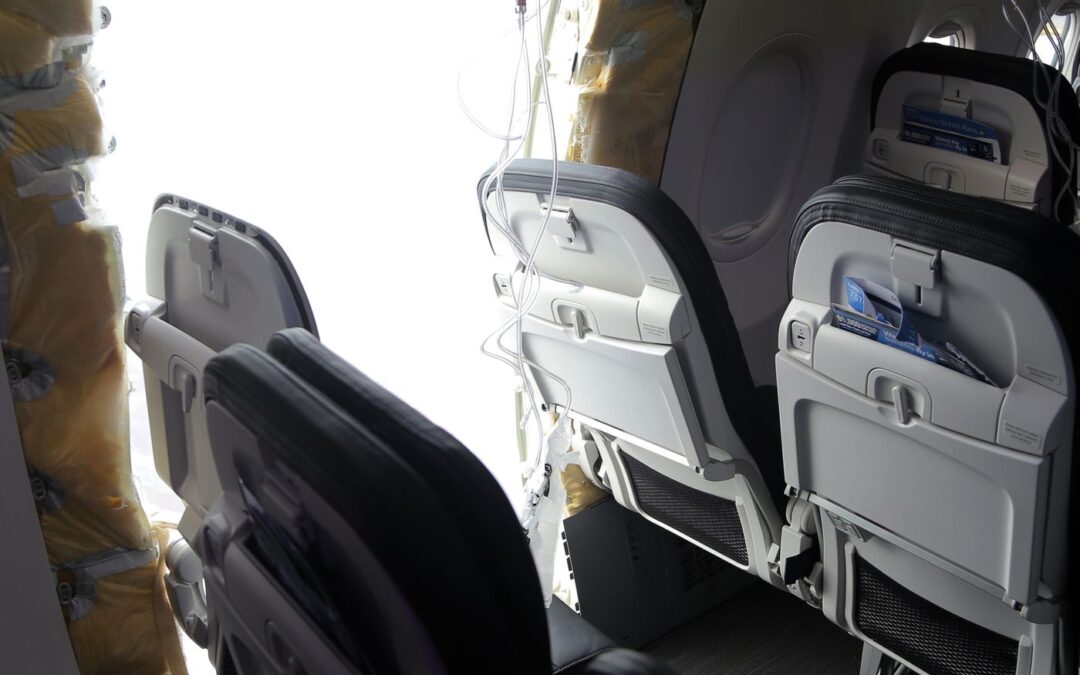
It was a new plane that was traveling from Portland Oregon to Los Angeles California. The plane was taking off and at 5,000 meters when a piece of the fuselage tore off leaving a hole in the passenger cabin. There was a great draft of air from the cabin due to the air pressure being much greater inside than outside the plane. Fortunately, there were no passengers sitting near the hole, as in that case, there was a high chance that they would have been lost through the hole. The plane had not reached its cruising altitude - (usually at least 10,000 meters) - or things would have been much worse with the air pressure outside only half the amount at 10,000 meters as it is at 5,000 meters. All in all it is a miracle that not even one person was lost in the accident. The crew of the plane were great in dealing with the emergency and the pilot brought the aircraft back to the ground perfectly.

What the hell happened to the aircraft?

To tell the truth, this is not the first time the 737 MAX has been in the news. There were two plane crashes with the 737 MAX 8 in 2018 and 2019. No one survived those crashes and 648 souls were lost. At first Boeing said that pilot error was the cause of the accidents but after investigations by the governments of Ethiopia, France and the United States, it was very clear that there was a fundamental problem with the plane itself. Boeing was well aware of that problem and instead of solving it, they worked around it by using new software, but they didn't inform their customers - the airlines - about it at all. Unfortunately, a new problem was introduced with that software, which relied on input from only one angle-of-attack sensor - despite having two. When that one sensor failed, the software thought the plane was at the stall point and forced the plane nose down. The pilots did not know what was going on and were unable to correct matters in time to avoid the accidents. After the accidents, all Boeing MAX 8 type airplanes were kept on the ground until the end of 2020 when a long recertification process was completed.

Due to the major deficiencies in Boeing from the management point of view, Dennis Muilenburg, chief executive at the time, was fired. David Calhoun was then appointed chief executive of Boeing, a man who is still in the role. Boeing's board of directors said at the time that Calhoun was appointed to implement major changes in the safety of its products and services.

Step back

The latest crash is a devastating blow for Calhoun and Boeing. Boeing and its suppliers still have many difficult questions to answer regarding the manufacturing process and in particular about the tension of the bolts that failed to hold the panel in place as part of the plane. There is a good chance that Calhoun will be scapegoated and resign during the investigation. In my view, Boeing's pattern of bad behavior will continue, without significant changes in the oversight process.

Boeing is a profit making organization and without strong oversight from the regulatory authorities, especially the Federal Aviation Authority (FAA) in the United States and the European Aviation Safety Agency (EASA) in the EU, Boeing will put its own profit before the safety of passengers! I hope that these same authorities will be closely monitoring Boeing in relation to the manufacturing of their aircraft from now on. If that doesn't happen, Boeing and their aircraft will be back in the news before long.

We were very lucky with our own flight, because United changed the type of aircraft from the 737 Max 9 to an Airbus 320. We were very happy with that, because this amazing aircraft has a high standard of safety! From now on, we will be paying more attention to the type of aircraft we travel on and will avoid the Boeing 737 MAX, if possible!

.

.

.

.

.

.

Dírbheathaisnéis 7: Coláiste Chiaráin!

Autobiography 7: Kieran's College!


When I was in the sixth class in primary school, there was no question that I would attend Coláiste Chiaráin, the school where my father taught. I first had to take an entrance exam, which hundreds of other students were also taking. I was shocked when I found out that I got first place in the same exam. I was even more surprised to learn that I received a scholarship thanks to my results. I was offered a place as a residential student for the next five years, free of charge. What would I do?

Decision Time!

My parents were delighted and said that they would leave the decision regarding the scholarship to me. We discussed the pros and cons honestly together. I didn't have to take the offer, because I didn't live far from the school. Not only that, but I would have a lift door to door every day. Without a doubt, it would have been more comfortable and easier for me to stay at home, instead of the leap in the dark that would involve a new life as a residential student. There were strong arguments for staying at home. Was there any reason to enter college as a boarding student? I thought at the time that there were a few reasons. First of all, 'don't look a gift horse i the mouth'! I won this valuable prize, so why not take it? Secondly, I was an adventurer, and I was never one to turn down a challenge. In any case, if the whole thing fell apart me, wouldn’t I be able to return home again. I remembered my time away from home in the Gaeltacht, and I loved the independence it gave me while I was getting the education of a lifetime. It was not difficult for me to accept the offer. Although my parents were happy for me, they were probably also sad for themselves. After all, their first son was already growing up so fast, and now he would be leaving home on top of that. Perhaps my situation reminded my father of his own situation, when he himself was about fifteen years old and leaving home to attend the seminary school. I think he was of two minds about the time he spent in church-run institutions. Anyway, he accepted my decision without saying a negative word about it. My mother held her tongue too, I guess. Without a doubt, she was conflicted about it. On the one hand, she was sad that she would lose her son from home. But on the other hand, she was very proud of me, and she only wanted the best for me.

New School - New Identity

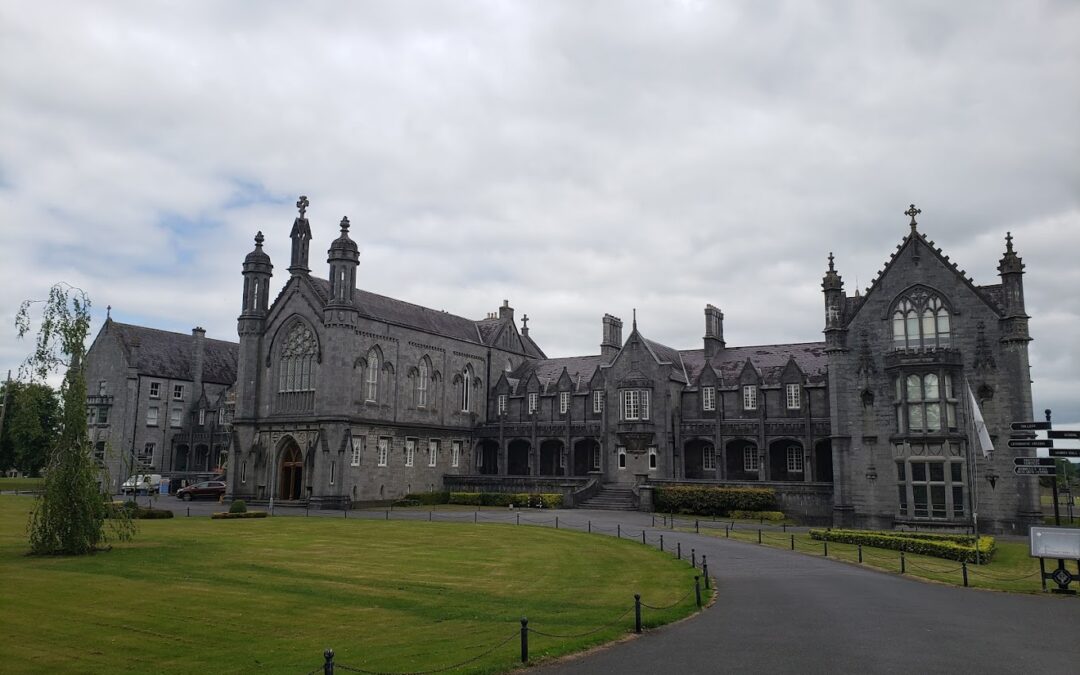
At the end of the summer, when the school holidays were coming to a close and all the preparation complete, I was very eager to start my new adventures. We collected my bits and pieces and drove to the College to register me as a boarding student. The College staff members welcomed us all and then our parents left. Roll was called and then we, the new residential students, were assigned beds. At first, I was not in a dormitory in the College itself, but outside in Desart Hall, on Lower New Street. But after a few days, I was put into a small dormitory at the College. There were only ten beds in St. Columba's dormitory, compared to a hundred beds or so in the other dormitories in the College. I had a bed and a small locker with a basin of water on top. There was an internal screen between the beds which gave us the least amount of privacy. It was cold in that dorm too, but my bed was just a sheet and thin blankets that were almost worn out. I would have a hard enough life here, in the absence of the physical comfort I had available at home. But things like that didn't bother me, and I continued regardless.

The Custom of Nicknames

It was a completely different life for us in boarding school, as we learned social skills so that we would be able to live in the new environment of the school. Everyone in the school, both teachers and students, was given a nickname, and often the same names were not too flattering. For example there was one student who had an intolerance to gluten. He could not eat white bread and had special brown bread. He was christened 'Brown Bread'. Anyone with the surname 'Ó Murchú' was called 'Spud'. In my case, when it was discovered that my father was a teacher at the school, and nicknamed Peadar, I was given the same nickname. I was quite happy with that, and with the new name and the new people and the new environment in the College, I lost one identity and took on a new identity. In that way, the new life of the school began for me.

.

.

.

.

.

.

.

.

Cairde iontacha trí Mhalartú Tithe!

Great friends through Home Exchange!

More than twelve years ago we first listed our home on the Intervac-homeexchange.com site. My wife's sister had been using that service for a long time, and she highly recommended it. It is a home exchange service and is used by people all over the world. Once, my wife Sinéad and I went to France on our holidays with her sister Máire and her children on a house exchange. We had a great house in the middle of the country with lots of space inside and out. Having a house was much better than a hotel because we could cook our meals, wash our clothes and settle in as if we were at home.

After our positive experience we signed up with Intervac shortly thereafter. It only took a little while until we received a message from people who were looking for a house in Ireland in exchange for their apartment on the island of Hawaii. We couldn't believe it and needless to say we didn't hesitate to take that great opportunity.

Carrickshock

The man's surname is Doody and he traced his family roots back to County Waterford. So he was looking for a house in the area. Carrickshock would be suitable for him to do his research. We made the deal and shared information about our homes together. We were not in Carrickshock ourselves when Louie and his wife went over and spent three weeks there. They had a great time and Louie was able to learn a lot about his Irish ancestors.

Hawaii

Later in the year we went to the big island of Hawaii for our vacation. Louie and Dolly were waiting for us in the apartment and made us feel very welcome. Each of them had a 'lei' for us as is customary in Hawaii. It is a flower wreath given to visitors to Hawaii as a welcome.

Louie and Dolly are gentle, kind people, with interesting backgrounds. Dolly is from Cleveland, Ohio and Louie is from Boston, Massachusetts. They met as students in the sixties at the University of Hawaii. Both received a scholarship that was available at the time from the American government to study the Far East. Dolly was studying Japanese culture and Louie was studying Chinese culture. A friendship grew between them because they had a lot in common, but after graduating with a master's degree, they went their separate ways. They both had great careers. After obtaining her doctorate, Dolly got a job for the State in the culture and arts center in Honolulu (on the island of Oahu), and after a long time she moved to Hilo (on the island of Hawaii) with a new job as director of the Lyman museum from 2001 until 2013. Dolly was (and still is) a very active member of the Hawaii Democratic Party for a long time. Louie was a middle school history and French teacher, a position he held for 30 years. When he retired, he and another teacher started writing books about Native Americans and especially about the Cahuilla tribe. The book focuses on the terrible experience of the Cahuilla people under the Spanish, Mexican and American authorities in the 19th century, when the number of Cahuillas decreased, most of whom were expelled from their homeland. That book received an award from the American historical association in recognition of the work done by the authors to preserve and interpret local history. When Louie's wife – who had severe rheumatoid arthritis – died some time after they retired, Louie had to make a new start.

New start

Louie contacted Dolly and before long moved to Hilo, Hawaii. After dating for a while, they got married, and have been together for about twenty years now. Louie began writing a historical fiction novel under a pseudonym, and published a few books. Dolly edited them. They loved to travel and when they were younger, they spent a lot of time traveling to Asia. Dolly spent time in Japan, and she speaks Japanese. Louie has spent time in China and Taiwan, and speaks Mandarin as well as French and Russian. It is not surprising, then, that they decided to travel together to Asia and the European Union. Dolly already had an apartment in Hawaii, and Dolly and Louie bought a house in Hilo when they got married. When they came across the Intervac-homeexchange.com site, they were instantly convinced that they could use the apartment to do a home exchange. And that's how we met them in the first place. We were in Hawaii for a week then, in 2012, and we went back in 2018 for another week.

Back on the Big Island!

We recently wanted to go to the big island again. We have been in contact with Dolly and Louie by email from time to time, and I sent them an email on the off chance that we can rent the apartment for two weeks. I got a reply from them saying that the apartment was not being rented, but that they had another idea and it might be easier to talk together on the phone. We phoned them and they said they wanted to make another visit to Ireland next year, although they weren't sure about it yet. Anyway, we swapped houses together with the understanding that they would be able to use our house next year. We had no problem with that arrangement. We spent a good time with Dolly and Louie, telling stories and relaxing together.

I would highly recommend Intervac or a similar service, and who knows but you might just make new friends too, like we did!

.

.

.

.

.

.

.

.

.

.

.

.

Cé hí an bhean sa phortráid?

Who is the woman in the portrait?


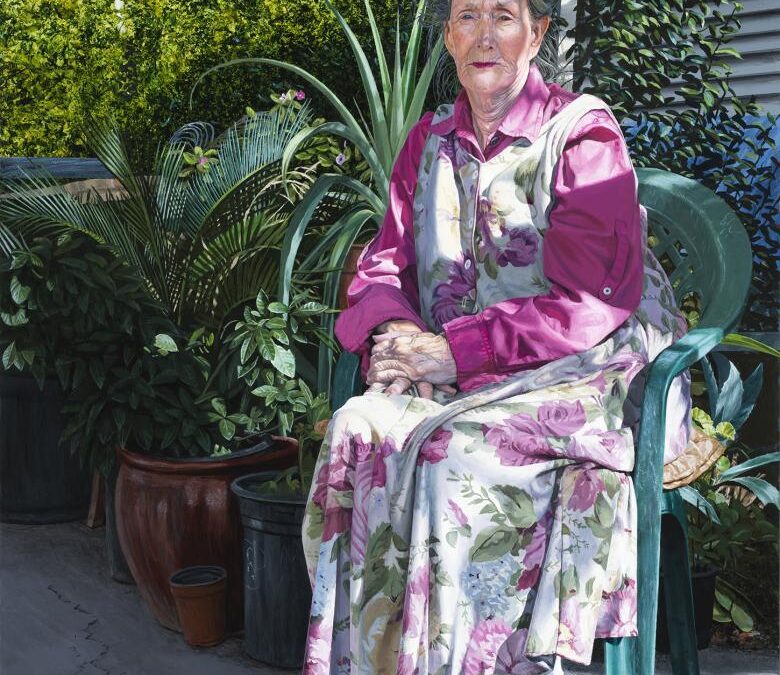
A couple of pictures hang side by side in the National Gallery of Ireland. Although everyone knows the person in one portrait - Sinéad O Connor, not many people know the person in the other portrait. But still, it could be argued that that woman had as strong an influence on the future of the country as Sinéad herself! In the portrait of the nondescript woman, she is sittiing in a plastic chair on the porch of her mobile home somewhere in the desert, perhaps in America. If you are of a certain age, it may well jog your memory when I tell you that that woman's name is Annie Murphy.

It could happen to a bishop!

When Annie Murphy came to Ireland from America in 1974, she hoped to start a new life and leave her previous life behind. Her marriage had ended in divorce and she was still grieving the loss of a child. Annie's father had a distant relationship with Bishop Eamonn Casey, and he wrote a letter to the bishop to help Annie when she arrived. Eamonn was an unusual bishop - a very serious man who liked to keep the spotlight on himself. He wanted the 'dulce vita', as they say in Italy. He was known for his love of fine wines and expensive meals. He loved to travel abroad. His heart was very much into fast cars and he was often seen racing around his diocese at high speed. He had the life of Riley, no doubt. There was only one thing missing. But now he would be able to fix that! Later, his critics would say that it was inevitable that illicit love was on the cards for this sinful bishop.

Anyway, after collecting Annie from the airport, the bishop gave her a room in his own house by the sea, called 'The Red Cliff House'. Annie was smitten with him, and vice versa. It's no wonder, then, that it wasn't long before he slipped into her room one night. The whole world knows what happened next! A secret relationship began between them. After a while, Annie expressed her concerns to Eamonn, questioning whether he would be able to continue the relationship. He answered her like this: "If God were here, he would approve of what I am doing." He told her she had to keep the relationship a secret, though.

But everything changed when she became pregnant. The fantasy world they were living came to an abrupt end. Eamonn suggested she give the child up for adoption, but Annie completely disagreed. In 1974, a year and a half after the beginning of their relationship, Annie moved back to the United States with her child, Peter. From then on for almost twenty years, the bishop sent money to Annie to support her son. But if the bishop thought that things would continue like that forever, he was wrong.

"Thrice you shall deny me"

In May 1988, Murphy's partner, Arthur Pennell, visited the bishop and informed him that Peter wanted to spend some time with him. The bishop gave him an answer that started a real upheaval, which would bring the bishop down in the short term, and would have a major long-term impact on the Catholic church in Ireland. This is what he said, according to Peter Murphy who heard it from Arthur himself: “Annie was a prostitute who would have sex with the whole town. And Peter is not my child.” That was the fatal blow and when Pennell returned to New York, Annie brought a case to court against the bishop, saying that she suffered because of the bishop's actions. When the case ended in 1990, Bishop Casey had to pay $98,000, but he did not admit that he was Peter's father. When the bishop went to New York to sign legal documents, he met Peter unexpectedly.

As Peter later recalled, it was a five-minute conversation and the bishop was "out the door". He felt that his father treated him as a "little clerical error in his life". From then on he decided that he would force his father to confess the truth publicly.

Annie Murphy then demanded that the bishop pay for Peter's education, who was attending university. The bishop did not give her a red penny, and Annie decided to make the story available to the public.

The bishop's version

Pennell and Murphy contacted the 'Irish Times' in 1992. The story about the bishop's son quickly spread across the front pages of the newspapers and shortly afterwards, the Vatican announced that Eamonn Casey had resigned as bishop of Galway, although he would remain in the priesthood. Soon after, Eamonn Casey left Ireland on an Aer Lingus flight to New York, where he issued a statement admitting that he was Peter Murphy's father and that he had used money from diocesan funds to support him. After six months, he was sent to Ecuador as a missionary priest for six and a half years. That was his "punishment". He then spent time in England, and was not allowed to return to Ireland until 2006.

Excellent response!

In 1993 a book was published, written by Annie Murphy and the author Peter de Rosa called: 'Forbidden Fruit: The True Story of My Secret Love Affair With Ireland's Most Powerful Bishop.' Annie detailed her relationship with Bishop Casey, and she didn't hide anything. The whole country was taken aback, but especially the older generation, who were loyal to the Catholic Church. This was a betrayal of trust to the country, and there was no turning back. In 1993 a book was published, written by Annie Murphy and the author Peter de Rosa called: 'Forbidden Fruit: The True Story of My Secret Love Affair With Ireland's Most Powerful Bishop.' Annie detailed her relationship with Bishop Casey, and she didn't hide anything. The whole country was taken aback, but especially the older generation, who were loyal to the Catholic Church. This was a betrayal of trust to the country, and there was no turning back.

When Annie Murphy was back in Ireland for her book launch, she was invited to the 'Late Late Show', with Gay Byrne. In that interview, Gay Byrne took the side of the church, implying that it was she who tempted the bishop. Gaybo ended the interview by saying: "Let's end on a note that says 'if your son is half as good as his father, he wouldn't be too bad.'

"I'm not doing too bad either, Mr Byrne," replied Annie Murphy, before leaving the show without shaking the host's hand. That moment would live as a decisive moment in the country's history. Although we didn't know it at the time, we were just at the beginning of an era of scandals for the Catholic Church in Ireland and around the world. The Church would never have such power in Ireland again, after its terrible betrayal of our trust.

.

.

.

.

.

en_USEnglish