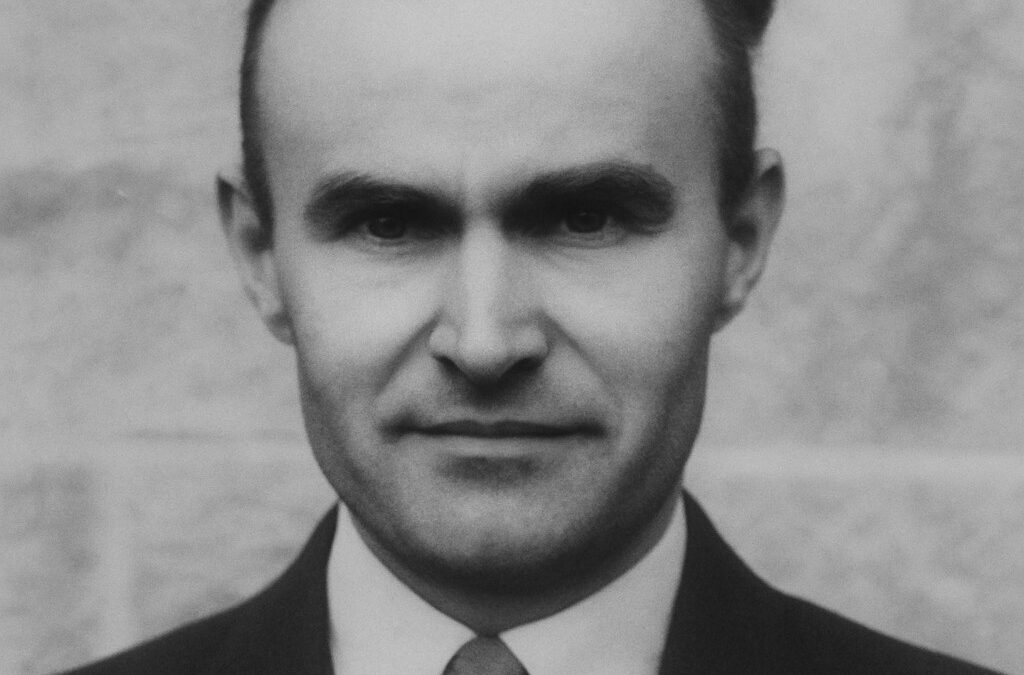
Éamonn Mac Coistealbha – Gaeilgeoir go Smior!

Éamonn Mac Coistealbha – An Irish Speaker to the Marrow!

Éamonn Mac Coistealbha – An Irish Speaker to the Marrow!

Teacher, Mentor, Irish Speaker

We had Éamonn Mac Coistealbha as our Irish teacher in second and third year at St Kieran's College, right up to the Junior Certificate. I was extremely fortunate, I must say, as I had excellent Irish teachers at the College. Éamonn was no exception. He was an Irish speaker to the marrow, who had not only a BA in Celtic Studies, but also an MA from Maynooth College. Éamonn attended St Kieran's College as a student, and returned as an Irish teacher in 1939. I think he was a mentor to most of the other Irish teachers in the school, including my father, who all had great respect for him.

A Strong Foundation in Irish

It's very important when you're learning any subject to have a good foundation. Without that, it's difficult to progress to learning more difficult things. I think that basic Irish is the most difficult subject to teach and to learn. Repetition and practice must be done again and again until you don't have to think about it. You're able to learn more interesting things after that – read wonderful books, have conversations on many topics, and so on.

Stone by Stone, Step by Step

Students who attended other schools said how difficult it was for them to learn Irish. But that wasn't the case for us at St Kieran's College at all. I didn't fully understand why at the time, but later I realised we had a high-calibre teacher. Éamonn was able to improve our knowledge, stone by stone, step by step, giving simple answers to our questions, and focusing on the important principles when we were ready. Éamonn was on the learning journey with us, working hand in hand (with us).

Éamonn was a patient, reasonable man, and a man who always listened to us. You have to take into account that Éamonn had a long curriculum to teach us for the Junior Certificate, and pressure on himself to finish it in time. There were teachers who taught their subjects at lightning speed. But perhaps they were the only ones who understood what they were teaching – we couldn't keep up with them in class at all.

Solid to the End

I don't remember when I first heard that Éamonn was very ill. But I remember that he would cough badly from time to time in class. Despite his poor health, Éamonn continued teaching right up to 1974, when he passed away.

Éamonn was a fine example to us. He never used the cane on us, never looked down on us, and always listened to us. He treated us well, and we had great respect for Éamonn because of that.

I will never forget Éamonn Mac Coistealbha. I use Irish in my own life every day, and I am grateful to that great man, Éamonn Mac Coistealbha, for what I learned from him all those long years ago.

Excerpt from his Obituary

There is no better way to conclude than with an excerpt from his obituary written by a fellow teacher at the school:

He was a man who devoted himself to his work always and never neglected any task he undertook. Teaching is often a thankless task, but that wasn't the case with Éamonn — his former students are forever grateful, understanding that they learned from him not only Irish but insight and wisdom about their own lives. He had a special interest in every aspect of College life — in every activity, in sports matters, in the boys' development overall. He was loyal to his people and to his parish, and was a committed member of the St Vincent de Paul Society in Kilkenny.

He was a truly generous, charitable person — a man from the country and of the country — who wanted nothing as respite from the cares of the world but a winter's day outdoors with his gun and his dog, or a golden August day by the western shore with his family. His death is a cruel blow to his wife and family, and a great loss to the College with the passing of this noble Christian. It is also a personal grief to those of us who worked many long years with him — we have lost a true friend. May God grant eternal rest to his soul and consolation to his wife and family.

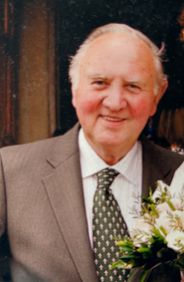
 

Cothromaíocht Oibre agus Saoil – Bernie Clarke

Work-Life Balance - Bernie Clarke

Note to the reader: Not everything in this story is true. For example, there might have been a small problem with a chemistry experiment once or twice, but that’s about it. As teenage boys, our imaginations tended to run wild. So, parts of the story are based on our subjective impressions rather than on bare facts.

There were wonderful teachers in St Kieran’s College, and they were all very different from one another. Every one of them influenced me in some way. I would like now to talk about a particular teacher who demonstrated the balance between work and personal life — Bernie Clarke.

Bernie Clarke was a young teacher at the time — perhaps he was in his early thirties. He was a relaxed, gentle, and stylish man. Although he was not a tall man, he drew attention nonetheless. He was always neatly dressed, wearing some kind of sports jacket, often one with a check pattern. His hair was as black as coal. Furthermore, there were no wrinkles on his face, as he was a calm person who did not get worried easily.

While many of the other teachers were putting in some extra time on school matters, Bernie did not generally do the same. Despite that, he was a very good teacher — a very pleasant person. There wasn’t the threat of the strap in his class, and he never used corporal punishment or harsh language on us. We took advantage of that knowledge — we weren't overly well-behaved in his class! We, the students, were a lively bunch, and sometimes it was difficult to hear what Bernie was saying in the class. Another thing we liked was that, unlike some other teachers, Bernie didn't give us any homework at all. We were very grateful for that, as we already had too much homework. School was on every day, except Sunday, at that time — a half-day on Wednesday and Saturday. And we had to study at night every single day for about two or three hours. But we were constantly busy with homework in the other subjects, and it was difficult for us to finish everything on time.

Chemistry with a Fireball

Bernie taught us chemistry, a subject that was not too interesting to us at first. In his classes, we used to laugh and jeer, throwing paper balls at each other when Bernie wasn't looking. Occasionally, Bernie's patience broke, and he would raise his voice:

“Ah now, lads, cool it there!”

We would be quiet for a little while, but before long the commotion would start again.

But you could hear a pin drop any time Bernie got a test tube, or a jar, or chemicals. He was about to do a chemistry experiment. Everyone knew what would happen then. Every experiment failed disastrously! Dangerous results — an explosion, or a strange smell, or even a fireball! We couldn't control ourselves; it was so funny. In the end, this is what Bernie would say:

“Ah well, lads, you get the main idea, anyway!”

I clearly remember the time one student tried to imitate Bernie. The student stole a glass (jar) containing potassium. He went to the toilet, and threw a piece of it into a toilet bowl. There was a huge explosion, and the toilet seat was thrown up into the air with the force of the blast. Everything that was in the bowl was spilled as well. The poor student came out of the toilet in distress, and he was wet with water and whatever else was in the bowl. He also lost his hearing for a little while. The college was not too happy either, and he was nearly expelled from the school because of that awful misbehaviour. The chemistry lab was locked after that, and the like never happened again.

Doing Two Things at Once

Apart from the chemistry experiments, there were other occasions that captured our attention in the class. In the days just before school exams, Bernie would summarise everything he had taught us that term. But everyone and their uncle knew that Bernie would give the class hints about the questions that would be on the exam paper. We didn't want to let Bernie down either, and so we would spend some time studying our notes from the last classes of the term. We never let him down, not even once.

As for Bernie's passion, you would have to go out onto the golf course to see that. My father told me about Bernie, as my father also played golf, on the same course. He told me that Bernie had a handicap of about five.

“Only the best amateurs in the sport have a handicap like that,” my father said.

I understood then what Bernie's passion was — golf. He was out on the course every chance he had, improving his skills, God bless him.

I learned a lot from Bernie in addition to chemistry. I learned that you get the results you want when you focus your attention and energy on your passion, and you have a more worthwhile and satisfying life as a result. That's not to say that you don't do anything else — definitely, you do. You are able to do other things excellently too when you put the right structure in place.

That is exactly what Bernie did. He knew that his true passion was golf. As a teacher, he was able to be on the course every day during the holidays, especially in the summer. His passion and his career came together wonderfully for him, and he was able to handle both at the same time.

I am certain that Bernie retired from teaching many years ago. I would bet, however, that he is still playing golf!

Mistreatment of a Long-Term US resident by immigration officials!

Mícheál Ó Duibhir, Fíor-Fhear na hAthbheochana

Michael O'Dwyer, True Renaissance Man

I was very happy to be a student at St Kieran’s College in Kilkenny. As a child, I had a natural curiosity about the world and the stars above. From the moment I opened a book about planets, stars, and galaxies, I was completely enchanted. In my young mind, Newton, Galileo, Descartes, and Einstein were wizards who had uncovered the hidden laws and principles of the universe. To me, science was a kind of magic—only better, because it was true and could be proven. It’s no surprise, then, that when I began my first classes in the College, I was thrilled to find physics and chemistry on the curriculum.

Although almost every teacher in the school was excellent—knowledgeable and passionate about their subjects—one stood out as the person who opened doors of possibility for me: our physics teacher, Mr. Mícheál O’Dwyer.

He began teaching at St Kieran’s College in 1967, after ten years teaching in Downpatrick, County Down. In all, he spent thirty-four years working at St Kieran’s—a long career that left a deep mark on generations of students. When I was a teenager, he was like a high priest at the altar of science.

Master Craftsman

Mr. O’Dwyer was a modest, sturdy man, full of energy and quick, playful wit. Unlike many teachers of that era, he never used corporal punishment. He created a safe space where we felt free to think independently. That’s not to say he couldn’t maintain discipline—he certainly could. He used humor and gentle mockery when needed.

I remember one day when I was chatting and laughing uncontrollably in his class while he was trying to teach. He looked straight at me, a serious gleam in his eye, and said, enunciating every word slowly and clearly:

“Now, Michael—just because your father is the vice-principal…”

He didn’t need to finish the sentence. The entire class burst out laughing; I turned crimson with embarrassment. From that day on, I was as quiet as a ghost in the physics lab.

He didn’t need to finish the sentence. The entire class burst out laughing; I turned crimson with embarrassment. From that day on, I was as quiet as a ghost in the physics lab.

When he taught us about focal length in a lens, he didn’t start with equations but with the stories of the scientists who shaped our understanding: Kepler, Huygens, Newton, Descartes, and Gauss. He impressed upon us that we were inheriting a magnificent intellectual tradition. Then he drew a clean diagram on the board, showing how parallel rays of light bend through a lens and converge, before deriving the thin-lens formula for focal length.

Watching him work was like observing a skilled craftsman at his bench—precise, patient, and completely absorbed in his subject.

The Scientific Method

He never left theory as something abstract. In the case of focal length, he divided us into pairs, each with a lens, an object, and a screen. Our task: measure, record, calculate; then test whether our result matched the formula.

In this way, the lesson wasn’t only about optics—it was about the scientific method itself: forming hypotheses, testing them rigorously, and drawing conclusions from tangible evidence. He also taught us the importance of teamwork and cooperation.

Those lessons went far beyond physics; they taught us how to approach problems methodically and how to work together effectively.

Looking back, I can say with confidence that Michael helped shape my path. He lit sparks of curiosity in me—not by telling, but by showing how the principles of physics worked.

He had a profound influence on me at a decisive moment in my life. It’s no accident that I went on to study Physics at University College Dublin, then Electrical Engineering, and finally earned a Master’s degree in Electrical and Computer Engineering at the University of California, San Diego.

I spent most of my career in research and development in the field of wireless communications. My professional journey traces its roots directly back to those early lessons in the physics lab—and to our teacher, Mícheál O’Dwyer.

Scientist and Historian

Many years later, I met Míchael again. By that time, I was closer to the end of my working life than the beginning. I told him plainly what he had done for me and how much he had influenced my life. He was gentle and humble, but I could see quiet gratitude in his eyes.

During that visit, he revealed his second passion: he had become an accomplished local historian. In his retirement, he devoted himself to writing about the history of Kilkenny, uncovering little-known aspects of its past.

Among his works was The History of Cricket in County Kilkenny: The Forgotten Game, a book offering a fascinating insight into the evolution of the GAA. He examined the upper classes of Kilkenny society and wrote about the very area where he himself had grown up. I was delighted to discover that the man who had once shown me the beauty of light and motion was now illuminating hidden corners of our cultural heritage.

True Renaissance Man

News of Mícheál’s passing caused me great sadness—he went on the ‘path of truth’ in February 2025. Those words “path of truth” seem fitting, for he had taught us in his classes what truth meant in science, and how that truth could be proven.

His image remains vivid in my mind—clear and precise, as if it were yesterday: standing at the front of the physics lab, chalk in hand, that kind smile on his face before the words I’ll never forget—

“Now Michael…”

I’m deeply grateful that I had the chance to thank him personally for what he had done for me, and for the lasting, positive influence he had on my life.

Reflecting on his life, I see clearly that few teachers like him exist. Forty-four years of teaching testify to his dedication. He believed passionately in the power of education to change not only the lives of his students but society itself.

I learned physics easily in his class—but I also learned something deeper: how to think logically and practically. That has served me well in every aspect of my life. Even now, when I sit down to write, I still hear echoes of his lessons—his voice in my ear offering quiet advice:

“Be precise and clear. Think logically. Approach every problem with curiosity and respect for the truth.”

As Máirtín Ó Néill wrote in an obituary in the Record 2025 (St Kieran’s College), Míchael O’Dwyer was “a Kieran’s man with many parts —a scientist and historian, truly a Renaissance man.”

Teachers rarely make headlines, but they change the world quietly and profoundly—mind by mind, generation after generation. Míchael stood as the model of a great teacher—a guiding star of knowledge for me always. I will never forget him for as long as I live.


Mistreatment of a Long-Term US resident by immigration officials!

Dírbheathaisnéis 13 – an Chéad Fhear ar an nGealach!

Autobiography 13 – The First Man on the Moon!


When I was going back through my old diaries recently, I came across an entry I had written on my thirteenth birthday. Reading the words of that entry brought a flood of memories to me, along with a fresh sense of what life was like at that time.

It was an entirely different world. In sharp contrast to the pessimism that so often reigns in the present day, there was in the sixties a spirit of hope. The world faced serious problems, just as it does now, but we felt they could be solved. There was dialogue then, dialogue we do not see as often today, especially in the United States.

In the North, the Troubles had begun. Yet even at that early stage people were seeking peaceful change, inspired by the example of Martin Luther King Jr., who himself had drawn inspiration from Mahatma Gandhi in India. As with other great leaders of peace, change did not come quickly or easily. But in time, it did come. In King’s case, after ten years of campaigning for racial equality, the Civil Rights Act was passed in 1964, followed by the Voting Rights Act in 1965. In the North, peace finally came after thirty years, with the Good Friday Agreement in 1998.

Without doubt, the influence of the United States was strongly felt in Ireland in the sixties. Radio and television brought us stories of peace marches for equality, protests against the Vietnam War, and the horror that followed the assassination of the first Irish-American president, John F. Kennedy. We felt that influence most of all in the great scientific achievement of the era—the Americans’ first step on the moon.

It was the moon landing that left the most lasting mark on me. That haunting image of Neil Armstrong placing his foot in the lunar dust awakened in me a deep fascination with science and technology that has remained ever since. It was an invitation to learn, to dream, and to imagine—that perhaps one day I might become a scientist or an engineer myself. In time, that dream did come true—but that is another story for another day.

Anois, áfach, ba mhaith liom dán a roinnt libh, a dhéanann iarracht croílár an ama sin a léiriú: an tuiscint ar iontas agus ar fhéidearthacht, agus tionchar na n-imeachtaí móra ar bhuachaill trí déag d’aois in Éirinn ag an am.

Teenager

“Thirteen years old today,
Teenager!
It’s a pity the sixties are over,
but I’m glad I’m an adult now.”

I read those words today,
a time capsule in my old diary,
26 January 1970.
I am there at once.

The old radio — prophet of our kitchen —
telling the stories of the world,
its chrome face,
its great dials turning through the static
until RTÉ was found.

Our house—
wallpaper turned yellow with age,
linoleum floors.
The Formica table—
warming its feet on the radiator.
The toilet and the bath
in separate rooms.

Outside, pebble-dashed stone walls,
a little garage with a creaking door
that served as my brother’s playroom.
Our cars—Anglia, then Cortina—
always parked outside.

The foods we loved most:
fish fingers and beans,
sausages and rashers,
jelly and custard,
porridge or cornflakes,
toast, tea, boiled eggs.

The television in pride of place,
king of the dining-room corner,
and gateway to the wider world,
through which were revealed to us
our talents and our failures,
our hopes and our dreams,
our history, our present life, our future.

Through its window of static we saw:
a murdered president,
marchers in Derry,
a man on the moon.

My mother wept for days
when Kennedy died,
the first Irish-American Catholic
in the White House.

In the North,
Catholics marched for equal rights,
echoes of Martin Luther King.

Between sorrow and hope
came the most wondrous moment—
that night I will never forget:
the moonwalk.
Armstrong’s boot in the dust.
The silence in our room—
his ghostly form
flickering in the static,
and his immortal words:
“One small step…”

As I watched that, I believed we had the power to do anything.


Mistreatment of a Long-Term US resident by immigration officials!

Dírbheathaisnéis 13 – an Chéad Fhear ar an nGealach!

Autobiography 12 – Jackie Robinson!

In the last chapter, I was writing about the summer holidays, and what I used to do during those wonderful summers that stretched out almost forever at the time. But unfortunately, all good things come to an end, and eventually I had to go back to school. That change was quite difficult, because it not only involved going back to classes, but also having to gather my wits and say goodbye to my home and family until the next holidays. After the summer, I used to live in the school for three months until I had a good break at Christmas. I needed a little self-discipline after being locked up for so long. But unlike most students, who had to stay in school every weekend, I used to have a couple of days off every week at home, which I loved.

My life at school, however, was lonely. I was a fragile boy with asthma, so field sports were not for me. I developed a good camaraderie with the football and hurling players, but I didn’t have that opportunity. I played handball and although there weren’t many students playing, there were a few other regular players who I made friends with as a result.

I loved academic life, and I studied or read every chance I got. I stood out because almost everyone else in the school preferred to be outside, playing together. There were a few other students who were interested in the same things as me, and we got along really well from the start. It takes one to know one, as the old saying goes, and it was certainly true in my case.

My cubicle in the Dormitory

In my first year at school, I was in the small St. Columba’s dormitory. It was a gentle introduction, for there were only ten of us, and we had a supervisor – a young man who was studying at the seminary, named Jackie Robinson. My cubicle was by the door, and I didn’t have much privacy, but I didn’t care. I was the second smallest boy in the dormitory, and the other boys would play together before we went to bed every night. I didn’t usually take part in those games, although the smallest lad, Seán Ó’Cúiv, was always in the middle of the action. I had asthma and consequently wasn’t very strong. When Jackie heard the scream coming out the door and into to the room he was in, he would come in and settle us down. Then he would turn out the light. We would go to bed immediately, as we were tired after classes, studying and playing and running whenever we got a chance.

Because I wasn’t playing with the other boys, I drew their attention, and they were asking me questions trying to understand why I wasn’t joining them in their games at night. I didn’t want to seem like a loser, and I made another excuse that I was tired or something like that. But the boys didn’t believe a word of it, and they started to tease me every night. One time, Jackie saw me blinking my eyes to hold back the tears. He had a word with me discreetly and asked me what was going on. I told him that the other boys in the dormitory were ganging up on me, and hurling insults at me and calling me nasty names. He nodded his head and walked away. I still remember that the insults and names stopped before long. The other boys started chatting to me, and after a while I was comfortable in the dorm, laughing and talking to every boy there.

The next time there was a loud noise in the dorm, Jackie ran in to stop it. He looked at me knowingly, and said: “And you too, Michael - go back to your cubicle and take your pillow with you!” A big smile spread across his face, and he was out the door. I was one of the guys now, and I was very proud of that.

I still don’t know what Jackie did behind the scenes, but it’s clear that he had a few words with each of the guys. Because we all respected Jackie very much, we listened to what he had to say to us. He did the job without me knowing, but at the same time I knew he did the job. I learned a great lesson that our ancestors have well said: there are many ways to skin a beast. Without a doubt, diplomacy is the best way to ensure peace. I had a better life at school after that, and I am always very grateful to Jackie for what he did for me.

Dírbheathaisnéis 11 – Raidió Luxemburg!

Autobiography 11 - Radio Luxembourg!

When I was a boarding student at Coláiste Chiaráin, I loved the holidays, because I got to live at home again, enjoying all the benefits that came with that – delicious meals, a comfortable bed and privacy. I also got to spend time with my own family and friends. And I got to go out by myself or with my friends, play games and do all the things that young people like to do. I had time to read books and watch TV at night, and I didn’t have to go to bed too early. In a word – I had freedom!

Of the many holidays we had, the summer holidays were the best. I had a three-month break, the weather was mostly fine, and the sun didn’t set until nine or ten o’clock. It seemed like the summer holidays would never end, but eventually they would come to an end and I would have to move back to school.

I had a close friend called Tomás, who was a few years younger than me. We spent every summer together and we were able to play hurling and football, because we were at the same level, and we didn’t play them as contact sports. That way, we had access to the skills and pleasures of the sport. We would go out into the field behind my house, with sliotars and hurling clubs and play in the All-Ireland championship. Or we would play soccer in the back garden, with jerseys as goals. Whenever my parents saw us out in the garden kicking a ball, they would bang on the window and scream “Get out of the garden, you’ll ruin our roses!” But we wouldn’t stop, because wasn’t the World Cup wasn’t on and I was about to score a penalty. Often, our brothers and sisters would play with us and we would all have a lot of fun.

Sometimes, Tomás and I would go on adventures together, and we had plenty of imagination. There was an old harvester that was in poor shape sitting in the field behind Tomás' house. We spent a lot of time there every summer. For us, it wasn't a harvester, but a spaceship exploring the galaxy. We would get our inspiration from 'The Invaders' and 'Star Trek', science fiction series that were broadcast on RTÉ at the time. Everything else would disappear and we would be in space, fighting alien spaceships – and we would always win! We would visit new planets and meet aliens, both friends and enemies. Eventually, we would hear Tomás' mother calling us and we would wake up from our dreams for that day. But we were back on the spaceship the next chance we got.

Bhí teach iargúlta suas an bóthar amuigh faoin tuath, agus cé go raibh daoine ina gcónaí ann, ní bhíodh duine ar bith le feiceáil riamh ann. Bhí rud éigin mícheart, agus b’éigean dúinn spiaireacht a dhéanamh ar na comharsana sin, chun a fháil amach cad a bhí ar siúl acu. Bhí coill bheag in aice leis an teach, agus bhíodh Tomás agus mé féin inár bhfolach ann, ag iarraidh muintir an tí a fheiceáil. Is cosúil nach spiairí maithe muid mar, in ainneoin an t-uafás ama a chaithimis ag spiaireacht, ní fhacamar muintir an tí fiú uair amháin. Nó b’fhéidir go raibh siadsan ina spiairí proifisiúnta, agus ag déanamh monatóireacht orainn. Tar éis tamaill, d’d’éiríomar neirbhíseach agus tuirseach den obair sin, agus tháinig deireadh luath leis ár ngairmeacha bheatha mar bhleachtairí.

We both loved pop music, and we loved listening to the music of the day on Radio Luxembourg on 208 FM. We had a transistor radio at home, and every Sunday evening when the weather was nice, I would borrow it. We would take a walk up the road to a quiet, secluded spot, across the road from the aforementioned house, as it happened. We would sit down and turn the radio on to 208FM, and we would listen to Kid Jensen’s ‘Top 20’. We were in heaven listening to the 20 songs that were the most popular that week. I remember musicians and bands like: Don McClean, Slade, Gary Glitter, Gilbert O’Sullivan, Diana Ross, The Who, Winds, David Bowie, Mott the Hoople and T-Rex to name just a few. We loved hearing the new, fresh, modern sounds on that radio, many of which were earworms. Even still, to this day, when I hear tunes from that time, they take me back to the days of my youth – the sounds, the smells, the sights and the feelings from a time long gone. In particular, when I hear 'Get it on (bang a gong)' by T-Rex, I feel like a teenager on the side of the road with my friend Tomás, listening to the song on that transistor radio. How well I remember those days. I haven’t told you the funniest thing that happened to us while listening to the ‘Top 20’. We weren’t alone as an audience. When we turned around, there would be a herd of cows standing by the fence, entranced by the music – just like Tomás and I!


en_USEnglish