Learn with the article
My father was a quiet man, even when Mayo were playing football.
He would slide forward in his armchair until he was almost sitting on its edge.
“Come on, lads. Ah, come on.”
The tone of his voice changed according to how the team were doing, but the words remained much the same.
My brother supplied the sound effects. He had a response for every free, every mistake and every refereeing decision, with a curse to match. Dad leaned forward and urged Mayo towards the next score.
Dad was a Mayo man, and Mayo football held a special place in his heart.
He rarely went to matches because he suffered from claustrophobia. Instead, he supported Mayo from the comfort of his armchair.
Sinéad’s father supported Mayo differently.
He would think nothing of driving from Dublin to anywhere in the country and back again the same day to see Mayo play. His sister Úna would travel from Castlebar, and they would meet at the ground.
He rarely missed a Mayo match.
On a recent Sunday afternoon, Sinéad and I were sitting in our house in Carrickshock, County Kilkenny, watching the All-Ireland football final between Mayo and Kerry.
We had to get used to the new rule awarding two points for a kick over the bar from outside the forty-metre arc. Each time the ball sailed over, we looked at each other and then at the scoreboard.
Two points.
Kerry surged ahead from the start.
David Clifford scored a goal and, by the end of the first quarter, Kerry led by seven points, 1-5 to 0-1.
For a few minutes, it looked more like the beginning of a rout than another narrow defeat for Mayo.
But Mayo did not collapse.
They came back.
By half-time, only one point remained of the seven-point gap. Early in the second half, Mayo went ahead. Kerry came back before Mayo finally managed to pull away.
The match hung in the balance until the final minutes.
We were on the edge of our seats.
I thought of Dad.
Sinéad thought of her father.
He would have been there with Úna. There was no question about that.
Dad would have been on the edge of his armchair.
“Come on, lads.”
My brother would have been making the noise.
Then the referee blew the final whistle.
For the first time in seventy-five years, Mayo were All-Ireland champions.
As the match drew to a close, Midwest Radio commentators Stephen Grealis and Martin Carney lost all restraint. They shouted at the tops of their voices:
The famine is over.
The curse be damned.
Sam Maguire is coming home.
Sinéad and I began to laugh.
And then we began to cry.
All four of our parents were from County Mayo. Our fathers remained loyal to their home county until the end of their lives, always believing that Mayo would win again.
Neither of them was there to see it.
When Jack Coyne accepted the Sam Maguire Cup, he paid tribute to those who had worn Mayo’s green-and-red jersey before him and to the Mayo people who were no longer with us and who had dreamed of that day.
He said he hoped they would be proud of the team, and he urged Mayo’s boys and girls never to give up on their dreams.
We knew whom he meant.
Our fathers had never given up on the dream.
According to legend, Mayo’s victorious 1951 team passed a funeral on their journey home without showing proper respect. They were said to have been cursed: Mayo would not win another All-Ireland while any member of that team remained alive.
The last surviving member of that team died in 2021, two weeks after Mayo lost an All-Ireland final for the eleventh time since 1951.
This was their first final since his death.
They won.
After the match, I read about Paul Murphy, a Mayo man living in Manchester. He brought his two sons, Feidhlim and Odhran, to Croke Park in the hope that they might turn Mayo’s luck.
When Mayo won, the family did not know what to do with themselves.
They were not used to being on the winning side.
This time, no one needed to say, “Maybe next year.”
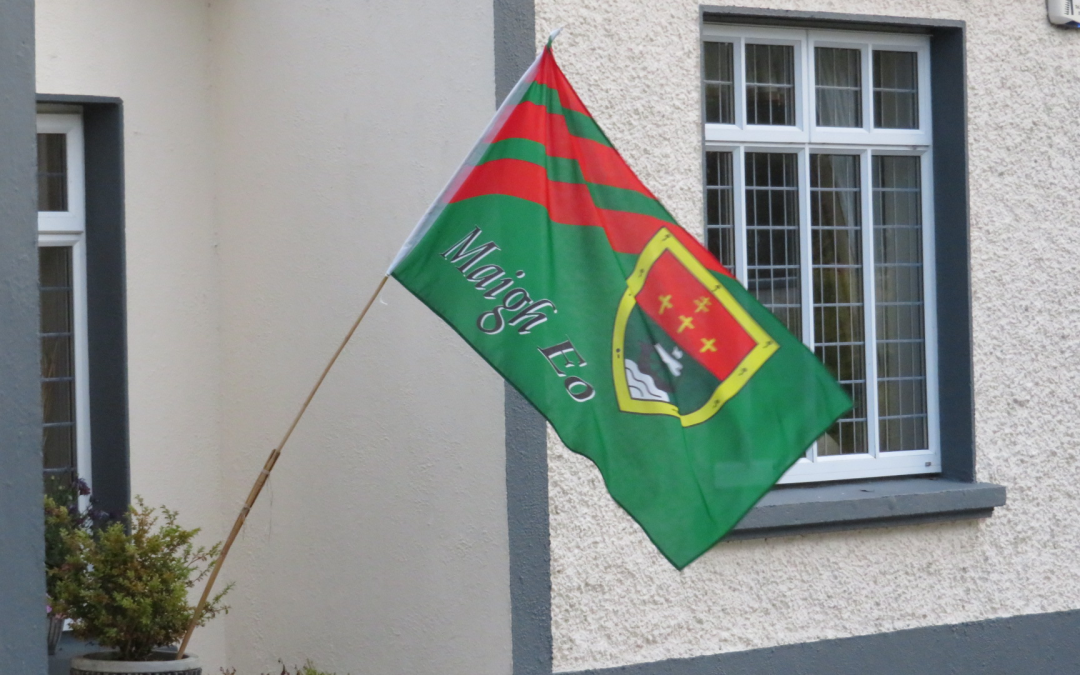
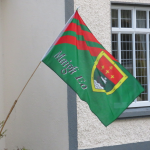
The following day, thousands gathered in MacHale Park in Castlebar. Children sat on their parents’ shoulders, and green-and-red flags flew above the crowd. People sang, laughed and cried as the Sam Maguire Cup returned to Mayo.
They were celebrating every journey made, every final lost and every supporter who had kept the faith.
In Carrickshock, Sinéad and I remained in front of the television as Jack Coyne raised the Sam Maguire Cup.
For a moment, I saw Dad again on the edge of his armchair.
My brother beside him, making the noise, and Dad leaning forward with his familiar quiet appeal:
“Come on, lads.”
And, this time, another one:
“Well done, lads. Well done!”
And Úna was there to see the day her brother had hoped for all his life.

 English
  Gaeilge