
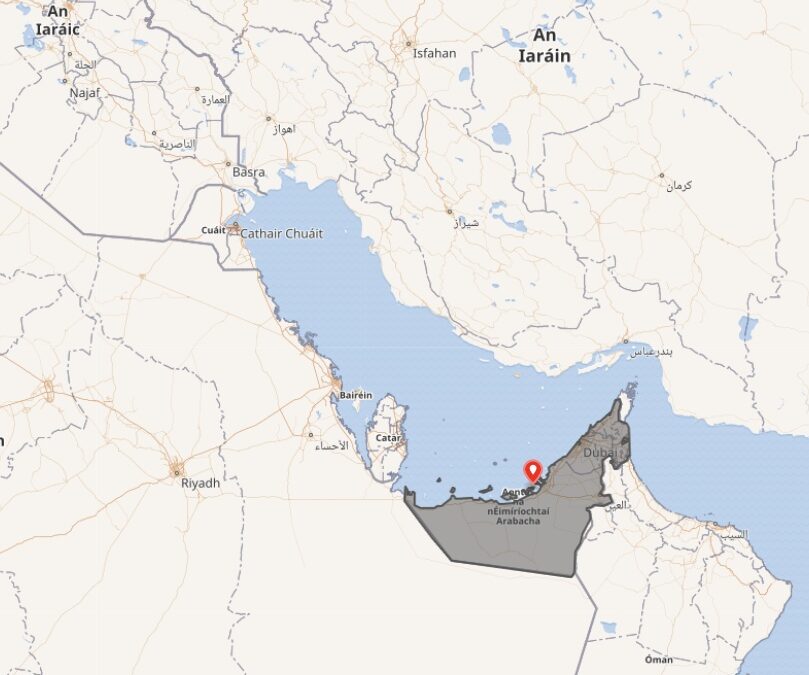
Trapped in the Middle of a War – My Niece’s Report from Dubai!
The war involving the United States, Israel, and Iran has taken a significant turn for the worse over the past week. Following Israeli strikes on major Iranian oil and gas facilities at South Pars and Asaluyeh on March 18, Tehran sharply escalated its threats, warning that Gulf energy infrastructure in Saudi Arabia, the UAE, and Qatar could be targeted. This sparked widespread anxiety across the region, as it signaled that the war could spread further, devastating the economies and lives of people already living under its shadow.
Iran also demonstrated its long-range capabilities by firing two ballistic missiles toward the joint U.S.-U.K. base at Diego Garcia in the Indian Ocean. Although reports indicate the missiles did not hit the base, the incident reinforced the sense that the conflict is widening, becoming increasingly unpredictable and difficult to contain.
President Trump then raised the stakes once again. He warned that unless Iran fully reopened the Strait of Hormuz within 48 hours, the United States would strike Iranian power plants. Iran countered with its own threat, stating that if its power infrastructure were attacked, it would retaliate against Israeli power plants and other regional power facilities linked to U.S. bases.
Then, almost as suddenly, Trump appeared to pull back. On March 23, he claimed that “very good and productive” talks were underway between the U.S. and Iran, with major points of agreement reached, and he postponed the threatened strikes for five days. However, Iran publicly denied that any such talks were taking place. Thus, the region remains in a state of profound uncertainty: one day brings threats of escalation, the next talk of diplomacy, followed almost immediately by denials and renewed doubt.
For those living in the UAE, it is a constant, agonizing journey. Every new threat spikes the tension. Every rumour of talks or a pause brings a small measure of relief, but that relief fades quickly, as no one knows what comes next.
My niece shared her thoughts with me before some of the most recent developments. If anything, the tension is even sharper now than when she wrote them:
“For me, the main feeling lately has been a kind of constant mental exhaustion. You’re always slightly on alert, waiting for the next notification on your phone and wondering if it will be followed by a bang, and if so, how far away it will be.”
In the UAE, a phone message is no longer just a message. Silence is no longer just silence. Every pause is heavy with the understanding that something else could be about to happen.
This pressure doesn't stay with just one person. It seeps into homes, onto the roads, into workplaces, and into family life. The city might still look normal from the outside, but the atmosphere has changed completely.
As my niece put it:
“I think many of us have become a bit irritable and hypersensitive too, simply because our nerves are on edge. It changes the look of everyday life. I get nervous about simple things like driving somewhere. There’s always a question in the back of your mind about something falling from the sky, whether that’s missiles or debris.”
It is easy, from a distance, to view these events as a series of headlines. But for those living in the UAE, the war is felt differently. It is felt in the phone alert that tenses your shoulders, in the instinctive glance at the sky before getting into the car, and in the effort to keep daily life moving while the wider region lurches from one threat to the next.
If the past week has shown anything, it is how suddenly this war can change direction. One day brings threats against power plants and Gulf infrastructure. The next brings talk of productive discussions. Then come denials and further uncertainty.
Undoubtedly, things are much worse for the people of Iran, with a terrifying amount of bombs being dropped on them by the U.S. and Israel. But my family is not in Iran, so I do not feel that direct impact in the same way. There is no such thing as a good war, and I hope this conflict ends soon. Even then, it will be difficult for life to return to how it was, and it is likely the people of the UAE will be keeping an eye on the sky long after the hostilities have ended.




 English
  Gaeilge