Learn with the article
Our applause struck the low ceiling and its echo came down upon us.
Maria de Fátima stood in the centre of the long, narrow room, the musicians beside her. She had finished another song. All of us, sixty people or so, were clapping as hard as we could, sweating and packed around the tables like sardines.
Then silence fell across the room.
Maria began to sing again.
Maria de Fátima was eighty-four years old.
You would never have known it.
A few hours earlier, Sinéad and I had been on a boat on the Tagus. We sailed beneath Lisbon’s great suspension bridge and watched the city slide past us.
By the time we came ashore, we thought the day could not get any better. But I had managed to reserve two places for dinner and a fado show at 7.45.
Fado is the traditional music of Portugal. The singer’s voice and the sound of the stringed instruments work together to convey stories and emotions. This was our first visit to the country, and we wanted to hear fado there.
Parreirinha de Alfama was hidden down a narrow lane. The tables were squeezed into a long room with a low ceiling. It was both a restaurant and a music venue. By nine, there was not an empty seat.
One of the musicians welcomed us. He explained that complete silence was required during every fado performance. He also asked us to stay until the end of the show, out of respect for the tradition and the performers.
The room lights went out.
The conversations stopped and the servers disappeared.
A young woman opened the show. Although we could not understand the words, her voice and face told the story. She moved from a whisper to full power and back again without losing control.
One musician held a viola de fado, a relative of the conventional six-string guitar. The other held a pear-shaped Portuguese guitar with twelve steel strings arranged in six pairs.
He was clearly a virtuoso.
His fingers flew across the strings. Every note was clean. He made the instrument surge forward, stop, whisper and then ring through the room.
The other guitarist supplied the rhythm and harmony. The young woman sang four or five songs that revealed different sides of her voice.
The lights came up and the room became a restaurant again.
The conversations resumed. Our waitress moved quickly between the tables, collecting plates and bringing out the next course. She forgot no one.
The room lights went out, and she disappeared again.
The food alone would have made the evening worthwhile. Sinéad had melted cheese, sea bass and chocolate mousse. I had sardines on toast, fish stew with mussels, clams, potatoes and an enormous prawn, followed by the finest crème brûlée I had ever eaten.
In the second part, a man came out to sing. His voice was loud and assertive, with the force I associate with Greek and Italian singers.
The young woman returned, and they took turns singing to each other as though they were having a conversation.
What were they saying, I wondered.
We did not have the words, but we felt love, jealousy, anger and reconciliation coming through the music.
When the room lights came up again, it was after ten.
Then the guitarist, who also acted as presenter, introduced the last singer.
Maria de Fátima.
Eighty-four years old.
He told us that she had begun singing when she was very young and had won awards.
The room lights went out for the final time.
She walked to the centre of the room and began to sing.
She took possession of the room.
There was a slight roughness in her voice that gave it a distinctive character. She sang effortlessly but with power, controlling every phrase and hitting every note precisely.
When the song ended, we applauded heartily.
Maria waited for silence and began again.
Another wonderful performance.
Louder applause.
Then she sang again.
She performed more songs than either of the younger singers who had appeared before her. The longer she sang, the louder the audience became.
And the longer she sang, the more she seemed to enjoy herself.
During one song, I noticed our waitress at the far end of the room.
For the first time, there were no plates in her hands. She was not watching the tables or checking whether anyone needed anything.
She stood motionless, her eyes fixed on Maria.
The waitress had probably heard fado in that room hundreds of times. She knew the singers, the musicians and the songs.
But that night, Maria stopped her in her tracks.
Near the end, the other singers returned and gathered around Maria. They sang together, and the audience joined in for the climax of the evening.
The final applause was the loudest and most enthusiastic of all.
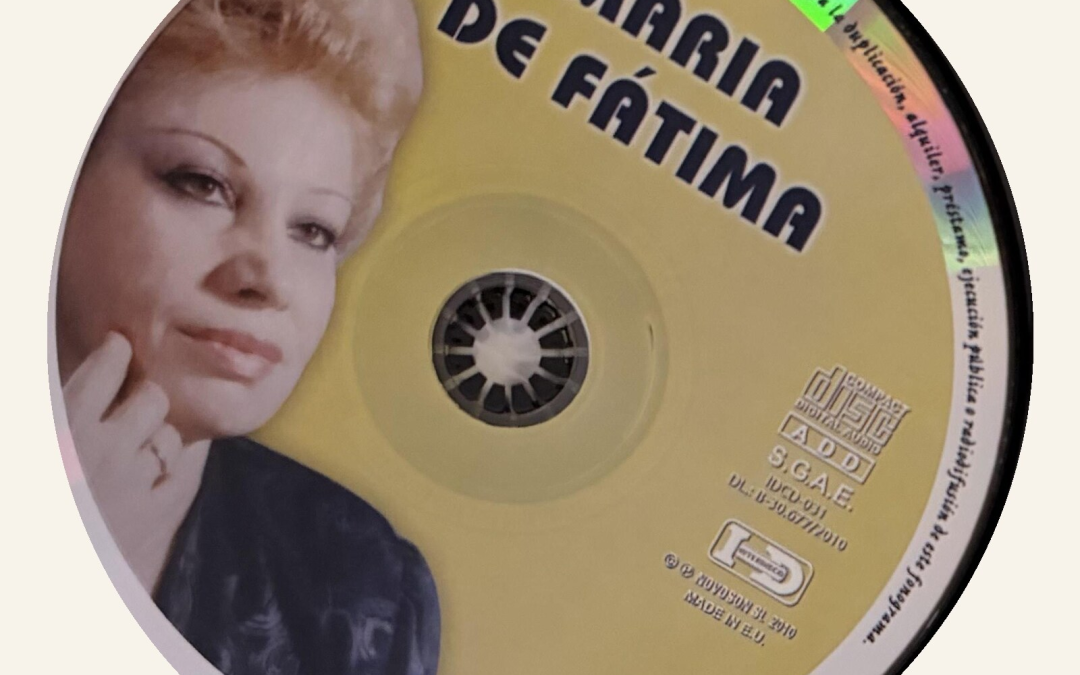
As we were leaving, we thanked Maria, who was sitting near the door. We bought a CD from her called Super Fados. She signed it for us.
Maria was younger in the photograph on the cover, but the same personality could be seen in her face.
For us, she will remain the vivacious eighty-four-year-old singer in the middle of that crowded room, pouring her heart into the chorus of a fado song as the sound of the Portuguese guitar filled the room beside her.
But it is the image at the far end of the room that will remain most clearly with me forever.
The waitress.
Standing motionless.
Everything forgotten.
Except the music.
Her eyes on Maria.



 English
  Gaeilge