
An tSiria!

Syria!

“There are decades when nothing happens; and there are weeks when decades happen.” - Vladimir Lenin, founder of the Communist Party of Russia.

There was an abrupt end to the civil war that had been going on in Syria since 2011 - the Arab Spring, a time of demonstrations and protests in the Arab world, including Syria. Dictator Bashar al-Assad stood firm at the time. He had a strong army and with the help of Lebanon (and especially Hezbollah forces), Russia and Iran, he brutally suppressed the uprising. It is reported that more than half a million Syrians were killed and millions were driven from their homes during the war, and that six million have become refugees in other countries as a result.

He did not win against the rebels this time. Why?

Ebbing Alliances!

This time, everything was different. The rebel forces cut through the country like a knife through butter, and the official army barely put up any resistance. The largest group among the rebels is “Hayat Tahrir al-Sham” (HTS), an Islamist militant group led by Abu Mohammad al-Jolani. Although these groups have existed since the beginning of the war, they recognized weaknesses in President Bashar al-Assad, and especially in a couple of important countries that were allied with him – Russia and Iran. HTS seized that historic opportunity, and they succeeded brilliantly. But why did Russia and Iran not do anything this time?

Russia

The world saw where the ugly dictator Bashar al-Assad went when the traitor returned. He did what any terrorist would do and fled as soon as he could. And where did he go but to Moscow, where he is safe, under the protection of the president – Vladimir Putin. They will be able to sympathize with each other about what happened in Syria. The huge losses were not only for al-Assad, but for Putin as well. As former Ukrainian foreign minister Dmytro Kuleba said: “Putin threw Bashar al-Assad under the bus, so that he could prolong his war in Ukraine. He is short of resources, and he is not as strong as he makes himself out to be!” Even Donald Trump had a few words to say, saying: “Because Russia is so tied up in Ukraine, and because they have lost more than 600,000 soldiers there, they have not had the ability to stop the march through Syria, a country that they have defended for years.”

There is no doubt that the victory of the rebel forces over the al-Assad regime revealed that what Putin has going on outside Russia is only posturing.

Iran

In recent months, Iran has been unable to thwart Israeli operations. Hamas’s political leader, Ismail Haniyeh, was killed in Tehran. Israel has attacked about 20 military targets in Iran. After a military campaign against them, Hamas and Hezbollah have been badly beaten by Israel, and their military power has been reduced. Iran has been supporting Hamas and Hezbollah because they fight on their behalf. Iran and Hezbollah have been using Syria to transport weapons and supplies to Lebanon. They no longer have that option, and so the Axis of Resistance (Iran, Syria up until now, Hezbollah, Hamas, the Houthis from Yemen and a few other groups in Iraq) is so badly beaten that you would think it is dead. We'll see.

Syria

What is the future of Syria itself? HTS is seeking to install a transitional government, with Mohammed al-Bashir as its leader. He was previously the leader of HTS's territories in the north-west of the country. The leader and HTS will face many difficulties in achieving stability for the country.

The country is home to various ethnic groups, including: Arabs, Kurds, Turks, Assyrians, Armenians, Circassians, Druze, Alawites, Yazidis and Palestinian refugees. There are also people of various faiths, including: Muslims (both Sunni and Shia), Alawites, Christians, Yazidis, Druze and Jews.

The country's economy is in poor condition as a result of the civil war. The economy has been shrinking for more than 13 years - currently one-sixth of its pre-war size.

More than half of the country’s population has been displaced, and an estimated 16.7 million people are in need of assistance. Some 6.3 million are refugees or asylum seekers, and many are now seeking to return home.

Syria is a strategic country in the Middle East, bordered by Turkey to the north, Iraq to the east, Jordan to the south, and Israel and Lebanon to the southwest. The country will be able to exert a major influence on the balance of power in the Middle East, and many other countries will undoubtedly have a vested interest in Syria as a result.

A Steadying Hand?

So far, I have only seen a couple of countries involved in Syria – the United States and Israel. But instead of providing aid to the country, they have been heavily bombing military targets there. What kind of aid is that? Such behavior does not send the right message to Syria, or even to the wider world.  

But Syria can be supported through their difficulties. The countries that have imposed sanctions on Syria should ease them soon, and pledge funding to rebuild its infrastructure. The country is also in a humanitarian crisis, and humanitarian aid is urgently needed. It would also be appropriate for the United Nations to introduce a peacekeeping force as an interim measure, until a lasting recovery and political stability can be seen in the country.

While it is encouraging that the Assad regime has been overthrown, this is not over yet, and Syria is currently a fragile state. Let us hope that this is not the calm before the storm, but it is too early to tell.



.

.

.

.

.

.

Olltoghchán 2024 – Scamaill dhorcha ag bun na spéire!

2024 General Election – Dark clouds looming!


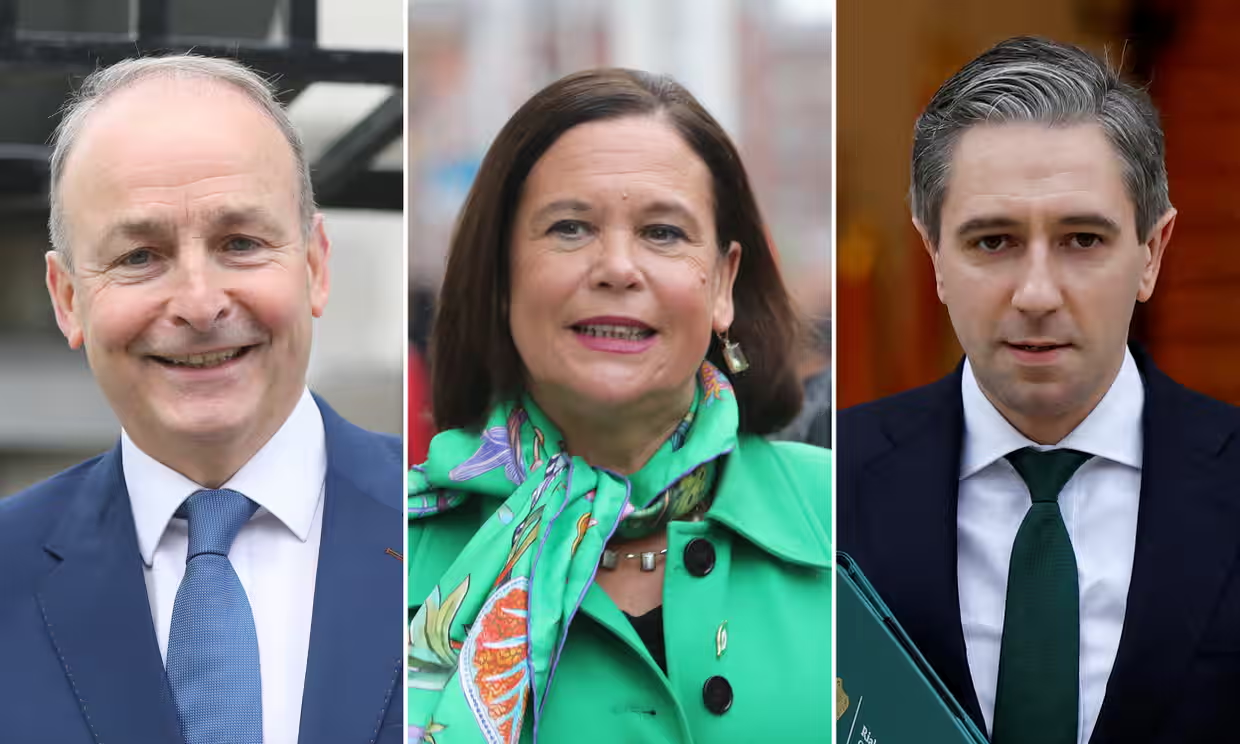
Now that the general election is over, and the bargaining is in full swing, I think it’s time for a post-mortem examination.

If you were to take a quick look at what happened in the general election, you would think that the people of the country are quite happy. The main parties in government – Fianna Fáil and Fine Gael – were not thrown out, but they won more seats in the 2024 general election – 86, than in the 2020 general election – 73. It will be easier for them to reach 88 seats this time and form a coalition. 

Vote of Confidence?

Is it a vote of confidence in the current government? That is the big question, in my opinion. To discuss it, it is necessary to look behind the results.

Firstly, only 59.7% of the electorate in the country voted, one of the lowest percentages ever. This is not a good sign, as it reflects the dissatisfaction of those who are not involved in the process. When that percentage is falling, as it has been in this case, it would appear that democracy is deteriorating, and people have less confidence in that system.

Secondly, the electorate had no choice but to return Fianna Fáil and Fine Gael to power. Incidentally, the Green Party was a scapegoat and Fianna Fáil and Fine Gael blamed them for any harsh criticism the current government received – especially regarding the government’s green policies, even though they were obliged by the European Union to implement them. The Greens lost 11 seats in the general election, and as part of that defeat, the Minister for Tourism, Culture, Arts, Gaeltacht, Sport and Media, Catherine Martin TD, lost her seat and her Ministry. Any minor party will be afraid to enter a coalition with Fianna Fáil and Fine Gael from now on!

Although you would have thought that Sinn Féin would be in the running this time, they lost support for the first time in 35 years. They certainly made a few mistakes. And they were slow to recognise that a large proportion of their supporters was not happy with Sinn Féin’s stance on immigration. They lost support from people who had a negative view of immigration, and who wanted strong immigration policies in place, to limit the number of immigrants coming into the country. Some of these seem to have moved towards right-wing parties – Aontú or Independent Ireland, for example. In any case, Sinn Féin is not in a position to form a coalition, mainly because it is unlikely that Fianna Fáil or Fine Gael would join them in coalition. So, it is clear that Fianna Fáil and Fine Gael have not received any kind of mandate from the Irish people, and that they will remain in power despite the important problems that they have not yet resolved, after one or both of them have been in power for a long time. There are major crises and Fianna Fáil and Fine Gael are still talking about them and saying what they will do – but there is not much progress to be seen, in reality. I am talking basically about housing, homelessness and health issues, not to mention immigration issues. The government cannot be excused for its inaction on these ongoing crises that have not been resolved for more than a decade. We are a wealthy country, with a trade surplus for years, not to mention the windfall tax (€13 billion) from Apple that is due to hit the exchequer soon. It is hard to imagine that people would be happy with Fianna Fáil or Fine Gael, given their terrible political record.

Against the grain

It is clear that the majority of people around the world are not happy with their democratic governments. In 2024, most parties in power were weakened or ousted. This happened in America, Britain, France, Germany, Italy, Austria, Sweden, Finland, Greece, Argentina, Ecuador, Japan and South Africa. But this did not happen in Ireland, and it is an exception. As I said earlier, people did not have a viable alternative, in contrast to the countries mentioned above. In those countries, people were able to express their discontent politically, because there were other strong parties available to them as options. This is not yet the case in Ireland, but it is not difficult to imagine the emergence of a charismatic leader who would be able to speak directly to those who feel they have no input into the political process. That person would likely be on the right wing, with a vision very different from the parties in power. If that happens, and if such a person and his party win a mandate in the country’s general election, it is likely that a restructuring of government would follow. Without a doubt, democracy as we know it would be in trouble in that case. Look, for example, at what is happening in the United States, which was the world’s beacon of democracy until 2016. With Trump as President of America, it will be difficult for the country to save democracy. And we all know how the dictator’s story ends!

Recommendations

It is not over until the fat lady sings, and we still have a chance in Ireland to avoid an oppressive government. Members of government need to go out into their constituencies among their constituents, and they need to listen to them about the problems they have that the government could solve. Then, they need to formulate policies to address those problems and deliver on what they say. It is high time for the government to be proactive, and they already know about the important ongoing problems that still exist and are getting worse. It is vital that we as voters put pressure on our TDs to deliver on their promises, as our representatives must be held accountable to us.

If the government does not change its approach and implement its policies without delay, as well as addressing any other issues facing its constituents, it is likely that they will be out of a job after the next election. Unfortunately, such incompetence would be a major opportunity for the right wing to attract voters in their direction, and this must be avoided at all costs.


.

.

.

.

.

.

Olltoghchán 2024 – Scamaill dhorcha ag bun na spéire!

2024 General Election – Key Issues and Party Proposals (FF,FG,SF)!

2024 General Election – Key Issues and Party Proposals (FF,FG,SF)!

The general election is almost upon us! Politicians are making their promises liberally on traditional and social media, and the parties have published lengthy manifestos online. How can we separate the wheat from the chaff?

Manifestos

I have read the manifestos published by Fianna Fáil, Fine Gael and Sinn Féin, and they are incredibly detailed. It was not easy to compare the policies of the parties, as all the manifestos have different structures. Worse, even after finding certain policies in the three manifestos, you are still comparing apples and oranges. Every policy should have a budget, an objective and a deadline, but often it is just ambitious goals, without the details. The Sinn Féin manifesto is better than the others in clearly stating their policies.

Anyway, after reading the manifestos, I summarised the main issues in the election and the plans of the three parties to tackle them. I will share it with you here, and you may find it useful.

Summary: Main Issues and Proposals of the Parties (FF,FG,SF)

  1. Cost of Living: The cost of living is a major concern, although falling interest rates and the €10.5 billion budget package may ease the pain.
  • Fianna Fáil: Increase the State Pension to at least €350 a week; cap childcare fees at €200 a month.
  • Fine Gael: Raise the threshold for the highest tax bands by €2,000 each year; increase primary tax credits by €75 each year; changes to reduce the Universal Social Charge (USC); changes to reduce inheritance tax; cap childcare fees at €200 per month.
  • Sinn Féin: End USC on the first €45,000 of income, saving €1,100 per year; €1,000 rent relief; temporary mortgage relief up to €1,250 per year; €10 per day childcare.
  1. Housing Crisis:According to a poll last year, 61% of respondents said the housing crisis is one of the worst problems in Ireland. It is no wonder that Fianna Fáil, Fine Gael, and Sinn Féin have made housing a top priority in their manifestos.
  • Fianna Fáil: Expand housebuilding to 60,000 per year by 2030; prioritize affordable and social homes.
  • Fine Gael: Build 300,000 homes by 2030, with a budget of €40 billion.
  • Sinn Féin: Build 370,000 homes by 2030, including 125,000 social and affordable homes by 2029; three-year rent freeze.
  1. Healthcare: In ainneoin barrachas buiséid de bheagnach €2.2 billiún, léiríonn daoine a míshástacht leis an gcóras cúram sláinte, go háirithe maidir le plódú ospidéil agus liostaí feithimh fairsinge.
  • Fianna Fáil: Reduce waiting times by expanding hospital beds, consultants and GPs; provide new Rapid Access Outpatient clinics; reduce health fees; free medical cards for all children under 12, and specialist services for cancer care and women's health.
  • Fine Gael: Expand healthcare capacity with 5,000 new hospital beds, six surgical centres, and four elective hospitals; extend free GP care to under-18s, and cap prescription costs at €50.
  • Sinn Féin: Universal healthcare with free prescriptions; 5,000 new hospital beds, and four elective hospitals in place by 2031; expand GP services; improve mental health care and supports for people with disabilities; recruit 40,000 healthcare workers; invest €15 billion in infrastructure, and save €1 billion through effective reforms, ensuring equitable and modern healthcare.

And the Irish Language?

Here are the main proposals proposed by the three parties regarding the Irish language.

  1. Government Leadership and Policy
  • Sinn Féin: Create a new position in Government for a Senior Minister for the Irish Language and the Gaeltacht, to prioritise Irish language and Gaeltacht issues.
  1. Funding and Investment
  • Sinn Féin: Establish a dedicated Irish Language Capital Programme to create Cultural Centres and develop Irish Language Quarters in urban areas.
  • Sinn Féin: Provide an additional €50 million in current funding over five years and €75 million in capital expenditure specifically for the Irish language and Gaeltacht development.
  1. Education
  • Fianna Fáil: Increase the number of Irish-medium schools and Gaelcholáistí, improve teacher training, and expand the Gaeltacht Schools Recognition Scheme.
  • Fine Gael: Strengthen Naíonraí within and outside the Gaeltacht, and expand Irish immersion education for primary school children in the Gaeltacht.
  • Sinn Féin: Provide free Irish language books to all children and teenagers, once during primary school and once during secondary school.
  1. Cultural and Community Support
  • Fine Gael: Work with housekeepers and summer colleges to support Irish language immersion programmes.
  • Sinn Féin: Develop cultural centres and create Irish language Quarters with additional funding for language planning.
  1. Labour and Legal Rights
  • Sinn Féin: Make state websites bilingual; extend language requirements to print and online advertisements.
  • Sinn Féin: Achieve 20% bilingual public servants by 2030, with a B2+ Irish language proficiency requirement for state roles.

Conclusion

I hope the above comparisons give you a better understanding of the differences between the plans of Fianna Fáil, Fine Gael and Sinn Féin in relation to the policies that are most pressing for us as citizens, and as Irish speakers. But that’s only part of the story. Making a promise is one thing, keeping it is another.

According to the polls, it looks like Fine Gael and Fianna Fáil will be able to form a coalition government with the support of another party (the Greens for example).

The most important thing is to have a conversation with the political candidates in your area and let them know what you want from them. If they agree to do your bidding, get their commitment to that before casting your vote for them. If they are elected, be sure to keep putting pressure on them to keep their promises – especially on the Irish language!


.

.

.

.

.

.

Litir ó Mheiriceá – Oscailt Súl don Pháirtí Daonlathach!

Letter from America - A Wake-Up call for the Democratic Party!

Donald Trump carried the day. The Republicans took control of the Senate. The Republicans will also keep control of the House of Representatives. That is the reality of politics on the ground in the United States of America (USA) after the latest election. This did not happen by accident, either. No doubt, that is an eye opener for the Democratic Party.

Divining Rod

Why did Kamala Harris lose the election? Well, many people suspected that the same administration would just continue with their same policies, and they were not happy with the administration and their policies. President Biden's satisfaction rating was at 36% before he pulled out of the presidential race, and that's a terrible rating. On the TV show 'The View', Kamala Harris was asked if she would change any decision made by Biden as president during his term. She thought for a moment, and answered: "Nothing occurs to me, and I was involved in the most important decisions." With that answer, she tied herself directly to President Biden and his policies. People came to the conclusion that there would be no significant change with Harris as president. But the majority of the country's people were unhappy with Biden, and they desperately needed changes. So, they saw that they had no other choice but to put Trump in office, whether they liked the man or not. But why were so many people unhappy with Biden and his administration? Well, as it turns out, Trump has a divining rod, and he is able to identify the groups of people who suffer the most from major problems. Then, he speaks directly to them, saying that he will solve their problems as president. What are the problems and who is affected by them?

Eggs, Coffee, Milk…

There was a strategist named James Carville who worked for Bill Clinton as part of his presidential campaign. He was asked about the most important messages for the campaign to focus on. He had three messages, but one spread rapidly, and that message is still in use. "It's the economy, stupid!" Carville said. People were not happy with the economy at the time, and therefore, the Clinton campaign should focus on the economy, and their plan to improve it. That plan was a great success at that time and Clinton won the presidency.

Trump was also able to focus on the economy, and get his message across in a simple way, aimed at those who were struggling financially. He shared an information graphic on his social media ('Truth Social'), claiming that many items were much more expensive now with Kamala Harris as vice president, than when Trump was president. He mentioned salmon, coffee, potatoes, cheese, milk, ham and eggs, and the increase in price from when Biden came in as president. While the details are debatable, his message was very clear – it's harder to put food on the table now with Biden and Harris in charge. That message had a great impact on people in the country who were struggling and who were living from hand to mouth.

The Working Class/Gen Z

Before 1992 and the presidency of Bill Clinton, the Democratic Party was the party of the working class. But Clinton moved his party towards the right wing and big business, and things have continued that way ever since. With that, they lost members of the working class, bit by bit. Often, these people were conflicted and were swing voters. Things got worse for them during the Biden period, when prices increased significantly, so that they were barely able to survive. They blamed Biden and his party and cast their votes for the Republicans.

Young people of Gen Z (18-27 years old), regardless of their class, had the same problem, as they wanted to achieve their independence, but were unable to do so, due to the cost of living. Many of them were voting for the first time.

The Republicans asked people the question: "Are things better for you now than four years ago?" For a large portion of the working class and for Gen Z, things are no better, and they are suffering because of it. According to them, instead of helping them, the Democrats were ignoring them. The Democrats weren't even talking or listening to them. Why would they cast votes for the Democrats, then? And did not do so.

Trump spoke with Joe Rogan on his podcast "The Joe Rogan Experience" for three hours. It's the most popular podcast in the United States with audiences over the age of thirteen. Trump was able to spread his message among the struggling people, blaming Biden and Harris, and saying that he would help them as president. There are many other examples of Republicans reaching out to the working class and Gen Z (for example on Hasan Piker's YouTube show) and saying that they knew the Democrats were ignoring them, but that the Republicans would help them so that things would be better for them from now on.

Lesson

Without a doubt, the Democrats took their eye off the ball. They were doing data analytics instead of focusing on the people of the country. They were not in contact with the ordinary people of the country and therefore did not understand what they desperately needed from them. It is time for the Democratic Party to do some soul-searching, in order to create a new inclusive approach that will tackle, on an urgent and practical basis, the biggest current problems facing the people of the country. To understand what is troubling them, the Party needs to reach out to them and then listen to what they are saying. It will be hard to earn their trust, and it will take time, but there is no other way for the Democrats to resurrect themselves.  

.

.

.

.

.

.

Ceolchoirm Dhochreidte sa Hollywood Bowl!

An Incredible Concert at the Hollywood Bowl!

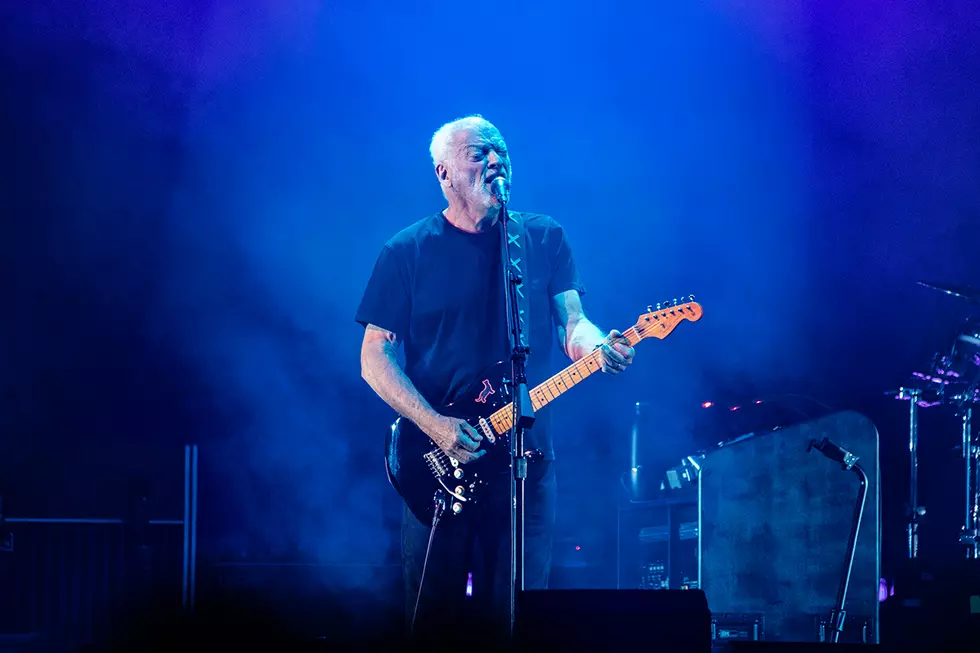
At exactly the right time, my wife and I found relief from the hustle and bustle of life, and especially from the anxiety we had about the big and important election we had coming up in the United States. We attended a rock concert at that iconic venue in Los Angeles called the 'Hollywood Bowl'. David Gilmour and his backing band were on stage. It's now about 50 years since I first listened to 'Dark Side of the Moon', Pink Floyd's seminal album, featuring Gilmour as lead guitarist. That album really impressed me, and it didn't fade over time. On the contrary, the influence of the album on me increased year after year, as it unfolded its its secrets to the world. Heartbeats (of life), the ticking of the clock, the rhythm of breathing, the influence of money, ageing, dementia and finally the inevitable death – these are the deep themes running through this album – important themes for all of us. Our insight changes and depends on where we are in our own lives, and that is a very clever plan. This album, like all great works of art, is timeless. So, it's no wonder we were excited about this concert. In spite of our expectations, it was better than we thought it would be, and that's not a small thing!

Beforehand

On the day of the concert, we drove a few hours to Hollywood from San Diego County and checked into a hotel we had booked months in advance. It was close to the 'Bowl' and we were able to walk to the concert. The crowds were doing the same thing, and it was easy and safe. A lot of police were present, and as it was Hallowe’en, a lot of people were in costume, including me ('The Riddler' from Batman). We were there quite early and had time to get some popcorn and a bottle of wine. Then, an official led us to our seats, and we sat down. We had a nice chat with our neighbors and then, the concert started.

The Concert

Gilmour and his band opened with '5 A.M.' from their album 'Rattle That Lock' (2015), followed by 'Black Cat' and 'Luck and Strange' from their new album 'Luck and Strange'. They were poignant pieces of instrumental music and paved the way for the classics we all looked forward to. Then came the pot of gold - three unmistakeable songs from the 'Dark Side of the Moon' album - 'Breathe (In the Air),' 'Time,' and 'Breath (Reprise)'. Even after decades, they haven't lost their spiritual magic, and for people of a certain age, including us, the music took us back down memory lane, and we were young again. A reverent silence fell upon us all, as we listened to sublime notes soaring and swooping through the air, notes that Gilmour coaxed from his guitar and that no other guitarist in the world would have been able to pull off. Perhaps God had left Heaven's gate open and the transcendental music of His own Angels was wafting down over us in the Bowl. Anyway, we were hooked and in a kind of Divine ecstasy!

I won't describe every other song in the concert, but a few others that stand out. I loved the set list - a powerful mix of songs, both old and new. Gilmour was also at his best as a singer, which was very clear when he sang the jewel 'Wish you were here' - the title track of the album of the same name, released in 1975. A new depth in Gilmour's voice brought a full-bodied sound to his singing style. Like a fine wine, Gilmour gets better with time, both singing and playing guitar. He is a master not only of his electric guitar - especially the 'Black Strat' (Black Fender Stratocaster), but also of his acoustic guitar - a Martin D-35, and he played both of them with gusto on 'Wish you were here' '. 

Romany Gilmour (David's daughter) sang a track from the new album 'Luck and Strange', called 'Between Two Points'. David took a back seat in the song and let the spotlight shine on his daughter, who has a great voice herself. We felt the intimate bond between David and Romany as they collaborated on stage.

Romany, Louise Marshall, Hattie and Charlie Webb sang the wonderful song 'The Great Gig in the Sky', from the album 'Dark Side of the Moon'. They were gathered around a grand piano that Louise was playing. Louise was the lead singer, with the other three as backing singers. David Gilmour was playing slide guitar in the background. You wouldn't imagine any singer could sing the high notes as well as Clare Torry, who sang the original version. In my opinion, this version was better than the original – and that’s no mean feat!

Encore!

At the end, Gilmour and his band returned for an encore. When we heard the iconic first note of the tune 'Comfortably Numb', we all stood up in tribute to Gilmour and his band.

Gilmour put on quite a show, playing both guitar solos like there was no tomorrow. He hit every note perfectly and precisely, so that his guitar squawked, whined and howled as if it were the voice of an animal, and he was taming the wild, emotional beast whose voice it was. It was an appropriate closing for the concert, and we were all, both musicians and their audience, exhausted and happy.


.

.

.

.

.

.

.

.

.

.

en_USEnglish