
Deis na Seamróige!

Shamrock Opportunity!

In a few weeks, the Taoiseach will stand in the East Room of the White House. The bowl of shamrock will be presented. Cameras will click and flash. The familiar annual words about friendship and historic ties will be heard.

But behind that ceremony, a more serious question lies hidden.

More than €20 billion in corporate tax was collected in Ireland last year, much of it from a small number of multinational companies headquartered in the United States. It is therefore natural for Taoiseach Micheál Martin to be cautious in conversation with President Trump, since no one can predict the response if tensions were to arise. What should the Taoiseach do — remain silent, or speak honestly about our views?

To navigate an international landscape that is becoming more uncertain by the minute, it is worth looking to Canada and its Prime Minister, Mark Carney.

Carney is known internationally as the former Governor of the Bank of Canada and later of the Bank of England. He earned respect for his steadiness during periods of financial turmoil. His credibility rests on action rather than words.

Carney’s grandparents were from County Mayo. He holds Irish citizenship and frequently speaks publicly about that rich heritage.

There are structural similarities between Canada and Ireland. Both countries are deeply economically integrated with the United States. Both rely heavily on open trade with it, and both are vulnerable when the tone or direction of American policy shifts. Recently, that risk has become more visible and more significant.

Carney’s response has been measured. At Davos earlier this year, he outlined what might be called a “middle-power strategy.” He did not attack the United States. Instead, he argued that smaller countries strengthen themselves through coordination and cooperation with one another.

That principle was evident recently in the case of Greenland. When President Trump renewed his interest in acquiring Greenland, a semi-autonomous territory of the Kingdom of Denmark, Denmark and the government of Greenland responded clearly: the territory was not for sale nor open for negotiation. European Union leaders expressed support for Denmark, and NATO partners reaffirmed their security commitments in the Arctic. The tariff threats associated with the dispute were withdrawn, and the matter did not escalate into a broader crisis.

The episode demonstrated the strength of allies when they stand together.

Canada will continue to trade and cooperate with the United States while at the same time expanding its economic and strategic options. That is risk management. Diversification reduces vulnerability.

In Ireland, a significant portion of corporate tax revenue depends on a small number of companies based in the United States. Pharmaceutical and technology exports to America make up a substantial part of our trade balance. If there were a sudden shift in Washington’s policy, Ireland’s economy would be hit harder than that of many larger EU countries with more diversified revenue bases.

Ireland can maintain and strengthen its economic relationship with the United States while at the same time expanding trade and investment links elsewhere — independently and through the European Union. A broader trade base reduces the risk associated with policy changes in any single capital.

That brings us back to St. Patrick’s Day.

Year after year, proposals are put forward calling for a boycott of the White House visit. But it would not be wise to take that advice. Ireland has symbolic access in Washington that countries of similar size do not enjoy. That access is a significant opportunity.

In my view, the question is not whether the Taoiseach should attend Washington. The real question is how Micheál Martin will use that opportunity on St. Patrick’s Day.

The Taoiseach can calmly and clearly express Ireland’s commitment to cooperation based on international rules and predictable trade. He can articulate his position without jeopardizing the partnership. That is consistent with Ireland’s diplomatic tradition and aligned with many of its European partners.

Carney’s emphasis on diversification is appropriate for a world that is more uncertain than before. He offers a practical approach — not only for Canada, but for countries like Ireland navigating this new world without a map. All that remains now for Micheál Martin is to seize the opportunity on St. Patrick’s Day.
 

Casphointe!

Pivot Point!

Every so often, a major innovation creates a decisive turning point. In times like these, the world changes rapidly. Often, companies or countries focused on established technologies—the very ones that brought them extraordinary success in the first place—are left behind (in áit na leathphingine), while others are willing to embrace the new technology and push it forward aggressively. The consequences can be profound, reshaping markets, power structures, and even the world order.

This dynamic is discussed in Clayton Christensen’s landmark book, The Innovator’s Dilemma. Christensen showed that leaders fail not because of bad management, but due to a lack of strategic decision-making. They continue to invest in technologies that serve their existing customers and revenue streams, while casting aside new technologies as weak, dangerous, or unprofitable.

Initially, that assessment is often correct. New technologies are immature, expensive, and weaker than established ones. But over time, the balance shifts. The new technology improves rapidly, and the legacy technology reaches its physical limits. The profitability of the legacy system decreases just as the capability of the new technology increases. By the time established leaders realize what is happening, the gap is too large to fill. They are left with no choice but to be followers or, worse, to be rendered obsolete.

Identifying such a turn in advance is extremely difficult, however. Sometimes, the perceived disruptions are false alarms. A famous example is Betamax versus VHS in video recording. Betamax was widely considered technologically superior to VHS. Consequently, many analysts thought Betamax would win the battle. Instead, VHS gathered strength because that technology was cheaper, more flexible, and had stronger support from the industrial sector. Those who followed the seductive call of Betamax were wiped out.

Today, we are seeing major turning points in the fields of energy and artificial intelligence (AI), and in the combination of the two. For a long time, the United States of America (USA) held (and still holds) a dominant position in fossil fuels. The USA is currently the largest oil producer in the world, with massive reserves and an extensive economic ecosystem based on hydrocarbons. This position shaped the world order, from foreign policies to domestic infrastructure.

But that era is drawing to a close. The world's energy system is turning toward renewable energy rapidly. Solar energy is now cheaper than oil-generated power. It is cheaper to drive electric vehicles than petrol vehicles. But China is the primary driver of these changes. China has made massive investments in energy manufacturing, battery technology, and electric vehicles. It does not see these industries merely as commercial opportunities, but as strategic priorities.

The results are clear. Chinese companies now lead in solar panel production worldwide. They are ahead in battery manufacturing. And in the field of electric vehicles, China’s BYD has overtaken Tesla in terms of global market share. Instead of competing directly, the USA has adopted protectionist policies—for example, with high tariffs on Chinese vehicles. This might protect domestic manufacturers in the short term, but history shows that this is a poor long-term strategy.

The U.S. approach is even worse because fossil fuels are a central cause of climate change. Politics does not change physics. Although the debate continues, we can all see the climate change that is underway. Meanwhile, China continues to export renewable technologies and solidify its role as the primary provider of the energy systems of the future.

The danger for the USA is marginalization. As global adoption of renewable energy accelerates, countries will rely more on Chinese supply chains, standards, and expertise. If the USA delays too long, it will have to adopt these technologies from a place of weakness. In that case, not even Silicon Valley—the innovation engine of America and the world for so long—can be sure it will survive.

Recent events have shown that Chinese power is increasing rapidly. China's threat to restrict rare earth minerals, combined with its total dominance in clean energy research and development, forced the USA to retreat from its plans to impose 60% punitive tariffs on China. This strategic countermeasure demonstrated that Beijing’s control over intellectual property and the supply chains of the future was a more powerful weapon than Washington’s traditional economic sanctions.

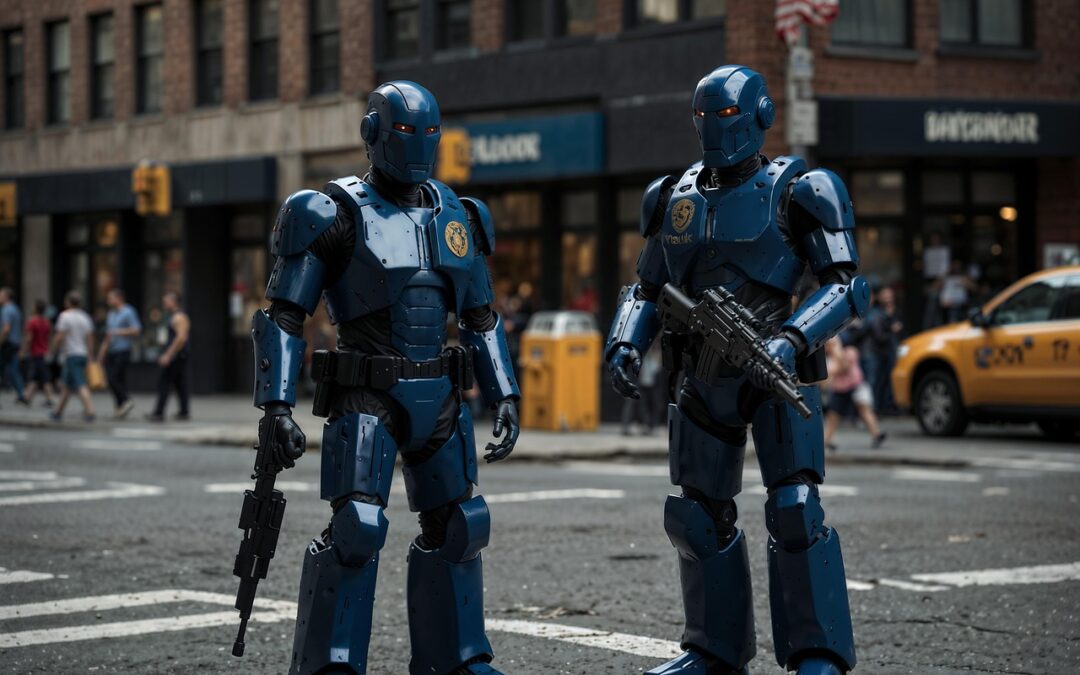
A similar competition is taking place in the field of artificial intelligence. Here, the USA is still ahead in foundational models and software. But China is advancing rapidly. The combination of artificial intelligence and energy could also be decisive. Consider mobile AI systems like humanoid robots. They rely not only on software, but on hardware, manufacturing, and power systems as well (solar energy, batteries, etc.). China’s strength in these areas gives it a structural advantage. Reports that humanoid robots are already being used to patrol cities like Shenzhen show that this technology will have a major impact not only on commercial affairs, but on security and military affairs as well.

It is highly likely that we are on the edge of a new era. It is clear that the USA is heading in the wrong direction. The country’s regime threatens its allies in Canada and Europe and imposes tariffs on them at the same time as being very friendly with Putin's regime in Russia. A major political divide has also opened in the country, where democracy is under pressure from authoritarianism.

Because of these significant changes, Europe and Canada are strengthening their ties with China, India, and South America. This will change global trade and influence for decades to come, and the USA will be the worst affected. The danger is also that, without the leadership of the USA as the champion of democracy, the world order will slip toward authoritarian dominance. History shows that it is a long and violent path, full of oppression, instability, and a terrible human cost. A world shaped by authoritarian power is not a safe or predictable world.

We are late in the game, but it is never truly too late. The USA must rebuild alliances, make serious investments in the technology of the future, and restore trust in itself at home and abroad. We barely survived the nuclear age—through restraint, cooperation, and imperfect institutions. Artificial intelligence could be even more dangerous, especially in the hands of dictators who care only for their own benefit.

The turning point is near us now. How the people of the USA meet this challenge—that is the vital question for us all.


Ag seasamh ar mo dhá chos féin arís

Back on my own two feet again

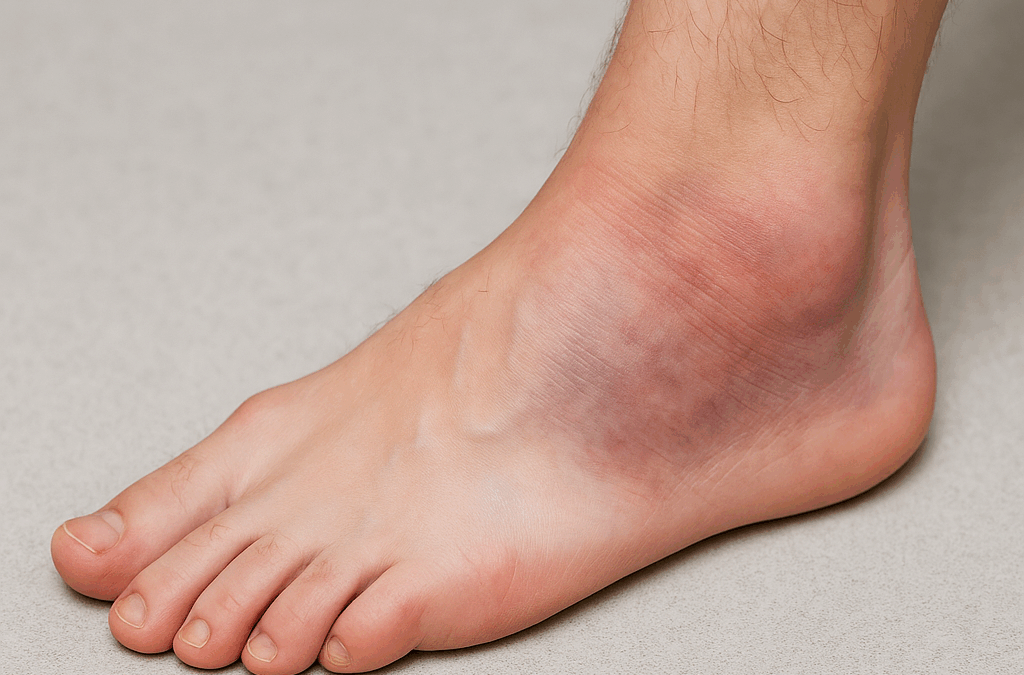
Almost four months ago, I fell while hiking. I fractured my right ankle and leg and damaged the surrounding ligaments. I went home in a large boot to keep the leg immobilised, and onto crutches to keep weight off it. I can finally walk again. Recovery is near complete.

I learned a lot more than I ever expected about what it means to live with a disability.

Steps everywhere

Our house is built on a slope. There are steps outside and more inside. Once indoors, shallow steps separate rooms on the ground floor. The main bedroom is upstairs.

The doctor provided a mobility scooter, but it wasn’t of much use. It couldn’t manage steps, inside or out. It was only of use in the kitchen. I ended up using the crutches all the time.

I could manage the shallow steps between downstairs rooms, but the stairs to the first floor were too dangerous. Because of that, I moved into the guest bedroom downstairs. It was one of many compromises I had to make.

Not allowed to drive

I wasn’t allowed to drive for the first three months. I depended entirely on my wife to get out of the house. I didn’t understand until then how key a car is nowadays.

Even with someone else at the wheel, new problems appeared. Parking was the biggest. I couldn’t go far on crutches, so it was necessary to park close to the door. We applied for and received a temporary disabled parking pass.

Disabled spaces are wider, and there’s a reason for that. You have to open the door fully, swing both legs out, steady yourself, and get the crutches positioned before you stand. Standard spaces don’t allow for that. They don’t have enough space.

What we also learned was how few disabled spaces there are. They were often all taken. When that happened, my wife would drop me at the entrance and go to park. When leaving, she would fetch the car and bring it back to me again.

Doors and ramps

Automatic doors were a blessing. Manual doors were a problem, especially heavy ones that seemed determined to close on you. It was almost impossible to open them while keeping your balance on the crutches, then then keeping them open enough to get through. Often, strangers would come to my assistance.

Steps without ramps were another challenge. I could manage the steps when necessary, but I was not comfortable using them.

People make the difference

One time, we attended a music event in the district. Staff allowed me to enter early. Accessible seating and a table were ready for me, with a clear view of the band. It was handled quietly and well, without any fuss.

Before that concert, there was a queue outside. A man at the front told my wife that I’d be fine waiting like everyone else. She checked with staff. We were allowed in. The man wasn’t pleased. He had no understanding how uncomfortable it was to stand on one foot with crutches for any length of time. And he didn’t ask either.

Begrudgers are part of the landscape. You learn to live with them.

Seeing the world differently

What surprised me most was how quickly your perspective shifts. You start to notice kerbs, steps and doors. You notice which places are easy to enter, and which are not.

You begin to see the world as something designed for a particular body, moving at a particular pace. And you realise that body isn’t always yours.

When we are not disabled, we expect easy access everywhere. When we don’t have it, we are unhappy. When other people don’t have it, we rarely notice.

My injury fell into just one category: mobility disability. In the United States, fourteen broad categories of disability are recognised, ranging from sensory or cognitive disability to neurological and mental health conditions. It was enough for me to experience just one, even temporarily, in order to understand how layered and complex the issue is.

In Ireland, the legal framework around disability is extensive. It covers access to public buildings and services, education, employment, Irish Sign Language, and digital accessibility under EU law. It helps, though experience on the ground still definitely varies.

I didn’t travel by public transport or by air during those months, but I could easily imagine how important support is in those settings. How essential it is to be seen not as a problem to be managed, but as a person moving through the world in a different way and at a different pace.

Conclusion

I learned other things too. I learned how many people are quietly helpful. How often support comes without being asked. I learned to slow down. You can’t rush anywhere on crutches.

Around a quarter of the population lives with some form of disability. Many more of us will, temporarily or permanently, at some point in their lives.

We are lucky when we are able-bodied. But the measure of a society is how it treats all its members, including those who have different needs than ours.

The biggest lesson that stuck with me was this: It is worth our while making the effort to serve the needs of everyone, not just the needs of the able-bodied.


Litir ó Mheiriceá –  Aird an domhain ar Mhinneapolis

Letter from America - Global Attention on Minneapolis

What is unfolding in Minneapolis is no longer only about illegal immigration. It is a stress test of American democracy, with consequences that reach far beyond a single city, a single state, or even a single country.

Two American citizens were killed following encounters with federal agents during protests that witnesses and video recordings show to have been peaceful. Neither had a criminal record. In both cases, senior federal officials applied the label “domestic terrorists” almost immediately, before any independent investigation had taken place and without presenting evidence to the public. In both cases as well, mobile phone footage tells a story that differs fundamentally from the official version.

As seen recently in the pressure exerted by the United States on Denmark over Greenland, American political stability is not a purely domestic matter. When democratic norms are weakened in Washington, the effects are felt near and far. Countries depend on the international system functioning properly and on major powers meeting their obligations. For countries such as Ireland, whose economic and security interests are closely tied to American stability, this erosion represents a practical and real risk.

Peaceful Protests

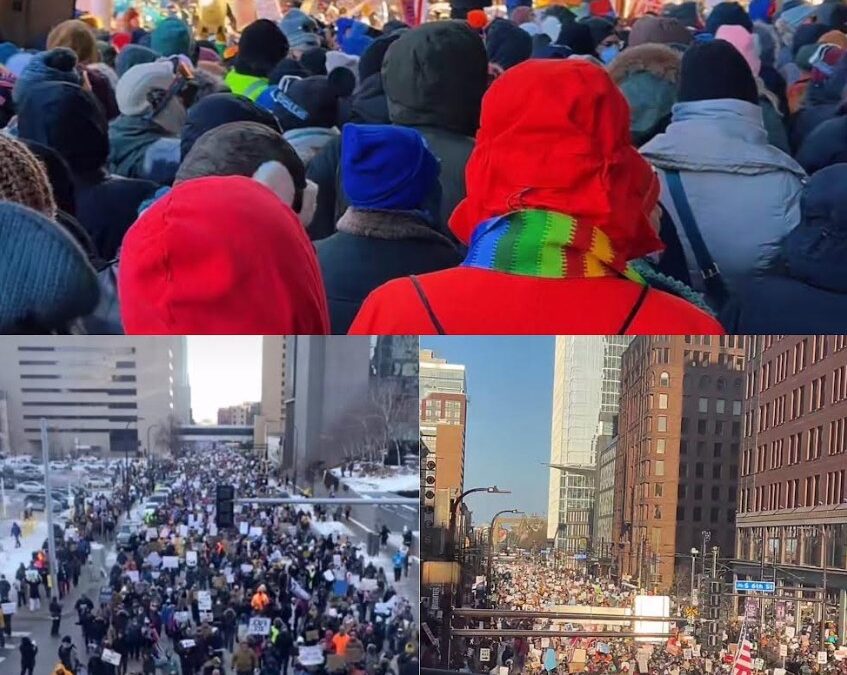
The streets of Minneapolis saw peaceful protests. The crowd chanted slogans. They criticised agents of the United States Border Patrol (CBP) and Immigration and Customs Enforcement (ICE). They recorded events on their phones. These are all lawful activities protected under the First Amendment of the US Constitution.

Despite this, the video footage clearly shows federal agents responding with force. Pepper spray and tear gas were used. Batons were used. People were pushed to the ground, restrained with plastic ties, and taken into custody against their will, even though there was no evidence of physical attacks by the crowd.

The Killing of Alex Pretti

Federal officials initially claimed that Alex Pretti attacked federal agents while armed with a gun. The video evidence does not support this claim in any way.

Pretti was legally carrying a concealed firearm and had the required permits. He did not draw the weapon.

Pretti saw a woman in distress after an agent pushed her to the ground and sprayed her with pepper spray. He attempted to help her. Pretti himself was sprayed, forced to the ground by six or seven agents, struck by one agent, and had his firearm taken by another. Then, while lying defenceless on the ground, one agent fired shots at him, followed by another agent. He was hit ten times and died.

After the shooting, the scene was not secured in accordance with standard investigative procedures. The agents left without preserving the site or securing evidence.

Pretti was participating in a peaceful protest, activity protected under the First Amendment. He was lawfully armed under state law and under what he reasonably understood to be lawful under the Second Amendment. On that basis, the video footage raises serious questions about the necessity and proportionality of the lethal force used.

The Killing of Nicole Good

The death of Nicole Good followed a similar pattern. She was killed after agents attempted to remove her from her car as she tried to leave. Without any independent investigation, it was officially stated that she was a terrorist, before the facts were publicly examined.

Once again, video footage and eyewitness accounts reveal a clear gap between official statements and what is visible. As in Pretti’s case, federal authorities refused to allow an independent investigation by state agencies or the FBI, asserting that an internal review alone would suffice. As is widely understood, accountability cannot exist when those who use force investigate themselves.

Smartphones

Smartphones have now become one of the most important democratic tools of the modern era. They expose contradictions between official statements and what can be seen in video recordings. They allow the public to witness events for themselves and reach their own conclusions, without relying solely on official accounts.

Minnesota Governor Tim Walz has urged people to carry their phones at all times and to record interactions with federal agents. This is a lawful act. Such recordings create a permanent record that can later be examined by courts, legislators, journalists, and the public.

Authority Without Accountability

In both deaths, federal authorities refused to permit independent investigations. At the same time, Governor Walz and the Mayor of Minneapolis are under investigation after declining to cooperate with CBP and ICE, arguing that state authority and civil rights were being violated.

If these practices continue without challenge, they are likely to expand. Other cities could be affected. Federal agents could be deployed during election periods, placing pressure on voters under the pretext of security. The erosion of civil liberties rarely remains confined to one location.

Authoritarian regimes in Germany, the Soviet Union, and China did not begin with mass killings. They began by portraying dissenters as enemies and demanding obedience in the name of order.

Response

The American public is not powerless. Peaceful protests can be organised. Votes can be cast in elections. Phones can record events. Pressure can be applied to elected representatives, and accountability demanded.

The international community also has a role. Recent US attempts at geopolitical coercion, including pressure related to Greenland, showed that coordinated resistance can work. Unified responses from the European Union and Canada demonstrated what democratic solidarity looks like, without resorting to threats or escalation.

It is now clear that the international system is changing. In light of these developments, it is reasonable for smaller countries to reassess their dependencies and future strategies, while keeping a close watch on the defence of democratic norms.


Litir ó Mheiriceá –  Scéal Dochreidte Donna Hughes-Brown

Letter from America- The Unbelievable Story of Donna Hughes-Brown

Donna Hughes-Brown has been released from the Campbell County Detention Center in Kentucky, hundreds of miles from her family in Missouri, after spending five months in custody. Her crime? Two bad checks (worth $80 in total) that she wrote at a grocery store more than ten years ago and for which she had already paid restitution.

It is a great relief that this Irish grandmother is now free, after being caught in the net of immigration enforcement currently taking place in the United States (USA). Her husband, Jim Brown, says the policy has "completely devastated" their family and clearly demonstrates the cruelty of the US government.

Unexpected Problem in Chicago

The nightmare began in July 2025. Donna and her husband Jim Brown had travelled to Ireland to attend the funeral of Donna's aunt. It was a routine trip for Donna, who was born in England to Irish parents in 1966 and moved to the United States in 1977 at the age of 11.

Despite having a Green Card for nearly half a century and having travelled internationally many times without any problem, this time was different. According to Jim, Donna had no problem at US Customs Preclearance in Dublin. However, when she landed at O'Hare International Airport in Chicago, the couple was separated.

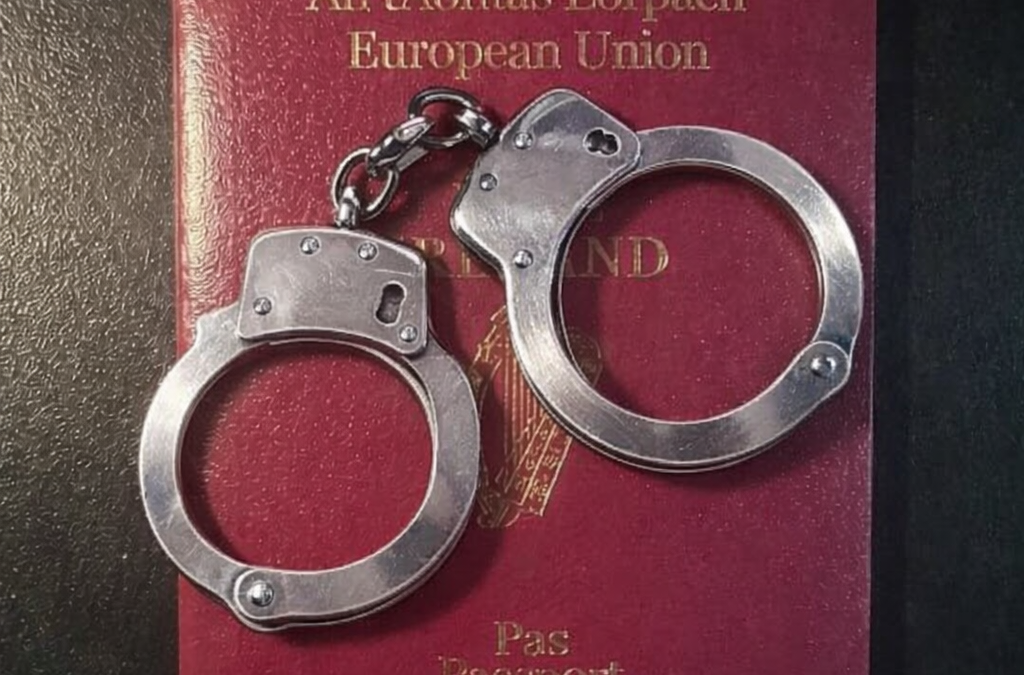
"She was given entry clearance in Dublin and was arrested anyway," Jim Brown said recently. He was told his wife only needed to sign some documents. Instead, she was handcuffed, detained by Immigration and Customs Enforcement (ICE), and imprisoned in Kentucky.

Trump signed the "One Big Beautiful Bill Act" on July 4, 2025. As part of that bill, the legislation of the Immigration and Nationality Act was amended, stating that the government can arrest people (who are not citizens) who violated any law in the past twenty years. The law came into effect on July 24, when Donna and Jim were already in Ireland.

"Crimes of Moral Turpitude"

Between 2012 and 2015, Donna was a single mother struggling and facing a serious financial crisis. She wrote two bad cheques at a local grocery store.

"They were for less than $80 combined," Jim Brown explained in testimony he gave at a Congressional hearing. "She was charged with a misdemeanor, paid the restitution, and completed one year of probation. That happened ten years ago." Under the new interpretation of immigration law, these misdemeanors are now being classified as "crimes of moral turpitude." On this basis, the government can strip Donna of her right of residency and deport her from the USA.

Important Campaign

Jim has been campaigning for months on behalf of his wife. He admits that he voted for Donald Trump because he believed Trump's promises that immigrants who were violent criminals would be arrested and deported. But he now believes the government is targeting people like his wife to meet deportation quotas.

"Look at the news, and the government isn't telling the truth about what is happening to many legal immigrants," Jim said. "The worst thing is that Trump is so disrespectful to people, so inflammatory and retaliatory, that people are afraid to say anything."

Confrontation in Washington

The case reached a tipping point in Washington, D.C., during a hearing on "Worldwide Threats to the Homeland." Jim Brown stood in the gallery while Democratic representatives placed strong pressure on Kristi Noem, DHS Secretary and a Trump ally, regarding the immorality of Donna being held without trial.

Representative Seth Magaziner of Rhode Island forced Noem to address the human cost of her department's policies. "He is a Navy combat veteran who served our country in the Gulf War," Magaziner said, referring to Jim. "He is married to a woman named Donna who came to our country legally when she was 11 years old... Because of you, Donna has been in prison for the last four months."

When Noem tried to avoid the question, saying she wasn’t responsible for which laws should be enforced, Magaziner pushed back, noting her broad discretion as Secretary to issue parole. Under the gaze of the committee and under the gaze of the distraught husband, Noem finally conceded: "I will review the case."

Pattern of Targeting

Donna's ordeal is not an isolated incident. There are striking similarities between her case and the case of another Irish person - Cliona Ward. Although she has a Green Card, Ward was arrested at San Francisco International Airport in April 2025 after a visit to Ireland, due to minor offenses that also go back almost 20 years. Although Ward was finally released in May, her detention indicated that this new aggressive enforcement strategy was beginning.

Home for Christmas

The story reached a happy conclusion at the critical court hearing on December 18. Despite fears that it would be delayed again, Donna was released from ICE custody.

Previously, Jim said: "Show me where it is written in the Bible that it is right to do something like this. It is wrong, period!" Now, after five months of hardship and uncertainty, Donna will be able to celebrate Christmas at home with her family in Missouri.

"She is one hundred percent innocent. She is in this country legally," Jim said. Now, finally, justice has been achieved for them.

en_USEnglish