Litir ó Mheiriceá- An Garda Náisiúnta: Cnámh Spairne Pholaitiúil?

Letter from America – The National Guard: A Political Battleground?

Letter from America – The National Guard: A Political Battleground?

What is the National Guard?

Every state in the United States has its own National Guard – a part-time force with roots in colonial militias. Normally, they are under the command of state governors. They are deployed to assist with emergencies such as floods, wildfires, or riots.

But the president has the power to “federalize” these units – that is, to place them under federal authority and use them in large national missions. Most are part-time soldiers, training one weekend a month and two weeks a year.

Traditionally, their work supports communities: rescues after hurricanes, evacuations during wildfires, distributing COVID-19 vaccines, and helping during major protests.

From Washington to Los Angeles – and now Chicago?

In August 2025, Trump ordered National Guard units into Washington, D.C. to “preserve law and order.” Armed soldiers manned checkpoints and stood in front of schools, angering parents. The slogan became: “Leave our kids alone.”

The irony: crime in D.C. was at its lowest level in 30 years.

In Los Angeles, the Guard was deployed alongside immigration officials, at checkpoints and detention centers – a controversial expansion of its role.

Now Trump is threatening Chicago, a city where crime has already fallen sharply. New York City has also been mentioned as a target.

Trump’s Executive Orders

On August 25, Trump announced an executive order: he wants the Secretary of Defense to establish “special units” within the National Guard to deal with “public order issues.”

Historians and legal experts warn this is a dangerous step, transforming the Guard from a support force into a domestic police force.

He also claimed he had “saved D.C. from destructive crime,” even though crime rates were at their lowest in a generation. And he went further still: ordering the Department of Justice to impose a one-year prison sentence on anyone who burns a U.S. flag – though he has no authority to do so.

The Facts Trump Ignores

The White House says deployments are needed in response to crime. But the numbers tell a different story:

  • Shootings and homicides in Chicago are down 23–30% this year; 2024 was the safest year in five years.
  • Crime in Washington, D.C. is at its lowest in 30 years.
  • Republican-run cities like Shreveport, Louisiana and Charleston, West Virginia are far more violent – yet no Guard has been sent there.

It’s plain: Democratic cities are being labeled “lawless,” while worse problems exist in Red states.

Red Flags

The 1878 Posse Comitatus Act prohibits regular federal troops from acting as police. While the National Guard is usually under governors’ control, the President can place them under federal command in certain situations.

But usually this happens with the consent of the state itself – not through threats from the White House.

A Strong Response from Pritzker

Illinois Governor J.B. Pritzker left no doubt about his stance after learning of Trump’s threats against Chicago:

“This is a manufactured crisis, not a real one. It has nothing to do with crime. It has everything to do with Donald Trump’s political nightmare.”

He called the move “unconstitutional, illegal, and un-American.”

He emphasized the facts:

  • 13 of the 20 cities with the highest murder rates are under Republican leadership.
  • 8 of the 10 states with the highest murder rates have Republican governors.
  • “Chicago isn’t even on those lists.”

And his strongest message:

“Mr. President, don’t come here to Chicago.

We don’t want you here, and you are not welcome here.”

The Danger of Authoritarianism

Until recently, the United States was viewed as a model of democratic practice.

But when leaders use military force against their own citizens, it signals a slide toward authoritarianism. And once military power is brought into civilian life, it is hard to remove.

Conclusion

The National Guard’s presence in D.C. and Los Angeles reveals a dangerous misuse: soldiers being deployed to police politics instead of protecting people.

By exposing the lies and standing firm, leaders in Chicago remind us of a simple truth: The National Guard was not created to frighten civilians, but to protect them.


Bata agus Bóthar!

The Boot!

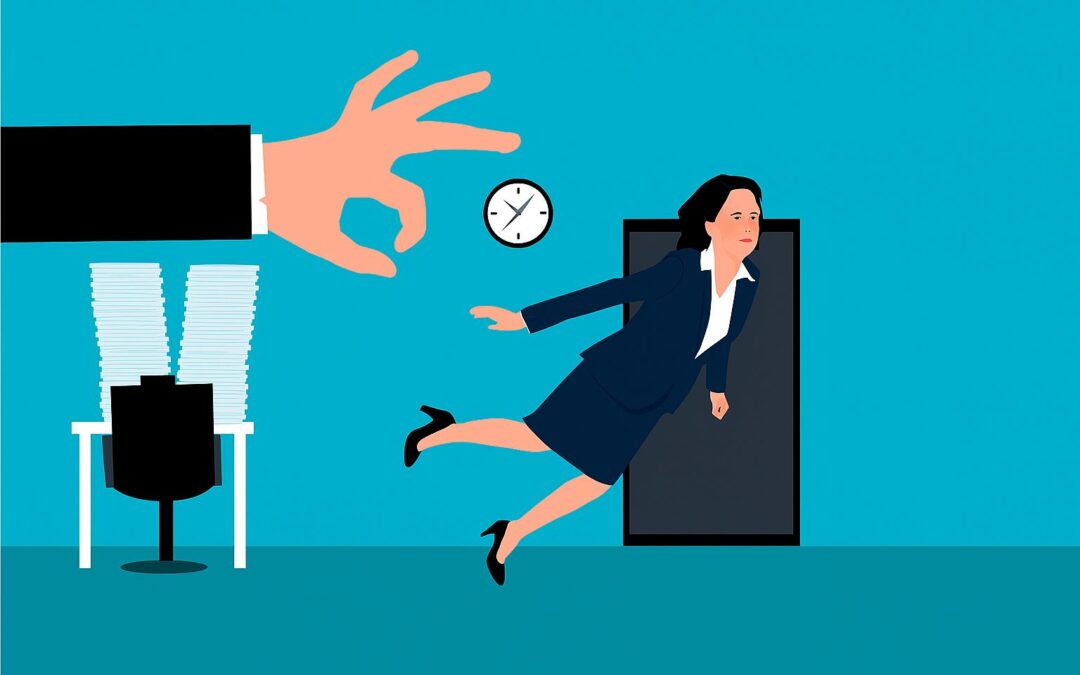
The recent decision to remove Erika L. McEntarfer, Commissioner of the Bureau of Labor Statistics (BLS), from her position is an extremely irresponsible act that puts the American economy at risk. It is concerning whenever a government puts its thumb on the scale for political purposes. The BLS reports statistics as they are, based on the data it collects. American presidents in the past understood this and did not interfere with these facts. As Janet Yellen, former Treasury Secretary and former Federal Reserve Chair, said, this is "the kind of thing you would expect in a corrupt country."

The Hard Work Behind the Data

The BLS is not run by an individual working on a private spreadsheet. About 40 full-time experts work diligently at the Bureau to issue monthly reports on employment, inflation, and other critical indicators. When a president dismisses the Bureau's Commissioner, it doesn't look good, nor does it change the truth. Such an action can create a crisis of confidence, which brings other major problems.

Unfortunately, the accuracy of the data is already under threat. The BLS budget has been reduced by about 19% in real terms since 2009, according to Axios (a statistical association in America). Additionally, participation in the Bureau's surveys has declined. But there are solutions to these problems: increased investment in the Bureau and a better understanding of the causes of declining participation, to address it effectively. Some critics say the BLS methodology is outdated. But what's needed is additional investment, not political interference, to fix this.

We've Seen This Before

Kevin Hassett, Director of the National Economic Council, recently admitted that the goal is to "put in one of our own people." That should sound every alarm. This is political interference. An important question needs to be answered: Will senior government officials - Bessent, Hassett, and others - set aside the truth for the sake of their own careers?

The Greek government concealed inflation data and budget deficits to meet EU criteria. This resulted in a debt crisis, international bailout, and years of economic crisis. In Argentina, the government falsified inflation figures and gross domestic product (GDP) to hide an economic crisis. As a result, foreign investment declined, interest rates rose sharply, and the peso fell. They are still paying for it.

If tariffs, spending, and supply disruptions are driving inflation, false reports won't stop prices from rising at the store, at the gas station, or in the bond market.

The bond market, in particular, is merciless. If that market loses confidence in the figures published by the BLS, lenders will demand higher interest rates as a result. As Bill Blain, a bond trader in London, wrote in his newsletter 'Blain's Morning Porridge': "August 1, 2025, might be remembered as the day the US bond market died. There was an art to reading US data. It was based on trust. Now that's broken - if you can't trust the data, what else can you believe?"

Jerome Powell

The attacks on Jerome Powell, Chairman of the Federal Reserve, are also dangerous. He is running an independent central bank, and his decisions should be based on data, not political expediency. He cannot be easily removed from his position, but that hasn't stopped the president from putting continuous pressure on him to lower interest rates.

This is not new. Turkey's Erdogan did the same thing, and it created widespread inflation, currency collapse, and economic instability. When loyalty is placed above expertise, disaster always follows.

The Root Problem

Despite his messages, the president's new spending bill (which he himself calls the Big Beautiful Bill) will add another $3.5 trillion to the national debt. Tariffs also carry major risks, including increased inflation rates, and it's not clear what real benefit they provide.

Authoritarianism at the Door?

This is not just about the BLS. A broader perspective needs to be considered: dissent is being punished, human rights are being revoked without due process, and electoral districts are being distorted. If critics are silenced and independent information is blocked, what will stop the next step?

Look at Ortega in Nicaragua: critics forced into exile, citizenship revoked, journalists killed. It starts with small steps. It ends in disaster. Blain imagined a future where a "Ministry of Economic Truth" would issue press releases: "Under the President's leadership, the US economy continues to grow at an unprecedented rate. Payroll data from the Ministry of Truth shows full employment across America." If nothing is done to address this, the same will happen in America. It begins when information is distorted to serve the president.

A Call to Action for Americans

It's uncertain whether the United States will have democracy or authoritarianism in the future. Democracy is a fragile system, and the public needs to be informed about it and participate in it. I hope every American will be ready to defend their system. Write to your elected representatives, participate in awareness campaigns, and support organizations that protect government transparency. Organizations like Project On Government Oversight (POGO) and Open The Government – these are organizations working diligently to protect government transparency and ensure accurate data for citizens. Every citizen will have the opportunity to cast their vote in next year's midterm election, and to elect representatives who will work for them, not for authoritarianism.

Good advice can be found in the West Point Cadets' prayer (training center): "Take the right but difficult choice instead of the wrong but easy one." This principle is not being applied at all by the current US government. If the administration's behavior continues in this way, we are not far from an America we don't recognize.

If the opportunity to stop this foolishness is lost, truth will be lost. If truth is lost, democracy will be lost.


Litir ó Mheiriceá – Caillteanas sa Chainneon Mór

Letter from America - Loss in the Grand Canyon!

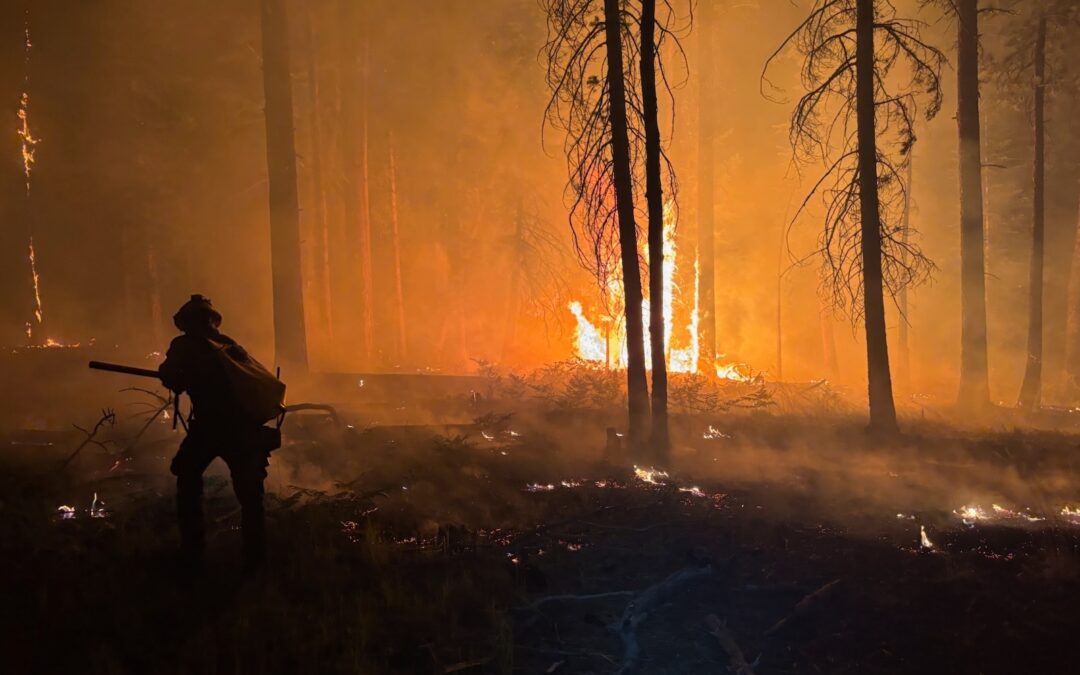
With wildfires spreading across northern Arizona, smoke clouds rose over the Kaibab Plateau. Within a few hours, flames reached the North Rim of the Grand Canyon, and by evening the Grand Canyon Lodge was on fire — the heart of the North Rim community for over ninety years, and a cherished piece of U.S. national heritage under the care of the National Park Service (NPS).

The Lodge was built in 1928 and later granted National Historic Landmark status. Designed by renowned architect Gilbert Stanley Underwood, it was constructed using local materials — Kaibab limestone, Arizona ponderosa pine, and Douglas fir — to blend into the natural landscape. For nearly a century, it opened its doors to visitors from every corner of the world. The building itself stood as a living symbol of cultural conservation and architecture suited to nature.

Its loss is devastating — not only for tourism and the local economy but for cultural heritage in the United States. The Grand Canyon was visible through the large windows in the sunroom. Large hand-carved beams were part of the interior design. A large fire burned in the stone hearth to welcome visitors. It was impossible to imagine the North Rim experience without spending a night in a wooden cabin beside the Lodge. It was central to the North Rim experience. Its destruction leaves a gap impossible to fill in the nation's cultural and architectural landscape.

Treasure at Risk

The Lodge stood as a living symbol of the principles of the first generation of conservationists. Located 1,000 feet higher than the South Rim, it always offered a quieter, more personal experience on the North Rim.

But that remoteness comes at a cost. Fire crews must travel far from their bases. Electronic communication is not widely available — in particular, mobile phone coverage is not reliable. Emergency responses are slower, and decisions often have to be made quickly and with limited information.

“I worked at the Lodge for three summers in the 1990s,” says Maria Sanchez, a former NPS seasonal employee. “We were worried about fire even then. We had regular drills, but we always understood we’d be left on our own if a big fire spread.”

According to the NPS, on July 10, 2025 lightning struck a dry forest nearby and began the Dragon Bravo fire. Although teams were monitoring it, it was initially not seen as an immediate threat. Inaction occurred because their trust was based on inadequate models. But then the wind shifted suddenly and the fire spread rapidly. Ground and aerial crews made seven determined attempts to control it, but they failed — it was too late by then. Everyone moved out of the Lodge in time, but the Lodge itself burned to the ground, along with most cabins and other buildings.

System in Disrepair

This was not just a natural disaster. The NPS has been under pressure for years. According to the Public Lands Alliance, the NPS lost nearly 3,000 full-time jobs over the past decade. Seasonal hiring has also declined, and there isn’t enough firefighting equipment available.

A 2023 Government Accountability Office (GAO) report claimed that officials were not properly prepared to deal with wildfires in national parks — including the Grand Canyon. They recommended better inter-agency coordination, reduced fire risk, and greater investment in protective infrastructure. But most of those recommendations were shelved.

The same report mentioned delays in updating evacuation protocols and failure to develop aid agreements between parks and local authorities. Historic buildings in high-risk areas — including the North Rim Lodge — were left without sprinkler systems, shelters, or comprehensive disaster plans.

Lessons Still to be learned

This tragedy echoes past failures: the Yellowstone fires in 1988 and Chimney Tops 2 in Great Smoky Mountains National Park in 2016. The risk was clear then too, but the response was inadequate.

When the alarm came this time, NPS teams were already dealing with other fires in Arizona. Internal sources show there were unusual delays in dealing with the Dragon Bravo fire. Meanwhile, some lodges like the Ahwahnee Hotel in Yosemite are well-prepared, with sprinkler systems, fire-retardant roofing, and cleared surroundings. It’s clear that standards vary between parks. Why isn’t the same standard applied across the board?

“There Must Be an Investigation”

Arizona Governor Katie Hobbs said bluntly after seeing the burned Lodge:

“There must be an independent investigation. We cannot allow historic landmarks like this to disappear without accountability.”

She’s right. We must ask the crucial questions: Why was expert advice ignored? Why weren’t precautions taken?

Climate crises are increasing. 2023 was one of the driest years ever on the Kaibab Plateau, yet funding for the agencies responsible for protecting our parks and heritage continues to be cut.

If we love the Grand Canyon, we must protect it — with firm action, not quiet memories.

What Happens Now?

The extent of the damage is still being assessed. Rebuilding is not ruled out but will be challenging. If it could be built once a hundred years ago, why not again now?

Fundraising has already begun by former employees and North Rim friends. But rebuilding alone isn’t enough. We need a strategic reassessment of how we safeguard our heritage.

Recommendations for the Future

To protect our National Parks into the future, clear and practical steps must be taken:
• Install water sprinkler systems and fire-retardant roofing on historic buildings
• Maintain cleared buffer zones around structures
• Implement forest management based on environmental, economic, and cultural criteria
• Share real-time data among agencies
• Deploy early-warning systems including satellites and drones
• Ensure strong, well-equipped firefighting teams are immediately available
• Conduct yearly risk reviews and protective planning in heritage zones

National Responsibility

Congress must pass a National Parks Emergency Act. This would allocate $500 million for wildfire prevention and infrastructure repair in at-risk parks, prioritizing protection of historic buildings like the Lodge.

The Lodge’s destruction isn’t just a loss — it’s a warning. If resource cuts continue, more tragedies are inevitable.


Litir ó Mheiriceá – Tuilte i Texas!

Letter from America - Floods in Texas!

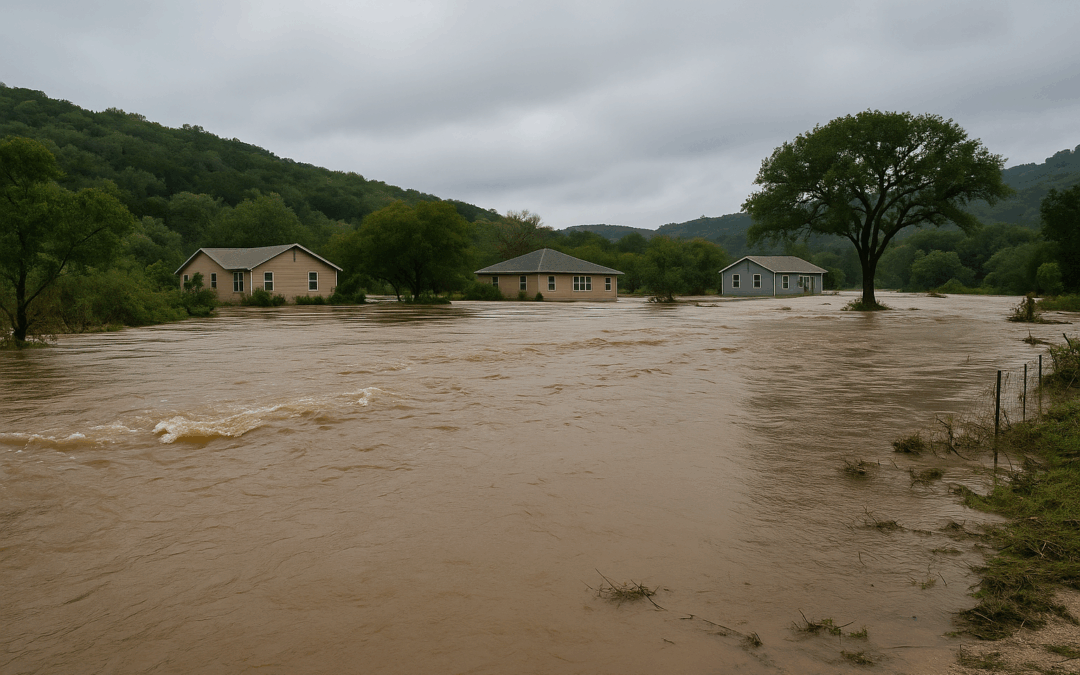
More than 120 people have died so far and a significant number are still missing after catastrophic flash floods swept through central Texas, USA, on the morning of July 4. Communities along the Guadalupe River, particularly in Kerr County, in the heart of a region known as the Hill Country, have been hardest hit by the flooding.

A terrible tragedy struck Camp Mystic, a summer camp for girls near Hunt, Texas. Located directly on the banks of the Guadalupe River, the camp was overwhelmed early on July 4th when the river rose more than 26 feet in less than an hour. The cabins were submerged before staff could put evacuation plans into effect in time. Not only were the old cabins not moved from the banks of the Guadalupe, but during a 2019 expansion, new cabins were allowed to be built in other areas of the camp, some in areas that were still at risk of flooding. The cabins closest to the river remained in place, despite being located in areas known as “floodways,” areas that are off-limits in many other states. No relocation strategy was devised. The most at-risk buildings were still in use when the disaster struck.

As of July 8, at least 27 campers and counselors have been confirmed dead, including the camp’s longtime director, Richard “Dick” Eastland. 10 other girls and one staff member are still missing.

While some people believe that little could be done given the speed of the flood, the story at Camp Mystic tells a different story. Some cabins were located on slightly higher ground, about 400 meters from the lower ones. The girls in the upper cabins survived. Only those in the lower cabins were lost. If they had had even five minutes of warning, they might have been able to initiate a partial evacuation, or at least alert the staff. The people did not fail. The system failed.

We extend our heartfelt condolences to all the families affected in any way. This is a time of grief and sorrow. Still, we must ask and answer hard questions openly, if we are to be better prepared for the next such disaster.

The Case of Kerr County: No Sirens, No Warning

Like much of the Hill Country, the people of Kerr County have a long history of flash floods. The area is so prone to flooding that it has been nicknamed "Flash Flood Alley." With steep limestone terrain, shallow soils and narrow rivers, it is susceptible to sudden bursts of water, especially when moist air moves in from the Gulf of Mexico, as happened with the recent Barry storm.

But despite the ongoing risk, Kerr County still doesn't have a siren. "We don't have a warning system," County Judge Rob Kelly said bluntly at a press conference. Nearby counties, such as Comal and Guadalupe, have had sirens installed for years. In New Braunfels, about 60 miles away, the warning system is tested monthly. A similar system was considered in Kerr County back in 2016, but Commissioner Buster Baldwin rejected a $50,000 engineering study, saying: “I see the word ‘sirens’ and all that stuff here.” Now, families are asking why that decision was never revisited, especially after the floods in 2018 and 2021 that exposed the same vulnerability. An online petition on Change.org is demanding a modern warning system. Nicole Wilson, who lives in San Antonio and grew up in Kentucky, said: “They know it’s needed. They’ve acknowledged it. They’ve just never been able to implement it.”

Texas Lieutenant Governor Dan Patrick went even further, referring to the upcoming special session of the legislature: “If the city can’t do it, let us do it… If there was a siren, it could make a difference.” For some Camp Mystic families, five minutes could have been the difference between life and death.

Flaws in the response system that saves lives

Lack of Sirens: Kerr County didn’t have a siren system. Many people, including those in Camp Mystic, received no warning before the flood hit.

Weaknesses in Digital Alerts: Warnings were sent via text and apps, but people were asleep or in areas without coverage. Timely warnings weren’t given until water was in homes.

Poor Coordination Between Agencies: There was a breakdown in communication between rescue teams and emergency services. Air rescues were called twice, and some responses were severely delayed.

Failure of Regulation and Planning: Local authorities allowed buildings to remain and new ones to be built in areas at high risk of flooding. They left cabins near the river even though they knew there was a risk of disaster. No steps were taken to protect people.


Steps to be taken

  1. Warning System: Every county with a history of flooding must have a warning system. If counties don’t have the resources themselves, the state or federal government should pay for one.
  2. Comprehensive Alert System: Text messages alone aren’t enough. The public needs to receive alerts via sirens, radios, cell phones, and if necessary, person-to-person.
  3. Shared Tracking and Planning Systems: Emergency agencies need to be able to easily share real-time data and mapping. Everyone needs to be on the same page.
  4. Stricter Rules: Local and state governments need to tighten building regulations in high-risk areas, especially in “floodways.” Cabins of any kind should not be allowed in the most vulnerable areas without independent review.

Missed Opportunity — or one Still to Be Seized?

Last March, House Bill 13 was introduced in the legislature. It proposed a plan for a statewide warning system and funding for rural counties. It failed. It was said to be too expensive.

But now, the cost is being measured in lives instead of money.

The Test Ahead                    

This disaster clearly shows what happens when human life is not prioritized. The upcoming special session in Texas can fix this. I urge them: Fund the sirens. Close the communication gaps. Coordinate the response. Enact the right legislation.

Every state and country has a lesson to learn: Prepare for climate disasters in advance, and provide the right funding at all levels. If we ignore this lesson, it will come back again and again – until it is learned.

Ó Ceanada!

O Canada!

O Canada!

O Canada!
Land of the just warriors
A crown on your head, with leaf of red and gold
From coast to coast, with sweet song
Your renown we are praising
Under the protection of your shield
Is bright freedom
Our enemies will not pull us apart
O Canada!
The hope of our hearts
Happiness, peace and the grace of God for our land,
Happiness, peace and the grace of God for our land.

Canadian Election 2025

Canada has reacted strongly to the hostile stance taken by Donald Trump and his administration. The reaction was clearly reflected in the dramatic results of their federal election on April 28, 2025. Just three and a half months ago, the Liberals were 25 percentage points behind the Conservatives in popular opinion polls. After nearly 10 years in power and under the increasingly unpopular leadership of Prime Minister Justin Trudeau, it seemed the Conservatives were ready to deal them a fatal blow.

Then Donald Trump returned to the White House and very quickly, everything changed.

Trump imposed 25% tariffs on Canadian imports, citing concerns about immigration and drug trafficking. These measures threatened key sectors, including steel, aluminum, and the auto industry, and posed the risk of a recession, with projections of a 2.5% decline in gross domestic product (GDP) and job losses for about 150,000 workers by early 2026.

To add insult to injury, Trump has repeatedly suggested that Canada would be better off as America’s 51st state.

Last week (as I write this) he said: “if it weren’t for us (the United States) there would be no Canada, indeed (it wouldn’t exist) as a country.”

Suddenly, Canadians realized that the strong, long-standing relationship between them and the Americans had been broken. It was hard to believe, as the Canadians had long been friendly neighbors, who had gone out of their way to help the Americans. They went to war with them, gave them sanctuary when necessary (in the Iran hostage crisis of 1980, for example), and they have cooperated frequently and with little disagreement between them – until now. Trump began threatening them without any basis when he was elected president.

“Up until then, the Conservatives, led by Pierre Poilievre, were on track to win the largest majority in government in Canadian history, but it all fell apart in three, four months,” said Kory Teneycke, a leading Conservative strategist.

Carney’s campaign emphasized economic stability and resistance to US interference, which resonated strongly with voters who were concerned about Canadian leadership. Conversely, public support for Poilievre, whose rhetoric matched Trump’s, and who did not address Trump’s threats to Canada, waned. In addition, a large share of supporters of other parties shifted their support to the Liberals – mainly the New Democrats and the Bloc Quebecois.

Trump meddles in Canadian affairs

Trump made things worse on election day, when he posted on social media, on Truthsocial.com, suggesting that Canadians might vote for Trump himself, which is not allowed, as he is not on the ballot. Here is what he wrote:

“Good luck to the Great people of Canada. Elect the man who has the strength and wisdom to cut your taxes in half, to increase your military power, for free, to the highest level in the world, have your car, steel, aluminum, lumber, energy, and all other businesses, QUADRUPLE IN SIZE, WITH ZERO TARIFFS OR TAXES, if Canada becomes the cherished 51st. State of the United States of America. No more artificial lines from many years ago. Look how beautiful this great land would be. Free access with NO BORDER. ALL POSITIVES AND NO NEGATIVES. IT WAS MEANT TO BE! America can no longer subsidize Canada with the Hundreds of Billions of dollars a year that we have been spending in the past. It makes no sense, unless Canada is a State!”

Trump received this response from Pierre Poilievre: “President Trump, stay out of our election. Only Canadians will decide the future of Canada at the ballot box. Canada will always be proud, sovereign and independent and we will never be the 51st state. Today, Canadians can vote for change so that we can strengthen our country, stand on our own two feet and stand up to America from a position of strength.”

Tar éis do Mark Carney an bhuachan a bhaint amach mar phríomh-aire, d’athdhearbhaigh sé a sheasamh maidir leis na Stáit Aontaithe, nuair a dúirt sé: “Mar atá á rá agam anois le míonna anuas, tá fonn ag na Stáit Aontaithe ár dtalamh, ár n-acmhainní, ár n-uisce agus ár dtír a ghabháil,” a dúirt Carney lena lucht tacaíochta. “Ní maíomh na mogail folamh é seo. Tá an tUachtarán Trump ag iarraidh sinn a bhriseadh ionas gur féidir le Meiriceá seilbh a ghlacadh orainn. Ní tharlóidh sé sin choíche… choíche.”

Conclusion

There is no excuse for Trump’s outrageous behavior. He should not threaten Canada, and he should not interfere in its election either. The 2025 Canadian election demonstrates the profound influence of international politics on domestic affairs. Canadian voters were angered by Trump’s tariffs and hawkish rhetoric, and they stood shoulder to shoulder against Trump’s threats and strongly for Canada. That is why they put Mark Carney and the Liberals in power – they understood that the Liberals would stand up for them. Mark Carney and his new government will face significant challenges as they chart a new course for the country – a more independent course and a more formal and cooler relationship with the United States. Other countries may well learn from what happened in Canada. The world will never be the same again, and we all need to understand that, and our governments need to act accordingly. 


Litir ó Mheiriceá – An troid in aghaidh na holagarcachta!

Letter from America - the fight against oligarchy!

"When you see something that is not right, not fair, not just, you have to speak out. You have to say something; you have to do something."

-John Lewis (1940-2020) - American civil rights activist.

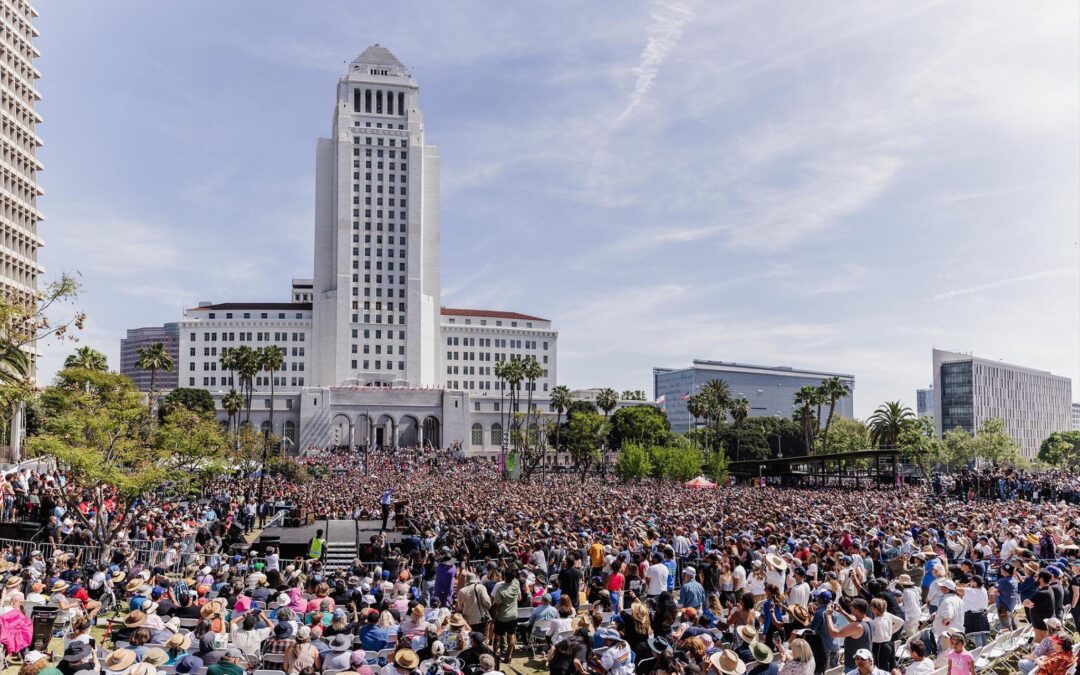
This is not the time to be silent here in America, with democracy in mortal danger. It is time for us to stand up publicly, to defend democracy against the imminent threat of oligarchy. The worst thing we can do is to be silent, to say nothing about what is happening before our eyes. Most Republicans are happy to sit back in government and do nothing, while President Trump and his colleagues permanently damage the federal government, and violate the constitution more blatantly every day. The Democratic Party or the Independents are not doing enough either – with a few notable exceptions. Independent Senator (Vermont) Bernie Sanders and Democratic Representative (New York) Alexandria Ocasio-Cortez (AOC) are currently on a major political tour of the United States, titled ‘Fight Autocracy’. They were not expecting the turnout they are getting across the country. A week ago, I attended another local protest in my hometown of San Diego County, and I was thrilled to be there, along with others who are not content to sit back and do nothing about the corruption going on in Washington, DC. When I heard that Bernie Sanders and AOC were coming to Los Angeles, it was an easy decision to attend this special event!

Fight Autocracy

On April 12th, my wife and I took the train to downtown Los Angeles (Union Station) early in the morning. After a short walk to Gloria Molina Park, we entered through security gates. We didn’t need to be there so early, as local politicians and guest speakers from various unions were on stage throughout the morning. We went out to find food after a while, as there were long lines waiting for the catering trucks and portable toilets. We were very lucky, as we found a food court near the park, and had a nice lunch before returning.

The main events really began at one o’clock in the evening, when Joan Baez took the stage. She opened with the country song “Ain’t Gonna Let Nobody Turn Me Around,” and the crowd cheered wildly as she sang new lyrics saying “I won’t let no white supremacists turn me around” and “I won’t let those ugly billionaires turn me around.” She followed with “There But For Fortune,” as well as a stirring cover of John Lennon’s “Imagine.”

Baez expressed her disdain for the Trump administration last month when she appeared on John Mulaney’s “Everybody’s Live With John Mulaney” and said, “Our democracy is on fire!”

Singer-songwriter Maggie Rogers then took the stage, singing “Different Kind of World,” “Light On” and “Alaska.” Baez returned to the stage and sang “America the Beautiful” together.

Neil Young got his turn before AOC and Sanders, coming out with his electric guitar and mouth organ, singing “Take America back” to the crowd while playing power chords on his guitar. Young performed “Rainbow of Colors,” “Take America back,” again, and at the end of his set sang “Rockin’ in the Free World” with Baez.

AOC and Bernie

Then it was time for AOC to take the stage. She didn’t mince her words, calling it a scary time. “We’re seeing neighbors, students, and friends losing their jobs; they’re being harassed and even kidnapped by the government.” She also said that power, greed, and corruption are taking over the country like never before.

When Bernie Sanders took the stage, we were all excited. He told us that there were 36,000 of us in attendance, which Trump and Musk wouldn’t want to see. “This is an era where the Republican party has become a cult, giving in to Trump’s every whim,” Sanders told us, adding that the Trump administration is now “planning how they can give $1.1 trillion in tax breaks to the wealthy.” He also said that these are very dangerous times, and that our response will have a significant impact, not just on us, but on future generations. He said a few other things that really struck me. “I’m no longer saying we’re moving towards oligarchy, I’m saying we’re now living in an oligarchic society.” He also said “In our democracy, we need to stop billionaires being able to buy elections!”

Conclusion

Those are just a few examples of what AOC and Bernie Sanders had to say, but I tried to convey the essence of their speeches. I can’t explain the emotions to you, either. But we were up and down, laughing and crying, and emotions ran through all of us present. But overall, it was an inspiring experience for all of us who attended this rally. We are not alone, and we are not powerless. But we all need to stand up every time we see the government doing something wrong, and oppose it in every legal way we can. In particular, when we have the opportunity to vote in the midterm elections next year, it is our critical duty to use that power to throw Trump's cronies out of the House of Representatives and the Senate, and to put new representatives and senators in power – people who will fight for us, not for the oligarchs.


en_USEnglish