Tuairisc ó Mheiriceá: An Rabharta Dearg ar iarraidh i gcomhrac!

Report from America: The Red Wave MIA!

Bad Hair Day!

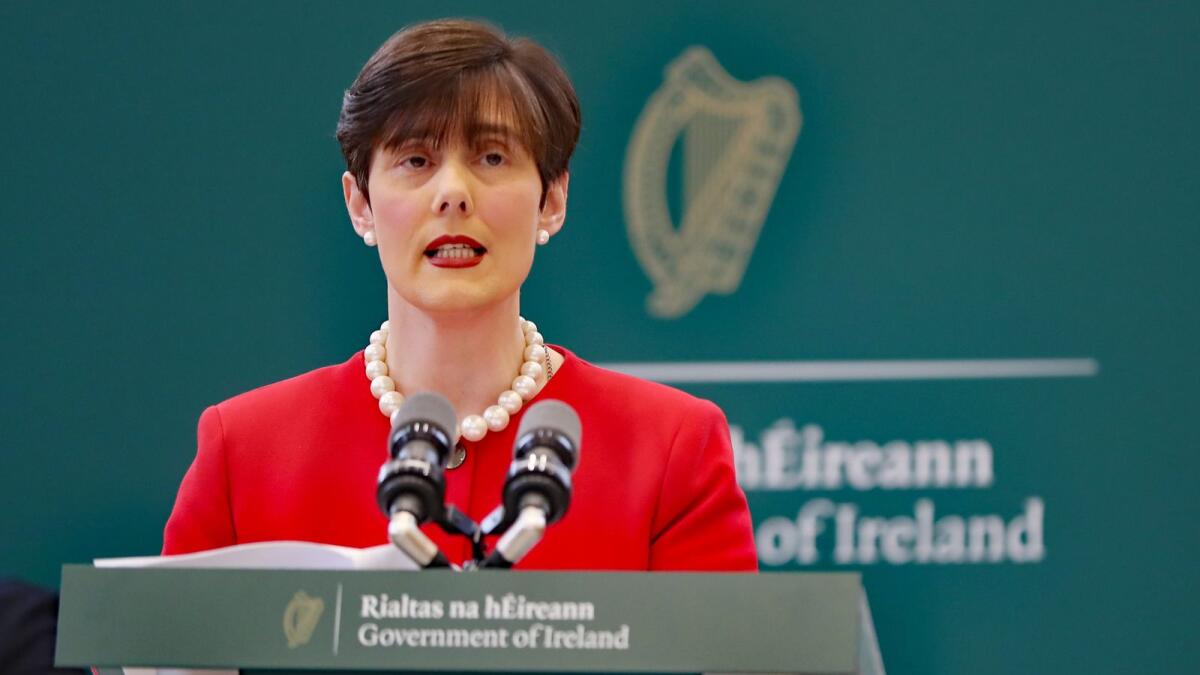
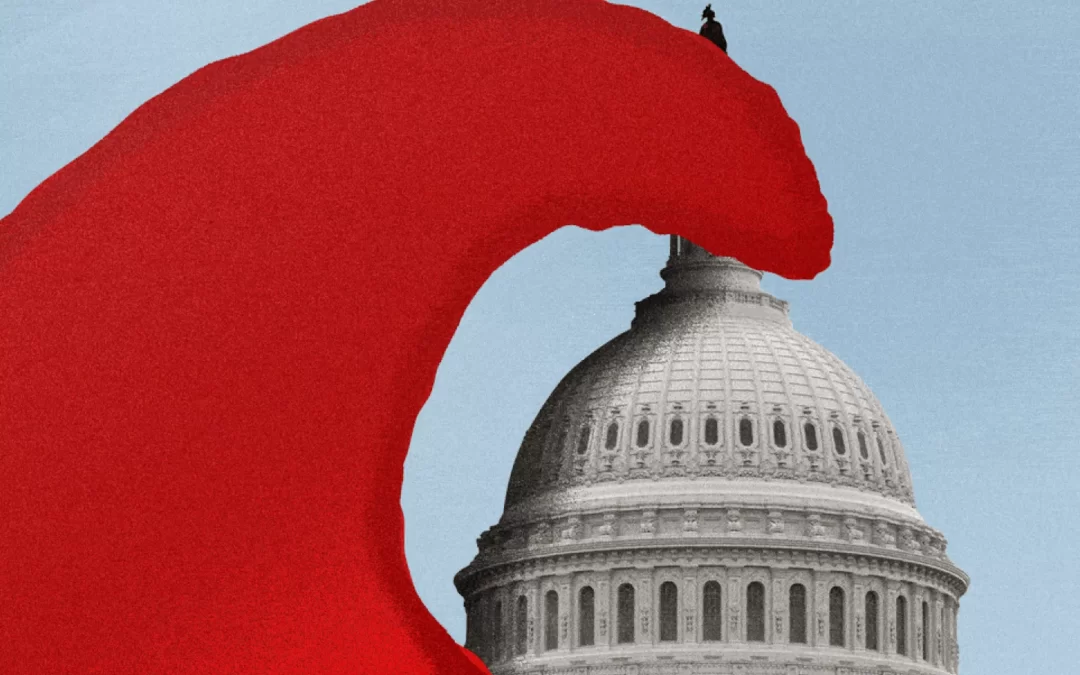
President Trump had a bad hair day after the mid-term election on November 8, 2022 in the United States. The analysts thought that the election would be a 'slam dunk' in favor of the Republicans, so the term 'red wave' was used in the media. Red is the color associated with the Republicans, and it was thought that they would have a landslide victory in the House of Representatives and the Senate. But thinking it does not make it so, and the red wave did not materialize. This is surprising because a new President's party usually loses quite a few seats in its first mid-term election. This has not happened this time, and as I write this, almost a week later, the Democrats will retain their majority in the Senate, and the Republicans will have a small majority in the House of Representatives. Historically speaking, this is a terrible result for the Republicans. 

What happened?

Here are a few reasons why the predicted 'red wave' didn't happen:

  • As kingmaker Trump chose candidates who drank the 'Kool Aid', with respect to the 2020 presidential election. They claimed that Trump had won, and that election fraud stole the victory from him. Maybe the American public is sick and tired of their lies.
  • Trump chose three conservative Supreme Court justices: Neil Gorsuch, Brett Kavanaugh and Amy Coney Barrett. That Court overturned abortion legislation, which gave the mother a federal right to demand and obtain an abortion anywhere in the United States. Thus, the court rendered the decision of Roe vs. Wade void as a direct consequence of those appointments. But according to the 'Pew Research Center', 61% of the population (80% Democrats and 38% Republicans) say they mostly agree with the mother's right to obtain an abortion. 
  • The Republicans were arguing strongly that Biden was to blame for the current unrestrained inflation in the United States. But the problem is being handled by both the government and the Federal Reserve Bank, with the inflation rate recently decreasing from 8.1% to 7.7%. But, more importantly, the inflation rate is higher in many other countries – almost 10% in the EU and Great Britain, for example. So, the Republicans do not have a persuasive case.
  • The Jan 6 committee presented irrefutable evidence to blame former president Trump for the uprising that occurred on January 6, 2021. Trump played a major role in all aspects of the uprising, from the big lie that the presidency was stolen from him ( he began casting doubt on the electoral process as far back as the presidential election he won in 2016), through the planning process, up to the attack on the Capitol itself. Prominent Republicans Liz Cheney and Adam Kinzinger were some of the members on the committee, and more importantly, most of the witnesses who appeared before the committee were Republicans. That strong evidence may have influenced a lot of Republicans, so that their trust in Trump and the politicians who strongly support him has eroded.

Tide turning?

Recently, Trump's allies have sharply criticized him. Here are a few examples:

"Almost every one of the candidates that Trump supported lost," Chris Christie, the former Republican governor of New Jersey, said on ABC's "Good Morning America." “It's a big loss for Trump. And, again, it shows that his political intentions are not for his party or for the country and for Trump himself."

"Republicans have followed Donald Trump off the cliff," said David Urban, a longtime Trump adviser with ties to Pennsylvania.

Former senator Peter King, a Long Island Republican who has long supported Trump, said, "I strongly believe that he should no longer be the leader of the Republican Party," adding that the party "cannot be his personal cult!”

Parting Word!

I hope that we have now reached the moment of truth, and it is a sign of hope that the majority of the people in the country are choosing democracy over autocracy and choosing the truth over lies. With respect to democracy (though), we shouldn’t count our chickens before they are hatched. 


.


Filleann an feall ar an bhfeallaire!

What goes around comes around!

The United Kingdom’s nightmare began way back in 2016 when David Cameron, the country’s Prime Minister at the time, announced an election on the question of Brexit. He misread the situation badly, as he did not think there was any chance that the majority of the public would choose to leave the European Union. He wrote the following in his autobiography: “I accept that my approach has failed. The decisions I made contributed to that failure. I failed.” I think he didn’t know at the time how bad that failure was, and how things would unfold afterwards.

By the time the Tories recognized how serious the mistakes were, they were unable to change their tune, and continued with the fallacy, like lemmings approaching the cliff.

In 2019 Jacob Rees-Mogg, who is now business secretary, was talking about the ‘expansive, sunny uplands waiting for us thanks to Brexit.’ But the facts tell their own story – a different story altogether, and it cannot be denied that the pound has fallen steadily against the dollar over the past six years, sliding over 23% during that period. The lack of political stability cannot be denied either. Liz Truss was the fourth Prime Minister in the Brexit era so far, with another coming soon. Worse than that, Jeremy Hunt is the fourth Chancellor of the Exchequer in the last four months. I recently read an interesting article in the ‘Telegraph’ where it said that the UK is more like Italy than France or Germany, in terms of its economy and political stability. For example, gross domestic product (GDP) per capita in the UK has grown by just 10% in the period 2015-2022, compared to 24% in Germany and 18% in France.

Significant Incompetence

Truss and Kwasi Kwarteng (then Chancellor of the Exchequer) put together their mini budget without any consultation stage with their party. That’s a red flag, in my opinion.

That mini-budget contained 45 billion pounds in unfunded tax cuts, which upset financial markets, weakened the value of the pound and increased borrowing costs for the UK government. The Bank of England had to intervene to avoid a wider financial crisis. But the market, the British public, and even Truss” Party itself demanded more. Truss had to sacrifice Kwarteng to save herself, and appointed Jeremy Hunt instead.

Jeremy Hunt immediately canceled the most expensive provisions in the mini budget and in particular the tax cuts for the wealthy. The market was pleased with these actions, and the foreign exchange rate and security prices settled down again.

Truss vs the lettuce

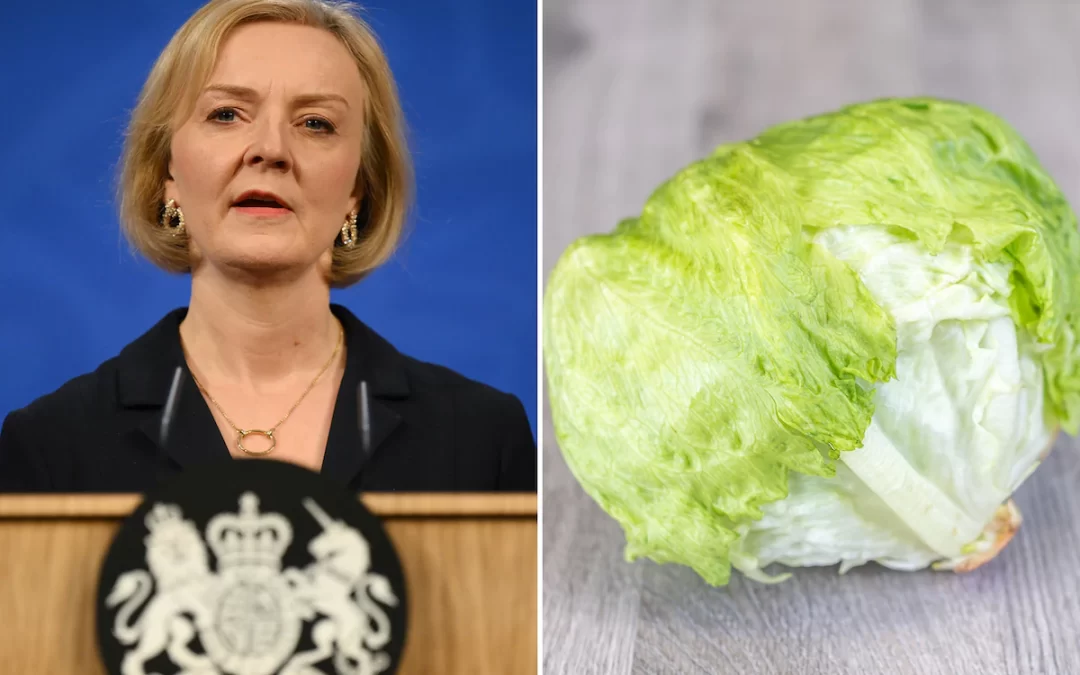
But Prime Minister Truss was still in big trouble as many politicians were demanding that she resign immediately. The UK media made a meal of the story, and the ‘Economist’ and the ‘Daily Star’ put Truss and lettuce side by side, asking which will last longer. When Home Affairs Secretary Suella Braverman sent an official email from her personal account, she had to resign. It was clear that things were quickly falling apart, and a few days later, Truss herself resigned. The lettuce won!

Lesson to learn?

In the coming months, the people of the UK will see brutal spending cuts, strikes in several sectors, power cuts, and under-resourced hospitals struggling to provide care.

One day, the British government will have to tell its citizens that the country must reunite with Europe or continue the Brexit fantasy, committing economic suicide as a result.

It was not right to hold a referendum on Brexit in the first place. That is the duty of the government, and it is a terrible decision to place that important duty on the people of the country, people who do not have enough information to make an informed decision.

This is a master class, showing the ‘domino effect’ that can occur after one bad decision has been made by the Government of the country. As for the UK, although we don’t know what is the next ‘domino’ that will fall, there is no doubt that another one will fall before long!

.

.

.

.

.

Ceist na nDíolúintí!

The question of exemptions!

I was in the Castle gardens the other day; stretched out completely from head to tail, relaxed and peacefully drinking in golden sun, when I heard the sharp, ear-splitting whistle, a whistle that woke me up from my sleep suddenly! But I realized in an instant who was to me, as who else but my old friend, Séimí an Droichid, would do the likes inside the heavenly gardens of the Castle. I welcomed him, and made a place for him beside me on the garden bench.

“Sit there beside me on this bench” I said to him, politely.

“Thank you very much,” he said, “and isn’t this a wonderful place you chose to meditate?”

“You said it my friend, but do you have any news on this blessed day?”

“I only have the story that is on the lips of every Irish speaker these days.”

“And what is his story?” I said, trying to provide a story telling opportunity to mad Séimí, as it seemed to me that he had some story to tell.

The Language Question

“You have probably noticed that a series of meetings of the Irish Joint Committee on the exemptions system is currently taking place?” said Séimí.

“I didn’t! Is there a big problem with our current system of exemptions, Séimí?” I wanted to develop an understanding on this topic.

“A very big problem, and if things continue like this, we won’t have a living language before long. There have been those unsupportive of the status of our language for a long time. There was a movement against the Irish language called “Language Freedom Movement” in the nineteen sixties, for example. The result of their campaign was the abolition of the requirement for civil servants to speak Irish since 1974. As a result, there were only 16 employees to deal with the Irish-speaking community in 2018 – a disgrace!”

“But,” I said, “the main goal of the Languages ​​Act 2021 is for 20% of new public service recruits to be competent in Irish before the end of 2030. Isn’t that a good thing?” I asked Séimí this question, seeking an antidote to his negative attitude towards the language.

Three steps back…

“Three steps back, and then only one step forward!” answered Séimí. “And these exemptions are just another step backwards. Initially, these exemptions were for exceptional cases – for pupils with special needs. But after a while, those rules were relaxed, and now quite a few parents are taking advantage of the flexibility of the rules, in order to get an exemption for their children – children who would not have a problem learning Irish, because more than half of them are learning other languages ​​without any question of exemption.”

“But maybe with the right management a scheme like this would work, wouldn’t it?” I said, asking Séimí the probing question.

“Whatever the Department of Education is doing, the scheme is not working well at all. And I’m not alone in that thought. Declan Glynn, assistant general secretary of the Teachers’ Union of Ireland (TUI), said that the system currently in place is “flawed and unsatisfactory”, and that it is now so easy to get an exemption that anyone would be forgiven for thinking it was mainly an automatic process.

Other representatives attending the meetings agreed with the opinion that there should be a curriculum for all students at whatever level of ability they are at and questioned the right to use ‘stress’ or ‘specific language learning disability’ as an excuse to demand an exemption. They are right, in my opinion, Michael, and this problem needs to be solved soon.”

“Well, Sam, I have to agree with you, because it’s clear you’ve done your homework well on the subject, and I didn’t have my eyes on that ball at all. Thanks for being patient with me, and I hope our government will do the right thing and put much stricter rules in place!”

“Me too! Nice to meet you in this wonderful place, Michael, as we discuss important matters together in Irish!

With that, Séimí left without delay, and I was left to my own devices with a new topic to with important matters for my consideration!

.

.

.

.

.

.

.

An tUathlathas i gcoinne an Daonlathais!

Autocracy versus Democracy

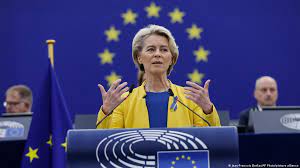
Recently, the President of the Commission of the European Union, Ursula von der Leyen, gave her annual address on the State of the Union 2022. It is amazing that this speech was available in Irish simultaneously with the original version. It is available online here: https://ec.europa.eu/commission/presscorner/detail/en/speech_22_5493.

I encourage you to read it! Here are my five highlights from her speech!

The courage to stand up to our heroes

Early in the speech, von der Leyen bluntly said: “This is not just a war that Russia is waging against Ukraine. It is a war against our energy, against our economy, against our values ​​and against our future. Autocracy versus democracy. As I stand here, it is my strong opinion that Putin will fail and Europe will have the day, thanks to our courage and solidarity.”

She then praised the people of Ukraine: “Today we have a unique example of courage, and that example is Ukraine.” And she emphasized the relationship between Ukraine and the EU: “Ukraine is a long-lasting legacy, a country full of European heroes. Slava Ukraini! The solidarity between Europe and Ukraine will remain forever.”

We need to get rid of the dependency

The dependency in question here is dependence on fossil fuels from Russia.

“As a result,” said von der Leyen, “gas prices are 10 times higher than they were before the pandemic. Millions of businesses and millions of families are struggling to make ends meet. That is why we are promoting measures for Member States to reduce their overall electricity consumption.” Then, the President laid down plans to control electricity prices.

Preparing for the energy future

Von der Leyen said that there was a lot going on in Europe in terms of offshore wind energy (in the North and Baltic Seas), new design solar panels (in Sicily), and especially in terms of trains using green hydrogen as fuel. According to her, hydrogen can fundamentally change the European market. This is what she said: “We need to make hydrogen a big market rather than a niche market. For that reason I can announce today that we are going to set up a new European Hydrogen Bank. The Bank will be able to invest €3 billion to develop the future hydrogen market.”

It will be very interesting to see how this venture turns out.

How to stand up for our Democracy

von der Leyen promised to tackle the threats from within with a Defense of Democracy package. “We will not allow the Trojan horses of any autocracy to attack our democracies from within,” the President asserted.

As everyone knows, the Union has struggled to address democratic backsliding in several Member States, notably Poland and Hungary.

Although the President did not mention any member states in particular, she said that payments under the common EU budget will continue to be linked to judicial independence and the rule of law.

Rethinking our foreign policy

“This is the time to invest in the power of our democracy,” said von der Leyen. This effort, she said, should start in the immediate vicinity of the block. “I want the people of the Western Balkans, Ukraine, Moldova and Georgia to know: you are part of our family, you are the future of our union, and our union is not complete without you,” she declared.

von der Leyen threw her support behind the idea of ​​establishing a European Political Community, an initiative proposed by French President Emmanuel Macron.

“Since we are serious about a larger union, we must be serious about reform,” she said.

“Therefore, as this Parliament has requested, I believe the time has come for a European Convention.”

Conclusion

von der Leyen put a lot of meat on the bones of the plans for the future of the Union. Her speech was a vision statement and if her vision is realized, the European Union will be more independent, more powerful and more dominant on the world stage than ever before. A new balance of power would be in place in Europe and the world, and with it there would be a better chance that our democratic system will flourish for a long time.

Long live the EU!

.

Comhdheiseanna do Theifigh!

Comhdheiseanna do Theifigh!

Ar an drochuair, níl mé bródúil as ár stair sa tír seo maidir le ceisteanna comhionannais. Sa bhliain 1945, sheol an Roinn Dlí agus Cirt memram chuig rialtas na hÉireann ag rá go soiléir gur teifigh míchuibhiúla iad na Giúdaigh agus mar sin bheadh sé níos fearr gan iad a ghlacadh isteach sa tír.  Dar leis an Roinn, ní mheascfadh na Giúdaigh go maith le pobal na hÉireann agus mar sin méadfaí líon na nGiúdach go suntasach cruthódh sé sin fadhbanna soisialta sa tír.

Cruálacht gan chúis a bhí ann, go háirithe nuair a chuimhníonn tú an bealach ar caitheadh leis na Giúdaigh sa dara cogadh domhanda.  Féach ar na Giúdaigh sna Stáit Aontaithe – nár mheasc siad isteach go maith le pobal na tíre sin? Go deimhin, mheasc siad, mar chuir an rialtas agus an pobal fáilte rompu teacht isteach sa tsochaí agus a bheith páirteach ar bhonn cothrom. Is tuar féinchomhlíntach é a rá nach mheascfadh daoine isteach nuair nach glactar leo sa chéad áit!

.

Dá gceapfá nach dtarlódh a leithéid in Éirinn sa lá atá inniu ann, bheadh tú mícheart! an ciníochas beo beathach in Éirinn fós. Is féidir linn a dhéanamh i bhfad níos fearr ná sin. Ach ar dtús, is gá dúinn admháil go bhfuil fadhb ann.

.

Ní hamháin in Éirinn atá fadhbanna mhóra maidir le teifigh faoi láthair. Tá rialtas na Breataine ag íocadh airgid go Rwanda mar chúiteamh ar teifigh a ghlacadh ón mBreatain. Sna Stáit Aontaithe, scair riarachán Trump páistí agus a dtuismitheoirí óna chéile, agus tearmann á iarraidh acu.  Íocann an t-Aontas Eorpach le Libia chun teifigh a ghabáil ar a slí go tíortha san AE agus iad a chur isteach in ionaid coinneála, inar sáraítar a gcearta daonna.

.

Na hÚcránaigh – cás speisialta?

I ngach cás thuasluaite, daoine de dhath atá i gceist. Ach cad faoi na teifigh as an Úcráin? Daoine geala atá i gceist sa chás sin, atá ar a dteitheadh ó scrios na Rúisigh, a rinne ionradh ar a dtír.  An bhfuil aon difríocht sa bhealach ar caitheadh leis na teifigh geala agus na teifigh de dhath?  

Chuir an AE an Treoir um Chosaint Sealadach i bhfeidhm chun dídean a thabhairt do na hÚcráinigh ag teitheadh ón gcogadh, agus thug sé sin cosaint láithreach agus stádas dlíthiíil do na milliúin daoine. Ach níor chuir an AE an Treoir céanna i bhfeidhm sa bhliain 2015 nuair a bhí breis is milliún daoine de dhath ón tSiria, ón Iaráic agus tíortha eile ag lorg dídine san AE. Níor cuireadh an Treoir i bhfeidhm an bhliain seo caite, ach an oiread, nuair a theith go leor daoine ón Afganastáin tar éis imeacht na Meiriceánaigh. Cén difríocht a dhéanann an Treoir sin san AE agus in Éirinn?

Ní hamháin go ndéanann an treoir é níos éasca do dhaoine teacht anseo, ach bíonn a saol níos éasca tar éis teacht anseo freisin. Mar shampla, cuirtear uimhir PSP ar fáil láithreach do dhaoine a thagann isteach go hÉirinn faoin Treoir sin agus leis sin, bíonn seirbhísí poiblí ar fáil acu (leas, oideachas, sláinte) agus bíonn siad in ann obair sa tír.

Is mór idir é seo agus an proiseas do teifigh ón tSomáil, ón tSiria, ón Aetóip, nó ón Afganastáin atá ag lorg cosaint idirnáisiúnta. Tosaíonn a n-iarratais ar chosaint idirnáisiúnta nuair a thagann siad go hÉirinn agus de ghnáth tógann an proiseas faofa sin traidhfil de bhlianta. Le linn an ama seo, bíonn siad i dteideal soláthar díreach. Ciallaíonn sé seo go bhfaighidh siad áit éigin le maireachtáil, béilí agus íocaíocht beag seachtainiúil, ach seachas sin, bíonn cearta agus teidlíochtaí an-teoranta acu maidir le leas, oideachas, sláinte agus obair.  Ach cé gur ionann na cásanna ina bhfuil siad ag teitheadh, na teifigh geala agus iad de dhath, tá sé soiléir nach ionann an slí ar caitear leo, ar chor ar bith! Níos measa ná sin, dá mhéad acmhainní breise a úsáidtear ar na teifigh as an Úcráin, is ea is lú acmhainní a úsáidtear ar an gcóras soláthair dhídigh. Is ábhar imní freisin é cur i bhfeidhm an Pháipéir Bháin um sholáthar díreach, atá déanach cheana féain agus atá ag tabhairt aghaidh ar dhúshláin acmhainní níos mó anois.

Tá muintir na tíre an-fhlaithiúil maidir leis na teifigh Úcráinigh, fiú ag oscailt a dtithe féin dóibh uaireanta. Cé go bhfuil sé go hiontach lámh fhial thacúil na tíre a fheiceáil i gcás na teifigh Úcránaigh, nach mbeadh sé i bhfad níos fearr an lámh fhial thacúil céanna a fheiceáil i gcás na teifigh nach iad.

Ní teachtaireacht éasca é seo a chur amach. Sa lá atá inniu ann, ní mór ár bhfreagairt mar shochaí a bheith cóir cothrom do gach teifeach, is cuma cad as dó/di nó cén dath craiceann atá air/uirthi. Ní mór dúinn gan deighilt agus doicheall a chur i measc na ndaoine atá ag lorg cosanta anseo.

.

xxx

.

Caithfimid labhairt faoi chine. An bhfuil sé cuma go bhfuil an chuma ar an gcuid is mó de mhuintir na hÚcráine “díreach cosúil linne”, nó go raibh siad “i gceannas ar ghnáthshaol” go dtí gur bhuail an ghéarchéim seo iad? Cén fáth a ndéanaimid an t-idirdhealú seo? Cén fáth nár úsáideadh na frásaí céanna sin chun cur síos a dhéanamh ar na daoine a bhí ag teitheadh ​​ó thubaiste san Aetóip, sa tSiria, san Afganastáin? An gcuireann éagsúlacht reiligiúnach lenár smaointeoireacht? Cén chaoi a bhfuil ár laofachtaí á múnlú seo?

.

.

.

Is féidir linn an chaoi a bhfreagraímid a roghnú; mar Stát trí dhul i gcoinne córas dhá shraith agus trí dheireadh a chur le soláthar díreach, mar shochaí trí iad siúd atá ag lorg cosanta a cheiliúradh agus a chothú, mar phobal trí leanúint ar aghaidh ag síneadh céad míle fáilte, agus mar dhaoine aonair trí mhachnamh a dhéanamh ar ár ndearcadh agus ar ár gcion féin .

.

Comhdheiseanna do Theifigh!

Cuairt an Phápa go Cheanada

Teip Thubaisteach!

Ar oilithreacht aithrí i gCeanada, ghabh Pápa Proinsias leithscéal as an “teip thubaisteach” agus as “mírún” na scoileanna cónaithe a raibh reiligiúin éagsúla i mbun orthu, an Eaglais Chaitliceach san áireamh. D’iarr sé maithiúnas ar na daoine a tháinig trí fhoréigean i scoileanna sa chóras uafásach sin inar tugadh drochíde coirp agus intinne dóibh agus do na deicheanna míle páiste eile freisin.

Tháinig an leithscéal, a rabhthas ag tnúth le fada leis, ag tús a chuairt seachtaine, in áit darb ainm Maskwacis, Alberta in iarthar Cheanada.

“Tá brón orm. Táim ag iarraidh maithiúnais, go háirithe, as na bealaí a thug baill na hEaglaise cabhair do na rialtais ag an am – uaireanta mar bhí siad ar nós cuma liom – a bpolasaithe mar gheall ar dhochar cultúrtha agus asamhlú éigeantach a chur i bhfeidhm,” arsa Proinsias, ag insint do shlua 2,000 a tháinig slán as an gcóras sin, faoin bhfearg agus náire a mhothaigh sé de dheasca na drochíde uafásaí a tharla do go leor páistí bundúchasacha.

Bhí Proinsias ag cásamh an mheoin choilínigh taobh thiar den chóras a raibh tionchar díobhálach aige ar na glúnta bundúchasacha. “Iarraim maithiúnas as an dochar a rinne an oiread sin Críostaithe do na bundúchasaigh,” a dúirt sé.

Bhí siad go léir bailithe ag “Powwow Arbour”, áit speisialta atá ag náisiúin na mbundúchasach a úsáidtear le haghaidh tionóil phoiblí agus ceiliúradh. Tar éis óráide an Phápa, chuir an Taoiseach Wilton Littlechild ceannbheart cleití ar cheann an Phápa agus lig an lucht féachana na gártha molta astu.

I measc na bhfreastalaithe, bhí Taoiseach Cheanada, Justin Trudeau, an t-ardghobharnóir, Mary Simon, agus Taoiseach Náisiúnta Thionól an Chéad Náisiún, RoseAnne Archibald, chomh maith le cúpla reachtóir feidearálach.

Gan dabht, ba é an rud ba thochtmhaire a tharla ná léiriú coscrach den amhrán náisiúnta Cheanada canta i dteanga na Cree ag bean dhúchasach, agus na deora go fras léi.

“Is nóiméad speisialta é seo do na daoine a tháinig slán,” arsa Phil Fontaine, iar-Thaoiseach na Chéad Náisiún agus duine a tháinig slán freisin.

Bhí an Eaglais Chaitliceach i bhfeighil níos mó ná leath na scoileanna cónaithe i gCeanada, a bhí ar níos mó ná 150,000 páistí bundúchasaigh freastal orthu, idir timpeall 1870 go dtí 1997.

Ní théann an leithscéal fada go leor

Tar éis na méide a bhí ráite ag an bPápa, chuir rialtas Cheanada in iúl go soiléir nach dtéann a leithscéal fada go leor, ag tabhairt le fios go bhfuil go leor oibre le déanamh fós ag an Eaglais ar son athmhuintearais.

Is ionann gearáin an rialtais agus gearáin na mbundúchasach – nach ndearna an Pápa tagairt don drochúsáid ghnéasach a d’fhulaing páistí bundúchasaigh sna scoileanna, agus nár ainmnigh an Pápa an Eaglais Chaitliceach mar institiúid a bhfuil freagrach as na rudaí uafásacha a tharla. Ní hamháin sin, ach ní dúirt an Pápa faic mar gheall ar chúiteamh nó infheistíocht, nó faoi fhreagracht na ndaoine a bhain mí-úsáid as leanaí sna scoileanna cónaithe, nó mar gheall ar na déantúsáin bhundúchasaigh atá fós sa Vatacáin. Bhí na bundúchasaigh ag impí ar an bPápa freisin an ‘Doctrine of Discovery’ ón 15ú haois a chur ar ceal, agus cé go ndúirt sé nach rud maith a bhí ann, níor chuir sé ar ceal é ach oiread. Sa pholasaí Eaglaise sin, thug an Eaglais Chaitliceach beannacht do na coilínigh Eorpacha talamh a ghabháil ó neamh-Chríostaithe.

Cinedhíothú

Cé nár úsáid an Pápa an focal ‘Cinedhíothú’ ar chor ar bith ar feadh na seachtaine a bhí sé ar cuairt go Cheanada, úsáid sé é ar an eitilt ar ais go dtí an Róimh. Dúirt sé gur focal oiriúnach é cinedhíothú, a dhéanann cur síos grinn ar cad a tharla sna scoileanna cónaithe i gCeanada.

“Níor úsáid mé an focal ‘cinedhíothú’ mar níor rith sé liom é a úsáid, ach is é sin a ghlaofá air,” arsa Pápa Proinsias leis na tuairisceoirí a bhí ar an eitilt leis.

Cad é le déanamh anois?

Dúirt Príomh-aire Cheanada, Justin Trudeau go raibh tionchar mór ag cuairt an Phápa ar an lucht inste scéil, ach nach raibh ann ach an chéad choiscéim. Is rud neamhchoitianta é don phríomh-aire labhairt faoin bPápa sa tslí sin, in ainneoin an ceart a bheith aige. Ar aon nós, rinne Trudeau agus a rialtas de réir a mbriathair. Mar chuid den socrú a baineadh amach i gcás cúirte, dhíol an rialtas cúiteamh sna billiúin dollar do phobal na mbundúchasach. Níor thug an Eaglais Chaitliceach fós dóibh ach 50 milliún, agus tá sé beartaithe aici 30 milliún eile a thabhairt dóibh sa todhchaí. Tá sé soiléir go bhfuil ar an Eaglais Chaitliceach lámh a chur ina póca chun a dualgas a chomhlíonadh agus chun clabhsúr cothrom a chur ar an gcaibidil náireach seo ina scéal.

.

.

en_USEnglish