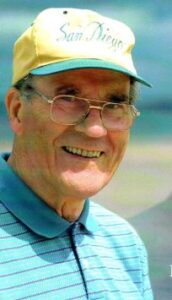

Nicholas Winton!

Nicholas Winton!

We have a close friend named Debbie. In 1939, her mother Marianne Schorsch was only fifteen years old when she was put on board a special train (kindertransport) as she was in danger of death from the Nazis. It was an Englishman named Nicholas Winton who organized the escape trip for Marianne and hundreds of other children, to save them from the Nazis. Although Marianne is now passed on, my wife and I knew that gentle sweet woman for many years.

A special invitation

Last week, Debbie invited us to go to the cinema and see the film 'One Life' together, a film about Nicholas Winton and the 'kindertransport'. We accepted the invitation without thinking, and the film made a big impression on us.

One Life

Nicholas Winton was a banker and philanthropist, born in London in 1909. He was of Jewish descent, and his own parents immigrated to England from Germany at the beginning of the twentieth century.

At the beginning of the film, you see Winton (Anthony Hopkins) in 1987, as an old man. He wants to get rid of the clutter in his home office. There is a leather case in the cupboard but he has no intention of opening it. We are curious about him, when we are suddenly swept back to Prague in 1939. We see a young Winton there (Johnny Flynn) and the plight of the children in the city moves his heart, so he decides to help them. There are already a few English folk in Prague, trying to help political refugees escape to England. Winton convinces them to help him, and it is a constant battle against the existing bureaucracy. They have to complete paperwork and get visas for the children. Then, travel has to be organized, and host families found for them. And of course, they have to raise money to pay for everything. Winton and the team in Prague are brave. But not only them! Winton's mother (Helena Bonham Carter) is also active and does not take 'no' for an answer from the officials who have the power to shorten the processes! There is a strong emphasis on Winton and the children, so the cruelty of the Nazi regime is not seen much, except indirectly, when you see the Nazis getting rid of the ninth train organized by Winton. The train never got going, because the Nazis stopped it. Winton felt guilty about that most of his life, because he knew that most of the children were lost.

Jumping forward fifty years, you see Winton as an old man again. Until then, Winton had not spoken about his part in rescuing the children. His wife Grete doesn't know about it, until she sees the old book in the leather case. It is filled with photographs, letters from the families and the names of the children. She takes the book to Elisabeth Maxwell, Holocaust researcher, and wife of Robert Maxwell. When Robert hears about Winton, he publishes an article in his 'Sunday People' newspaper, which leads to the 'That's Life' special. Winton is dubbed "Britain's Schindler" by the media, referring to the German businessman Oskar Schindler, who saved 1,200 Jews from the Holocaust.

In a landmark 1988 episode of the BBC TV program 'That's Life', Winton sits in the audience as the TV host, Esther Rantzen, begins to talk about his rescue of Czech children in 1939. As the camera pans over the audience, guests begin to stand up – these are some of the children (now older) that Winton rescued. This is the first time they have seen Winton in fifty years. Eventually, Winton realizes the importance of what he has done. Finally, too, he is able to deal with the guilt and sadness he has carried for the past fifty years, about the ninth train.

Honors

Nicholas Winton received a letter of thanks from the late Ezer Weizman, former president of the State of Israel. He was also made an honorary citizen of Prague. In 2002, Queen Elizabeth II knighted Winton for his services to humanity. He was named a British Holocaust Hero by the British Government in 2010. A statue dedicated to him outside Prague's main train station was unveiled in 2009. Finally, the Czech Republic awarded Winton the Order of the White Lion in 2014 for his rescue of the Czech children.

The Winton Train

On 1 September 2009 a special train took the original kindertransport route. Winton, along with survivors and their families went on the same journey as they had done seventy years before in 1939. Marianne and Debbie were on this train and it was a very special occasion for them. Debbie remembers that event, which gave her a new understanding of what happened. She also realized something else: Even in the abyss of despair, all is not lost. She herself is living proof of that!

.

.

Saint gan Staonadh

Unbridled Greed


There is something in our nature that covets power. That statement is not true for everyone, but for some it is undoubtedly true. We see this phenomenon clearly in the field of politics, religion and business, especially in their leaders. Let me cite a few examples, and you will understand what I mean.

The Political Realm

Here, in America where I live most of the year, we had Donald Trump as our president. He is trying to get the job back from Biden and no one knows what will happen in the presidential election at the end of this year. There's a good chance he'll win, unfortunately. He is a racist and a bigot, and he is not ashamed of it - on the contrary, he is proud of it. Everyone knows about the many crimes he has been accused of, and he is in court every day! Despite all the bad things Trump has done, he has a huge following. His followers are loyal to him, no matter what he does. Among his followers, there are many Christian fundamentalists, aligning with him whether he is right or wrong. As we have already seen, Trump incited his followers to attack the Capitol, when he lost the presidential election. Trump aims to be a dictator, like one of his heroes, Vladimir Putin – a terrible role model for anyone. But after all that, his fans remain loyal to him.

The Religious Realm

While organized religions have no shortage of people who enjoy power, things are much worse in religious cults. And of those religious cults, it would be hard to imagine a worse leader than Warren Jeffs. Jeffs is a self-proclaimed prophet in a fundamentalist sect of the Church of Latter-day Saints (FLDS), a sect that practices polygamy. Jeffs rose to fame in the 90s when he was at the top of the FBI's most wanted list. He was arrested in 2011 and found guilty of serious misconduct. He sexually assaulted and married two teenage girls. He claiimed they were spiritual brides. The jury heard that Jeffs had about 78 wives, including 12 he married when they were 16, and 12 when 15 or younger.

Jeff was sentenced to life in prison. In 2007, he tried to hang himself in his prison cell in Utah. When he went on hunger strike in an Arizona prison in 2009, he was fed against his will. He is currently still in prison in Texas, with no chance of release until 2038 at the earliest. Jeffs' son, a man named Jeffson, said: “When we were just children we were woken up at five every morning to prepare breakfast and clean up afterwards. Then, we were sent out to work on the farm all day. There was no music, no internet, no television, no movies, nothing of that nature. My father created our environment, and we could never go against his will. It even controlled how we saw the outside world, in every way.”

Warren Jeffs had about 10,000 followers at the time of his sentencing, located in a remote town on the Utah-Arizona border, where his followers still live and practice their faith.

The Business Realm

Bernie Madoff ran the largest Ponzi scheme in history, defrauding his clients of $65 billion over a period of twenty years. He claimed to have earned a profit of 11% every year without fail for his clients, year after year, from the time he started his investment company. It was too good to be true! He did not invest his clients' money at all, and when clients withdrew money from their accounts, Madoff's stash was used to pay them. He had a big problem in 2008, when the stock market crashed. Many people were trying to withdraw money and not many new clients were coming in. The scheme ran out of money, and his goose was then cooked. He explained to his two sons, employed in their father's company, about the corruption and the situation they were in. His sons immediately contacted their lawyers, and their father was arrested the next morning. Bernie Madoff was sentenced to one hundred and fifty years in prison. He died in prison in 2021 at the age of eighty-two years. His two sons and his wife claimed they did not know what Bernie Madoff was doing. Other officers in the company were also convicted and sentenced to prison terms. Madoff destroyed the lives of many people; including his family, colleagues and clients. Bernie Madoff was not the least bit remorseful for the heinous crimes he committed. Madoff was as rich as you've ever seen – before the corruption. It is therefore difficult to understand why he was prepared to sacrifice everything for a chance to get more money illegally, and why so many people believed that Madoff was capable of performing investment miracles, year after year. year!

Conclusion

It is very clear that unbridled greed is a kind of cancer of the mind, and the above-mentioned people have/had the disease badly. People like that do a lot of harm, not only to themselves, but to many people around them, and to society in general. People like this are able to put many others under their spell, so that they do everything that is asked of them - even if it goes against their own principles. As difficult as it is to understand the aforementioned leaders, it is even more difficult to understand their followers.


.


.


Scéal Pete Teti

Pete Teti's Story

Steve Lopez has long been a first-rate journalist and writer. He started working as a columnist for the 'LA Times' in 2001. He has won national journalism awards, as well as an award for creative non-fiction. Steve wrote a book when he was in his late sixties, entitled: "Independence Day: What I Learned About Retirement from Some Who've Done It and Some Who Never Will." He continued to work part-time as a weekly columnist for the 'LA Times', a job he still holds, now in his seventies. He started a new column at the time called 'The Golden State' and it's a column exclusively about seniors, something I haven't seen in any other newspaper, and not often in other media either. I love his column, and read it every week, without fail. I learn a lot of significant and important things there, and it is also a source of inspiration for me, without a doubt. One recent column Steve wrote really impressed me. This is a summary of that story.

Teti’s Story

Tá Pete Teti ar an mbóthar ceart más iad gluaiseacht agus géinte maithe bunús an tsaoil fhada.  Cé go bhfuil cónaí ar Pete i gcathair Los Angeles, tá sé in aice le Griffith Park, páirc iontach atá beagnach trí huaire níos mó ná Páirc an Fhionnuisce i mBaile Átha Cliath. Baineann Pete lántairbhe as, mar téann sé ar shiúlóid i nGriffith Park gach re lá.   Casann Pete lena chairde in aice le ‘Griffith Observatory’ agus siúlann an dream beag suas go barr ‘Mt. Hollywood’, agus ar ais.an tsiúlóid timpeall 4 ciliméadar ar fhad, agus is gá dul suas (agus ansin teacht anuas) 150 méadar in airde. Babhta traenála atá i gceist, is cuma d’aois, agus bogann Pete ar aghaidh ar an gcosán ar luas mear. Tógann sé sos beag ar an tslí agus suíonn sé ar feadh tamaillín ar bhinse páirce atá ainmnithe ina onóir! Seinneann sé an t-orgán béil le linn a shosa bhig, roimh leanúint ar aghaidh ag siúl.  Níos faide anonn, síneann cathair mhór na nAingeal amach ó na sléibhte go dtí an tAigéan Ciúin.

“Fágann siad a bhfadhbanna go léir sa chathair,” arsa Teti, ag bogadh gan stró chomh héasca le fear i bhfad níos óige.  Beannaíonn sé do dhaoine go minic, mar tá aithne aige ag go leor de na siúlóirí sa pháirc. Stopann Pete arís tamaillín, agus seinneannport eile ar a orgán béil. Ceapann fear darb ainm Jay Miller, atá 20 bliain níos óige ná Pete, go bhfuil Pete ar tí teacht anuas, ach níl an ceart aige.  Ar aghaidh le Pete suas ardú géar i dtreo mullach an tsléibhe, agus a chomrádaithe á leanúint.

Dar le fear eile ar an tsiúlóid, Tom McGovern, b’fhéidir nach bhfuil Pete ag siúl chomh tapa anois agus a bhí sé blianta ó shin, nuair a chasadar le chéile ar dtús. “Dá aois, bogann Pete ar luas lasrach!” arsa Tom. “Luas maith d’aon duine é sin, is cuma cén aois iad, i ndáiríre.”

Chas Nancy agus Mark Kristol le Pete le linn na pandéime, agus iad go léir ag siúl sa pháirc.  D’fhorbair caidreamh faoi leith eatarthu de réir a chéile, agus iad ag casadh le chéile go minic. “Is rud iontach é casadh le Pete suas anseo, mar tá gean ar leith aige ar an sliabh agus tá sé in aon sruth leis a thimpeallacht nádúrtha,” dar le Nancy.  “Tearmann ó ghleo agus ruaille buaille na cathrach atá i gceist san áit seo, leis an bhfear iontach seo.

Pete started walking up Mt. Hollywood more than twenty years ago, when he noticed that he was putting on weight. Today he is a thin man, in his prime, not only physically but also intellectually. He never stopped learning, even when he retired as a teacher after 50 years in that role. His friend, Jay, said that Pete has made two violins, is an artist, is currently creating animation, and is always learning physics, chemistry and math. When Steve Lopez met Pete at home, Pete showed him a gazebo he built, made of stained glass, and tiles he laid in the back patio. Pete has a studio in the house, overflowing with books, computers and abstract paintings.

On his most recent birthday, he joined his friends near his bench, for whom this tribute was written: "Pete Teti: Mouth organist, avid hiker, artist, teacher and World War II veteran." Then, those different people went on a celebratory walk up Mt. Hollywood, under the leadership of Pete Teti, who has reached the age of one hundred! What a role model Pete is, leading us all by example!

.

.

Athbhliain faoi mhaise daoibh!

Happy New Year to You!

It is our custom in this column to say goodbye to the year that is about to die and to welcome the New Year that is coming! My father fulfilled that solemn duty for many years when he was alive, and I therefore thought it appropriate to republish a column of his in his memory at this special time of reflection. This is what he wrote.

Another Christmas gone from us through the eye of the bridge of time. And although it is a time of celebration and fun, I hope, at the same time, that you have looked back over the years we have spent, until now, traveling with us on the great and difficult pilgrimage of life. It is also a time to remember the friends who have been lost, along the way. But, I am directed not only on that, this go round, but I am looking in front of me on the year that is stretching ahead of us now, while she waits on the threshold of the house, ready to meet us, and I pray the old prayer to you again, one more time. "Happy New Year to all of you, and may each of us live a better life, a year from today." Now, as we stand on the brink of the new year, shouldn't we, first of all, say goodbye to the old year as it now pursues death, itself, as it swims with it, on all fours, into books of history. What can we say about it before it leaves us? We can't go over the top praising it, and given that it wasn't the best year we have ever encountered, at the same time, it wasn't the worst! It is true that political matters here and abroad were not any great shakes during the year that is now on its deathbed, but at the same time shouldn’t we be grateful, blessed, that we are still alive, while we are plowing full steam ahead in the tumultuous field of life.

New Year's Resolutions

I used to, over the past years, make new year's resolutions, around this time, every year, pretending that I had to be a saint on earth in the new year! Did I succeed in taking action according to my words? You are raving mad ! Indeed I did not succeed! As I would have broken the same resolutions in short order. I am not suggesting now putting a stop to making those same resolutions, as that they are good for some people, that is, for people who want to head in a completely different direction, and in that case, usually, man who made the resolutions succeeds. And again, I'm not claiming that I don't have to change anything about myself, with the coming of this new year. No, indeed! For, truth be told, I have decided to continue writing these pieces, for the Kilkenny People, as long as the learned Editor of this great newspaper is willing to provide space for me, and add to that, that I am now determined on speaking out more boldly and forcefully than I have done up to now. I have also decided to keep a close eye on language matters, and on political matters, on the whole, in the coming year.

Wandering Memories

I needn’t say that my memories go wandering back through the years that have elapsed through the eye of the bridge of time, at this time of year, back also to the customs we used to have while I was growing up in Iorras na n'Iontas, yes and I also have memories of the people I knew who have passed on. May they all have a bed among the Saints. And since my Dad and his companions spent a period of time slaving away in Scotland, they brought home to Ireland Scottish customs such as the "First Footers", as the first person to come over your threshold on New Year’s Day was called. Yes, and the "Haggis" stories too. I often walked with them, in their stories, through the streets of the "Gorabals" as they called that city district in the city of Glasgow. But that's enough for this trip. All I have to do now is to wish you all a happy and prosperous New Year, and may we be alive at this time next year.

.

.

.

I dTeagmháil le Liam arís!

In touch with Liam again

I have to admit that I have not been in frequent contact with my former colleagues, especially after the start of the COVID-19 pandemic. As it happened, one of them, a great friend of mine called Liam, contacted me last week.

He sent me a message on Facebook Messenger out of the blue, and let me know right away that he had been let go from Qualcomm, after more than thirty years at the company. Liam is a first class engineer and senior director. His manager told him that his next project had been canceled and therefore his job had also been eliminated. His manager, the vice president of engineering ,was also let go, as well as many of the engineers working on the same project. Wasn't it cruelly ironic that Liam had received an email the week before from the human resources department, thanking him for his thirty years of dedicated service to the company? Isn't it really braindead for the company to do that with one hand and then throw him out the door with the other immediately after? Things are even worse, because Liam has been extremely loyal to Qualcomm, year after year. Poor Liam suddenly found out that his company’s words were nothing but lies and lip service, unfortunately. Poor Liam is not only in low spirits but also in real trouble, because he has to find another job soon and that won't be easy at all. Workers in the high-tech sector are discriminated against on the basis of age all the time, and Liam is now 55 years old. Not only will it be difficult for him to find a new job, but even if he does find a job, it will undoubtedly be difficult for him to find the same salary and working conditions. I personally think it is unethical for a company to treat workers in that way. Although there are laws in place in California to protect workers over the age of 40, companies end up skirting the rules. In this case, with the company trying to implement sharp cuts, certain expensive projects were cancelled, projects that are not central to the company's strategy. The company finds other jobs for many workers, but it is not so easy to move the leaders, because there are not many such roles to be found. It is no coincidence that the most senior workers - those who earn the highest wages - are let go. In this way, companies are able to let members of the high income group who are over 40 years old go without breaking any law. I saw this when I was working, and sometimes I saw the same projects resurrected with a new team after a short while later.

  A Person of Principle!!

Liam, myself and our spouses, met for dinner right after I spoke to him on the phone. It was still difficult for Liam to accept what happened to him so abruptly. But he was enthusiastically looking for work in the area, and contacting other former colleagues who were working in other companies. He had done a few interviews and was hopeful that he had done well in one of them. Liam said he was very grateful for me spending time with him on the phone, giving him advice. Sometimes, you don't know how important it is to talk together, especially when things like this happen. What kind of great advice did I give him? The most important thing I did was to listen with empathy to him - that's all. We have a strong relationship and he trusts me completely, and vice versa. It turned out that Liam had not been happy in his job for the past three years but despite that, he continued to work because he was loyal to the company, and he wanted to protect the people who worked for him, because he saw increasing risks on the horizon. He did not surrender his principles, even when his livelihood was in danger. The bottom line is that I have the utmost respect for Liam, and it's a shame that Qualcomm didn't treat him with respect after his spending his life in their service, working hard and benefiting them all that time . Shame on you, Qualcomm!


.


.


.


.


Cén Fáth?

Why?

Isn’t if often that someone asks us a question and we don't have a suitable answer because we are stunned! Don't we hate when this happens! Sometimes, we lose a few hours of sleep as a result, even if it's a small thing. I was asked this kind of question recently, and I would love to go back in time to answer the question properly. I may not be able to actually time travel, but I can do it with my imagination, and then write about it!

The Question

"Why are you studying Irish?"

I was in the pub in Glencolmkille with Sinéad, my wife, at the end of the day. Sinéad was meeting a few people from her class and I came to meet them for the first time, as I was not attending the same class as them. We were getting to know each other when I was asked the question. It was a judge who put it to me, and from his tone of voice, it felt to me that this man thought that there was no point in me studying Irish, and that it was a waste of time. He knew that I live most of the year in California, and that's it. The word froze in my mouth, and I was in a panic!

George Mallory

I don't know why, but that question reminded me of another question. The famous climber George Mallory was asked a certain question, many times. This is how Mallory wrote about it:

"People ask me, 'What is it worth to climb Mount Everest?' My immediate answer is "It's not worth it!” There is no chance of any benefit. We will not bring back a little gold or silver, or jewels, or coal, or iron

If you do not understand that there is something in us that faces the challenge of this mountain, and that this struggle is the same as the ceaseless upward struggle in our lives, you will not see why we go.

What we get from this episode is just pure joy. And after all, joy is the reason for life. We don't live to eat and make money. We eat and make money to survive. That's the meaning of life and that's the purpose of life."

Nach iontach an freagra a bhí ag Mallory! Ní gá dom a rá nár cheist eisiach mar sin a cuireadh orm, ach d’aimsigh sé an t-éasc ionam, mar sin féin. Rith sé liom aithris a dhéanamh ar Mallory, agus freagra a scríobh síos don cheist a cuireadh orm.

Yu Ming is My Name!

A short film is available on 'YouTube' entitled 'Yu Ming is My Name'. Before he comes to visit Ireland, Yu Ming reads that Irish is the official language in the country, and he starts learning it as he intends to settle in Ireland. At first, no one understands him and he understands no one. But he meets an Irish-speaker in the pub, who tells Yu Ming that "English is spoken here!" In the end, Yu Ming gets a job in the Gaeltacht, and is able to use his Irish. The reason Yu Ming learned Irish was because he thought that everyone speaks it every day. Unfortunately, Yu Ming did not have the right and he did not have a valid reason to learn Irish. Even in the Gaeltacht, it is quite difficult to use Irish all the time.

Why, then, would anyone – including the questioner, spend a week or two a year attending an Irish language immersion course? There were people who used Irish in their jobs, and I understand that well. But, even for most of them, it wasn't their jobs that motivated them to improve their Irish but the opposite! In addition, there were many people there, including the judge, who did not need to use Irish, from the point of view of their jobs. a chaithfeadh aon duine an ceistitheoir san áireamh, seachtain nó dhó sa bhliain ag freastal ar thumchúrsa Gaeilge? Bhí daoine ann ar úsáid siad Gaeilge ina bpoist, agus tuigim é sin go maith. Ach, fiú dfhormhór dóibhsean, níorbh é a gcuid poist a spreag siad chun feabhas a chur ar a nGaeilge ach a mhalairt!  Chomh maith leis sin bhí go leor daoine ann, an breitheamh san áireamh, nár ghá leo Gaeilge a úsáid, ó thaobh a bpoist de.

My answer

Finally, here is my own answer:

.

Irish culture, and especially the Irish language, is close and ingrained in me, no matter where I live or what happens to me. It is a kind of DNA or a basic characteristic in me with my memory, which my family on my father's side (a poet who was from the Gaeltacht) has had for generations. We find true joy and meaning in being true to ourselves, and wouldn't I be remiss and even foolish to ignore something as important as that?

.

.

.

.

.

.

en_USEnglish