
Uachtarán na hÉireann Catherine Connolly  –	Teanga, Cultúr agus Cothromaíocht

President of Ireland Catherine Connolly - Language, Culture and Balance

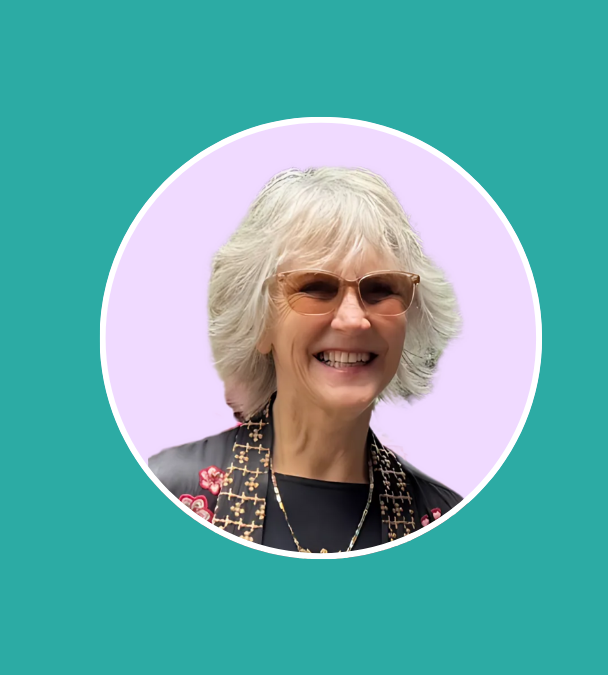
When Catherine Connolly was elected President of Ireland in October 2025, it was clear that a significant change was taking place in the political mood of the country, and that new values were being expressed through her victory. Connolly was the first woman ever to serve as Leas-Cheann Comhairle (Deputy Speaker) of the Dáil, and now she becomes the first independent President from Galway. She is a woman who places honesty and openness at the heart of her public life — especially regarding issues connected with the Irish language, Irish unity, the environment, neutrality, and social equality.

Biography and Roots

Catherine Connolly was born in Shantalla, Galway, where she was raised as one of fourteen children. She earned a Master’s degree in Clinical Psychology from the University of Leeds in 1981, before returning to the Claddagh in Galway, where she still lives with her husband Brian and their two adult sons. She later completed a Law degree at the University of Galway in 1989 and was called to the Bar in 1991. Her public life began in 1999 when she was elected to Galway City Council, and a few years later she became Mayor in 2004 — a period that deepened her awareness of Ireland’s cultural and linguistic identity. She was elected as an independent TD in 2016 and as Leas-Cheann Comhairle in 2020, confirming her as one of the most principled and fair-minded voices in Irish politics.

Return to the Irish Language

Connolly was not raised as a fluent Irish speaker. As she herself has said: “I only had the Irish I learned in school. I was embarrassed when I realised I couldn’t speak naturally with people in the Gaeltacht.” During her time as Mayor, after an event in Conamara where she found herself unable to say even a few words in Irish, she promised herself she would change that. She later completed a diploma course in Irish, and as she said afterwards: “I went back and learned it properly. And in the Dáil, from the very first day I was elected, I placed emphasis on Irish — as a living, vibrant language.” Gradually, Irish became a natural part of her daily life. She began using it in her speeches, interviews, and debates in the Dáil. She often reminds the public: “Irish is not a cultural ornament. It lies at the heart of who we are as a people.”

The Irish Language as a National Issue

Connolly’s election revealed how central the Irish language has become in political debate in Ireland today. Emer Higgins, a Fine Gael TD and Minister of State, said after the election that the government should “reflect on how central Irish was in the presidential race.” “I visited a school in Rathcoole,” Higgins said. “A pupil asked me, ‘Do you think Heather will lose because she doesn’t have Irish?’ Only one student in the class was fluent, yet every single one said it would matter to them if a presidential candidate spoke Irish.” For the first time in many years, Irish emerged as a major campaign theme across social media and news sites such as Tuairisc.ie and Extrag.ie. In an Irish Times poll, 3% of respondents said that “a person who speaks Irish” was the most important quality for a presidential candidate. While not a large number, it signaled a growing awareness of the language’s importance in political life. At the start of her campaign, Connolly herself stated: “It is essential that the President has Irish — not as a legal requirement, but as an expression of who we are as a nation.”

From Galway to Áras an Uachtaráin

Connolly’s roots run deep in Galway, a city where art, science, and community spirit meet. Before entering national politics, she worked as a barrister and city councillor and later as Mayor, known for her integrity and independence of mind. In the 2020 general election, she won a seat as an Independent TD for Galway West, and a few months later surprised many when she was elected Leas-Cheann Comhairle with 77 votes to the Government candidate’s 74. “I went for it,” she said, “because I couldn’t demand gender equality and then fail to act on it myself.”

Culture and Identity

For Connolly, language and culture are inseparable. As President, she is expected to emphasise the links between art, education, and language — “the three pillars of human society,” as she calls them. She believes Irish should not be left confined to classrooms or translation desks but returned to the heart of public life. “It is a living, central language. It is not a dead one,” she has said.

The Environment and Natural Balance

Connolly is also a passionate advocate for the environment. She believes it is not merely a technical matter but a moral one. “If we protect the land and the sea, we are protecting our heritage.”

Neutrality and Human Rights

Throughout her career, Connolly has consistently defended Ireland’s neutrality. “Neutrality is not the absence of action,” she said, “but an active commitment to peace.”

Reconciliation and Irish Unity

“We must create spaces where people can feel comfortable with their identity,” she says. “That is the beginning of reconciliation.”

Conclusion

It is a great honour to have Catherine Connolly as our President. She is an Irishwoman through and through, who will represent us with dignity on the national and international stage. At home, she will promote our language and culture. Abroad, she will stand against war, for human rights, and for our neutrality. In her own words: “Irish came back to me through patience, love, and daily use. Anyone can do the same.”

Cothromaíocht Oibre agus Saoil – Bernie Clarke

Work-Life Balance - Bernie Clarke

Note to the reader: Not everything in this story is true. For example, there might have been a small problem with a chemistry experiment once or twice, but that’s about it. As teenage boys, our imaginations tended to run wild. So, parts of the story are based on our subjective impressions rather than on bare facts.

There were wonderful teachers in St Kieran’s College, and they were all very different from one another. Every one of them influenced me in some way. I would like now to talk about a particular teacher who demonstrated the balance between work and personal life — Bernie Clarke.

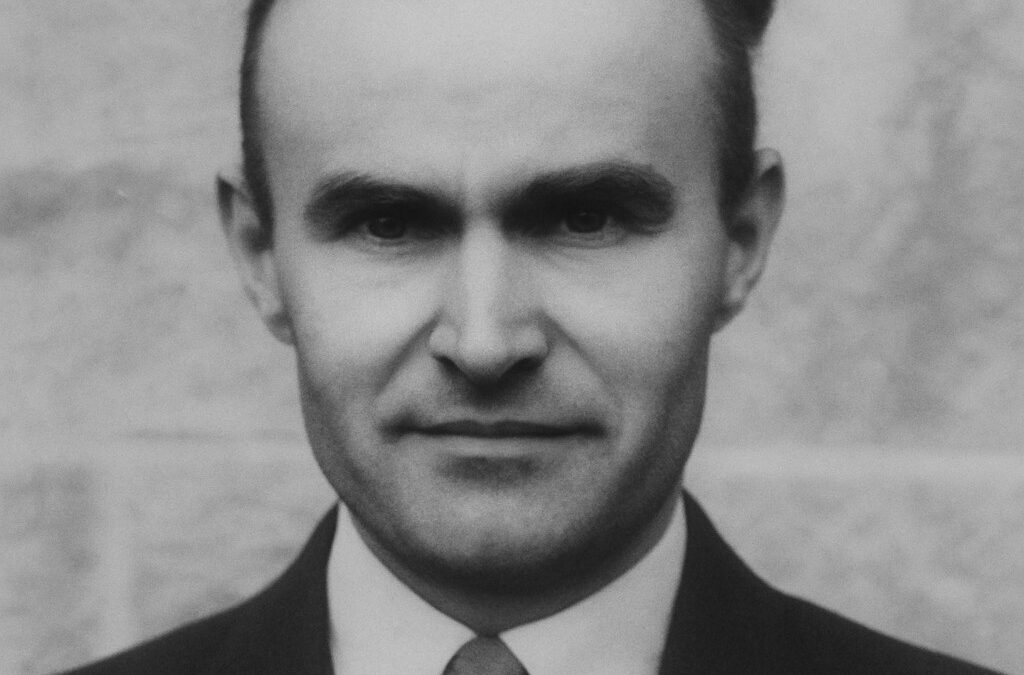
Bernie Clarke was a young teacher at the time — perhaps he was in his early thirties. He was a relaxed, gentle, and stylish man. Although he was not a tall man, he drew attention nonetheless. He was always neatly dressed, wearing some kind of sports jacket, often one with a check pattern. His hair was as black as coal. Furthermore, there were no wrinkles on his face, as he was a calm person who did not get worried easily.

While many of the other teachers were putting in some extra time on school matters, Bernie did not generally do the same. Despite that, he was a very good teacher — a very pleasant person. There wasn’t the threat of the strap in his class, and he never used corporal punishment or harsh language on us. We took advantage of that knowledge — we weren't overly well-behaved in his class! We, the students, were a lively bunch, and sometimes it was difficult to hear what Bernie was saying in the class. Another thing we liked was that, unlike some other teachers, Bernie didn't give us any homework at all. We were very grateful for that, as we already had too much homework. School was on every day, except Sunday, at that time — a half-day on Wednesday and Saturday. And we had to study at night every single day for about two or three hours. But we were constantly busy with homework in the other subjects, and it was difficult for us to finish everything on time.

Chemistry with a Fireball

Bernie taught us chemistry, a subject that was not too interesting to us at first. In his classes, we used to laugh and jeer, throwing paper balls at each other when Bernie wasn't looking. Occasionally, Bernie's patience broke, and he would raise his voice:

“Ah now, lads, cool it there!”

We would be quiet for a little while, but before long the commotion would start again.

But you could hear a pin drop any time Bernie got a test tube, or a jar, or chemicals. He was about to do a chemistry experiment. Everyone knew what would happen then. Every experiment failed disastrously! Dangerous results — an explosion, or a strange smell, or even a fireball! We couldn't control ourselves; it was so funny. In the end, this is what Bernie would say:

“Ah well, lads, you get the main idea, anyway!”

I clearly remember the time one student tried to imitate Bernie. The student stole a glass (jar) containing potassium. He went to the toilet, and threw a piece of it into a toilet bowl. There was a huge explosion, and the toilet seat was thrown up into the air with the force of the blast. Everything that was in the bowl was spilled as well. The poor student came out of the toilet in distress, and he was wet with water and whatever else was in the bowl. He also lost his hearing for a little while. The college was not too happy either, and he was nearly expelled from the school because of that awful misbehaviour. The chemistry lab was locked after that, and the like never happened again.

Doing Two Things at Once

Apart from the chemistry experiments, there were other occasions that captured our attention in the class. In the days just before school exams, Bernie would summarise everything he had taught us that term. But everyone and their uncle knew that Bernie would give the class hints about the questions that would be on the exam paper. We didn't want to let Bernie down either, and so we would spend some time studying our notes from the last classes of the term. We never let him down, not even once.

As for Bernie's passion, you would have to go out onto the golf course to see that. My father told me about Bernie, as my father also played golf, on the same course. He told me that Bernie had a handicap of about five.

“Only the best amateurs in the sport have a handicap like that,” my father said.

I understood then what Bernie's passion was — golf. He was out on the course every chance he had, improving his skills, God bless him.

I learned a lot from Bernie in addition to chemistry. I learned that you get the results you want when you focus your attention and energy on your passion, and you have a more worthwhile and satisfying life as a result. That's not to say that you don't do anything else — definitely, you do. You are able to do other things excellently too when you put the right structure in place.

That is exactly what Bernie did. He knew that his true passion was golf. As a teacher, he was able to be on the course every day during the holidays, especially in the summer. His passion and his career came together wonderfully for him, and he was able to handle both at the same time.

I am certain that Bernie retired from teaching many years ago. I would bet, however, that he is still playing golf!

Mistreatment of a Long-Term US resident by immigration officials!

Turas Siúlóra – Ó Bhriseadh go Biseach

A Hiker's Journey - From Fracture to Recovery

The X-ray results were devastating — a broken tibia, right at the point where it connects to the ankle. I had suspected that it was something more serious than just an injured foot, as there was sharp pain in my leg, especially at night. But I had been denying the truth, which was now staring me in the face.

Accepting the Truth

Normally, recovery from a sprained ankle takes six to eight weeks, but a fracture takes almost twice as long — up to four months. Oh, damn it!

The medical boot on my leg means I won't be walking or driving until I get permission from the doctor — which places a heavy restriction on me for a long time. I feel like someone who has been sentenced to a prison term. "Four months!" says the judge, hammering his gavel on the table.

The sight of the boot reminds me of my school days in Kieran’s College, where hurling players were occasionally injured, wearing plaster of Paris covered with graffiti. Injury was a natural part of that sporting life. But I never played hurling on a team, and so I was never injured — until now.

Modern medicine has come a long way. Instead of plaster of Paris, I have a medical boot that is much easier to wear. Unlike plaster, I can remove the boot in bed.

I have lightweight aluminum crutches and a small knee scooter too — essential tools to keep weight off the leg until the bone has healed back together.

Unfamiliar Territory

I've never broken a bone before, so this whole process is completely new territory for me. Beyond the worry about the condition of the injury itself, I was concerned that I wouldn't be able to do any exercise for a while.

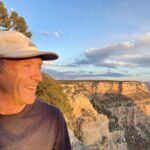
The irony isn't lost on me either. I had planned to take a rest day on the day of the accident. But when I was near a small mountain, I couldn't resist going up it immediately. It was meant to be an easy walk — nothing like many other hikes I've done: across the Grand Canyon and in the Pyrenees, the Alps and the Himalayas, for example. It's embarrassing that this accident happened on a small local path — but, in another way, perhaps it's a good thing too, as I managed to get down to my car, albeit walking with a limp.

The Medical Verdict

The orthopedist gave me news that was both good and bad. Fortunately, the bone fragment hadn't moved and was still in contact with the tibia. So, surgery wasn't necessary. But I wouldn't be able to put any weight on the injured leg for at least a month. If I follow his instructions carefully, however, I'll be back to my old self eventually — able to do everything as well as I could before the accident. I will achieve that goal, so that I can be back in the mountains again before long.

Different Opinions

People have different opinions regarding what happened to me. For example, my wife and I recently met a friend for lunch, with me wearing a boot and walking with crutches.

She told me that an accident like this would "humble" a person. She also said that she had told her friends about me, and they said: "Mick fell? Mick? How could Mick fall?" Those are the thoughts that stayed with me, stuck in the back of my mind.

I wasn't humbled by the accident at all. But I did regret what happened, as I had acted impulsively, and so wasn't properly prepared for the walk.

It's clear from the question "How could Mick fall" that the people who said this had unreasonable opinions. Where did they get such an idea? – not from me! In any case, anyone can be injured, no matter how much experience they have. The athlete who is never injured is a rare individual. By the way, I've fallen often on paths over the years; the difference this time is that the consequences are more severe and more visible to other people.

Every Cloud Has a Silver Lining

For the first time, I'll be living with a disability. Although I'm very fortunate that I'll make a complete recovery, this disability will give me a valuable perspective.

I'll have a flexible approach, being disabled for a period after the accident. I'm determined to do my utmost not to waste any time. I'll be busy with more reading and writing in Irish and English. I'll be able to spend more time learning how to play the guitar. I'll have more time to take breaks and reflect. But also, I'll have a new life — a different life — as a person with a disability. I'll have a lot to learn about that life, and I'll share those lessons with you over time.

And when I finally return to the path again with renewed energy, I hope that it won't just be my bones that are stronger — but my spirit too.


Mistreatment of a Long-Term US resident by immigration officials!

Mícheál Ó Duibhir, Fíor-Fhear na hAthbheochana

Michael O'Dwyer, True Renaissance Man

I was very happy to be a student at St Kieran’s College in Kilkenny. As a child, I had a natural curiosity about the world and the stars above. From the moment I opened a book about planets, stars, and galaxies, I was completely enchanted. In my young mind, Newton, Galileo, Descartes, and Einstein were wizards who had uncovered the hidden laws and principles of the universe. To me, science was a kind of magic—only better, because it was true and could be proven. It’s no surprise, then, that when I began my first classes in the College, I was thrilled to find physics and chemistry on the curriculum.

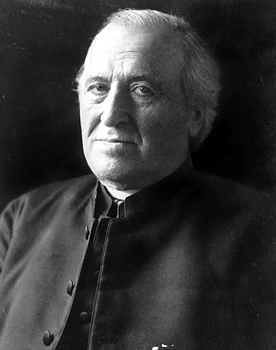
Although almost every teacher in the school was excellent—knowledgeable and passionate about their subjects—one stood out as the person who opened doors of possibility for me: our physics teacher, Mr. Mícheál O’Dwyer.

He began teaching at St Kieran’s College in 1967, after ten years teaching in Downpatrick, County Down. In all, he spent thirty-four years working at St Kieran’s—a long career that left a deep mark on generations of students. When I was a teenager, he was like a high priest at the altar of science.

Master Craftsman

Mr. O’Dwyer was a modest, sturdy man, full of energy and quick, playful wit. Unlike many teachers of that era, he never used corporal punishment. He created a safe space where we felt free to think independently. That’s not to say he couldn’t maintain discipline—he certainly could. He used humor and gentle mockery when needed.

I remember one day when I was chatting and laughing uncontrollably in his class while he was trying to teach. He looked straight at me, a serious gleam in his eye, and said, enunciating every word slowly and clearly:

“Now, Michael—just because your father is the vice-principal…”

He didn’t need to finish the sentence. The entire class burst out laughing; I turned crimson with embarrassment. From that day on, I was as quiet as a ghost in the physics lab.

He didn’t need to finish the sentence. The entire class burst out laughing; I turned crimson with embarrassment. From that day on, I was as quiet as a ghost in the physics lab.

When he taught us about focal length in a lens, he didn’t start with equations but with the stories of the scientists who shaped our understanding: Kepler, Huygens, Newton, Descartes, and Gauss. He impressed upon us that we were inheriting a magnificent intellectual tradition. Then he drew a clean diagram on the board, showing how parallel rays of light bend through a lens and converge, before deriving the thin-lens formula for focal length.

Watching him work was like observing a skilled craftsman at his bench—precise, patient, and completely absorbed in his subject.

The Scientific Method

He never left theory as something abstract. In the case of focal length, he divided us into pairs, each with a lens, an object, and a screen. Our task: measure, record, calculate; then test whether our result matched the formula.

In this way, the lesson wasn’t only about optics—it was about the scientific method itself: forming hypotheses, testing them rigorously, and drawing conclusions from tangible evidence. He also taught us the importance of teamwork and cooperation.

Those lessons went far beyond physics; they taught us how to approach problems methodically and how to work together effectively.

Looking back, I can say with confidence that Michael helped shape my path. He lit sparks of curiosity in me—not by telling, but by showing how the principles of physics worked.

He had a profound influence on me at a decisive moment in my life. It’s no accident that I went on to study Physics at University College Dublin, then Electrical Engineering, and finally earned a Master’s degree in Electrical and Computer Engineering at the University of California, San Diego.

I spent most of my career in research and development in the field of wireless communications. My professional journey traces its roots directly back to those early lessons in the physics lab—and to our teacher, Mícheál O’Dwyer.

Scientist and Historian

Many years later, I met Míchael again. By that time, I was closer to the end of my working life than the beginning. I told him plainly what he had done for me and how much he had influenced my life. He was gentle and humble, but I could see quiet gratitude in his eyes.

During that visit, he revealed his second passion: he had become an accomplished local historian. In his retirement, he devoted himself to writing about the history of Kilkenny, uncovering little-known aspects of its past.

Among his works was The History of Cricket in County Kilkenny: The Forgotten Game, a book offering a fascinating insight into the evolution of the GAA. He examined the upper classes of Kilkenny society and wrote about the very area where he himself had grown up. I was delighted to discover that the man who had once shown me the beauty of light and motion was now illuminating hidden corners of our cultural heritage.

True Renaissance Man

News of Mícheál’s passing caused me great sadness—he went on the ‘path of truth’ in February 2025. Those words “path of truth” seem fitting, for he had taught us in his classes what truth meant in science, and how that truth could be proven.

His image remains vivid in my mind—clear and precise, as if it were yesterday: standing at the front of the physics lab, chalk in hand, that kind smile on his face before the words I’ll never forget—

“Now Michael…”

I’m deeply grateful that I had the chance to thank him personally for what he had done for me, and for the lasting, positive influence he had on my life.

Reflecting on his life, I see clearly that few teachers like him exist. Forty-four years of teaching testify to his dedication. He believed passionately in the power of education to change not only the lives of his students but society itself.

I learned physics easily in his class—but I also learned something deeper: how to think logically and practically. That has served me well in every aspect of my life. Even now, when I sit down to write, I still hear echoes of his lessons—his voice in my ear offering quiet advice:

“Be precise and clear. Think logically. Approach every problem with curiosity and respect for the truth.”

As Máirtín Ó Néill wrote in an obituary in the Record 2025 (St Kieran’s College), Míchael O’Dwyer was “a Kieran’s man with many parts —a scientist and historian, truly a Renaissance man.”

Teachers rarely make headlines, but they change the world quietly and profoundly—mind by mind, generation after generation. Míchael stood as the model of a great teacher—a guiding star of knowledge for me always. I will never forget him for as long as I live.


Mistreatment of a Long-Term US resident by immigration officials!

Ceacht an Rúitín Casta

Lesson of the Twisted Ankle

We often think our own way is better than the right way. I've written more than once about walking safety, about checklists and gear, and about the great respect you must always have for mountains. But on a certain evening recently, with an hour or two free, I broke my own rules. I started a walk on a well-known path without hiking boots, without walking poles or a first-aid kit. All I had were worn running shoes and too much self-confidence.

It didn't go well, and I soon learned the lesson.

Falling Slowly

In certain places, the path is steep and covered with fine gravel. It's a multi-use trail, and mountain bikes often scatter the gravel across it, making conditions even worse for walkers. As I was descending a steep part of the path, my right foot slipped unexpectedly to the left, my body fell to the right, and my ankle turned inward and stretched badly under the load.

The fall was like a slow-motion movement, like a tree being felled.

For a second, I was sure I had broken bones. I kept control, and stayed on the ground for a while, breathing slowly and deeply, scanning for blood or anything out of place. I then stood up, and my ankle was very painful, but I was able to walk with a limp and slowly. I began the long walk back to my car.

Temporary First Aid

Back home, I bandaged the ankle, took ibuprofen, and propped my foot up on a pillow. By morning, the situation had worsened. My right foot was badly swollen. Purple bruising appeared on the inside of my foot. Painful blisters appeared on the ankle. I cleaned them and put medical dressing on them.

so he can examine my foot and advise me about it.

Nuair a bhí mé i mo shuí le mo chos ar leac oighir agus mé ag smaoineamh faoi cad a tharla, thuig mé gan mhoill: d’fhéadfaí é seo a sheachaint. Sa deireadh, is ormsa atá an locht.

The Three Essentials I Omitted

I was injured because I didn't have three essentials:

  • Hiking boots — without them, I had no chance. It is crucial to wear hiking boots when you're on the trail.
  • Hiking poles — without them, I didn't always have good balance. Two extra points of contact are the difference between a firm stance and a sprained ankle.
  • First-aid kit — without it, I had no relief in case of an accident. It is useful, not only for serious injuries, but for bee stings or sunburn as well.

Why did I omit the essentials? It happened because of impulsiveness.

People become careless with experience. I knew the path, I had walked it often, and that put me at ease. But I quickly paid for that assumption.

The Broader Lesson

A study published in the American Journal of Emergency Medicine says that almost 40% of walking injuries are related to ankles. The National Park Service also reports that footwear is a factor in more than 60% of these cases.

Every experienced walker, including myself, has heard this advice already. But it needs to be applied every single time, without exception.

As I found out, the time you forget the advice is the time you'll be in trouble.

Moving Forward

The ankle will heal. I will lose a couple of weeks on the trails. But I have learned a lesson. From now on:

  1. I will be using boots and walking poles, and a first-aid kit every time on the path.
  2. The mountain will still be there tomorrow; there's no prize for going out unprepared today.

I hope I have learned the lesson well. Otherwise, the next time could be not only worse, but fateful.

Mistreatment of a Long-Term US resident by immigration officials!

en_USEnglish