Sáinnithe i lár Cogaidh – Tuairisc mo neachta ó Dubai!

Trapped in the Middle of a War – My Niece’s Report from Dubai!


The war involving the United States, Israel, and Iran has taken a significant turn for the worse over the past week. Following Israeli strikes on major Iranian oil and gas facilities at South Pars and Asaluyeh on March 18, Tehran sharply escalated its threats, warning that Gulf energy infrastructure in Saudi Arabia, the UAE, and Qatar could be targeted. This sparked widespread anxiety across the region, as it signaled that the war could spread further, devastating the economies and lives of people already living under its shadow.

Iran also demonstrated its long-range capabilities by firing two ballistic missiles toward the joint U.S.-U.K. base at Diego Garcia in the Indian Ocean. Although reports indicate the missiles did not hit the base, the incident reinforced the sense that the conflict is widening, becoming increasingly unpredictable and difficult to contain.

President Trump then raised the stakes once again. He warned that unless Iran fully reopened the Strait of Hormuz within 48 hours, the United States would strike Iranian power plants. Iran countered with its own threat, stating that if its power infrastructure were attacked, it would retaliate against Israeli power plants and other regional power facilities linked to U.S. bases.

Then, almost as suddenly, Trump appeared to pull back. On March 23, he claimed that “very good and productive” talks were underway between the U.S. and Iran, with major points of agreement reached, and he postponed the threatened strikes for five days. However, Iran publicly denied that any such talks were taking place. Thus, the region remains in a state of profound uncertainty: one day brings threats of escalation, the next talk of diplomacy, followed almost immediately by denials and renewed doubt.

For those living in the UAE, it is a constant, agonizing journey. Every new threat spikes the tension. Every rumour of talks or a pause brings a small measure of relief, but that relief fades quickly, as no one knows what comes next.

My niece shared her thoughts with me before some of the most recent developments. If anything, the tension is even sharper now than when she wrote them:

“For me, the main feeling lately has been a kind of constant mental exhaustion. You’re always slightly on alert, waiting for the next notification on your phone and wondering if it will be followed by a bang, and if so, how far away it will be.”

In the UAE, a phone message is no longer just a message. Silence is no longer just silence. Every pause is heavy with the understanding that something else could be about to happen.

This pressure doesn't stay with just one person. It seeps into homes, onto the roads, into workplaces, and into family life. The city might still look normal from the outside, but the atmosphere has changed completely.

As my niece put it:

“I think many of us have become a bit irritable and hypersensitive too, simply because our nerves are on edge. It changes the look of everyday life. I get nervous about simple things like driving somewhere. There’s always a question in the back of your mind about something falling from the sky, whether that’s missiles or debris.”

It is easy, from a distance, to view these events as a series of headlines. But for those living in the UAE, the war is felt differently. It is felt in the phone alert that tenses your shoulders, in the instinctive glance at the sky before getting into the car, and in the effort to keep daily life moving while the wider region lurches from one threat to the next.

If the past week has shown anything, it is how suddenly this war can change direction. One day brings threats against power plants and Gulf infrastructure. The next brings talk of productive discussions. Then come denials and further uncertainty.

Undoubtedly, things are much worse for the people of Iran, with a terrifying amount of bombs being dropped on them by the U.S. and Israel. But my family is not in Iran, so I do not feel that direct impact in the same way. There is no such thing as a good war, and I hope this conflict ends soon. Even then, it will be difficult for life to return to how it was, and it is likely the people of the UAE will be keeping an eye on the sky long after the hostilities have ended.

 

Sáinnithe i lár Cogaidh – Tuairisc mo neachta ó Dubai!

Trapped in the Middle of a War – My Nephew’s Report from Dubai

Trapped in the Middle of a War – My Nephew’s Report from Dubai

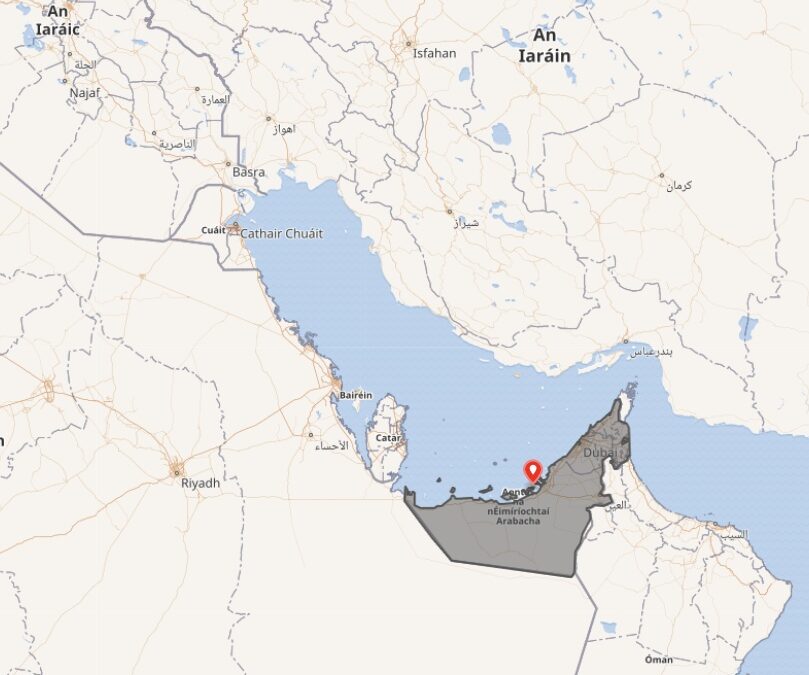
The situation for Irish citizens living and working in the Middle East, particularly in the UAE, has become far more stressful since the United States and Israel began the war against Iran. Although Iran says it is targeting military bases in the Arab Gulf states, it has been reported that hotels and other civilian sites in the UAE have also been hit. As a result, life has changed dramatically in Dubai, where my nephew and niece have lived with their families for years.

Before the war began, Dubai was widely regarded as one of the safest and most prosperous cities in the world. Now, Iran is launching missiles and drones toward the UAE almost daily. The UAE’s air defenses intercept most of them, but they do not manage to stop them all. This offers only a small amount of comfort to families living there, especially those with young children.

I asked my nephew and niece to describe daily life in Dubai at the moment. I am publishing my nephew’s report today, as it illustrates clearly what life is like there right now:

“Life in Dubai has changed dramatically over the past two weeks. There is a sense of uncertainty and unpredictability, and at times it feels dangerous. There has been a clear shift in day-to-day life.

Sometimes when you are outdoors, you hear missiles overhead or see them crossing the sky, with some being intercepted right in front of you. The sound of those explosions is unlike anything I have ever heard before. The shockwave travels through your entire body, and it is impossible to ignore.

We receive official government alert messages almost every day, instructing us to take shelter when waves of missiles are coming our way. Recently, other messages also arrive an hour or two later confirming that the situation is under control again. At night especially, people are much more alert, checking their phones, watching for alerts, and listening for unusual sounds. This creates a tension that is now part of everyday life. I’ve noticed one thing: every time I go out, I look up at the sky just to be sure. That has become an instinctive habit now—something that would have been quite strange a short time ago.

For families, especially those with young children, this is one of the most difficult aspects. We have two small children, and the sound of those explosions is very frightening for them. They are certainly afraid and don't understand what is happening, so we try to downplay the situation and reassure them, telling them it is a normal occurrence—like police cars or ambulances passing by.

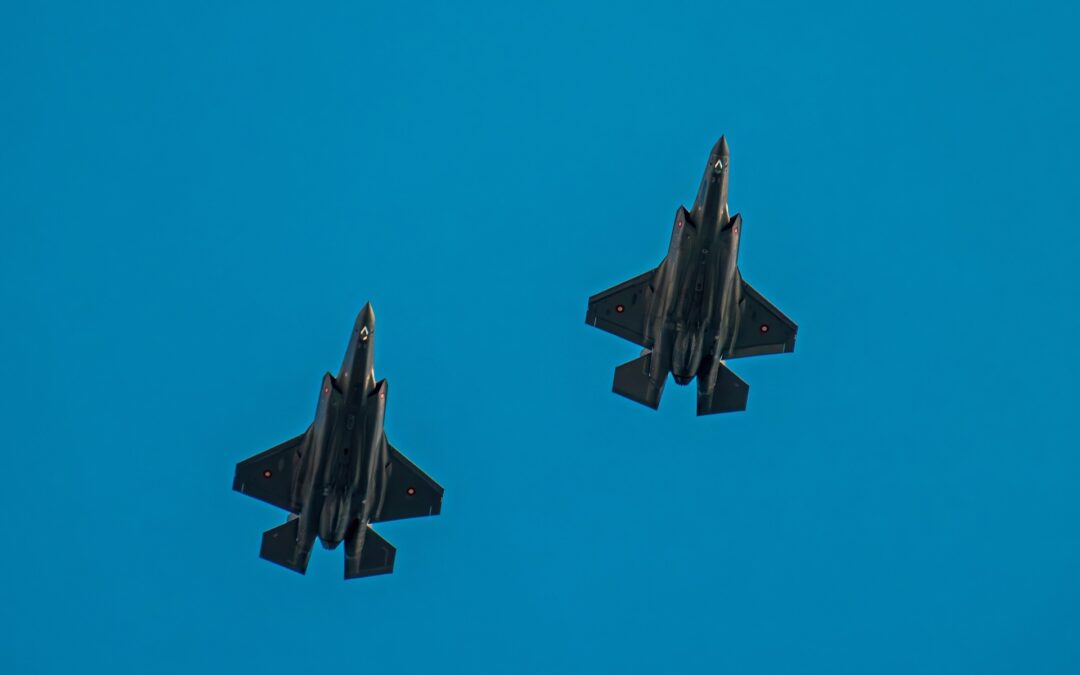
Travel has also been heavily affected. Due to the closure of airspace, flights were not operating for certain periods. On some days, the airspace was reopened for a few hours to allow people who were on holiday here to return home to places like Ireland and England, but many flights were still cancelled. Once, when flights resumed for a short while, civilian aircraft appeared to be flying side-by-side with military jets. I had never seen anything like it before, and it was a surreal experience.

In everyday life, there is much less traffic on the roads, though most people are still trying to carry on with their routines and daily duties. It must be said that the response systems are working very effectively. Despite this, there are still cases where drones or debris have caused damage to buildings.

Overall, people are getting used to the situation as best they can, but the atmosphere is very different now. There is an understanding that things could change suddenly. Daily life continues, but everyone is more alert and more cautious than usual.”

Next week, I will continue this series with a report from my niece in Dubai.


Sáinnithe i lár Cogaidh – Tuairisc mo neachta ó Dubai!

Caught in the middle of a War!

Saturday, February 28, I felt the Iranian war for the first time in a text message from my sister.

“There are explosions in Dubai,” she wrote. “C. is terrified,” she added, referring to her daughter.

Another message arrived shortly after. “A missile hit The Palm Hotel and Resort in Dubai. It went up in flames.”

Then she sent me a screenshot of an alert her son and daughter had received on their phones: “Due to the current situation and the threat of missiles, take shelter immediately in the nearest secure building, and stay away from windows, doors, and open areas. Await further instructions.”

I called my sister immediately. She was anxious about her son, her daughter, and her three grandchildren in Dubai. I tried to reassure her. We agreed that the threat was "low."

But “low threat” changes its meaning when it concerns your own family. When danger involves strangers, it seems like a measured thing. When it involves the people you love, it no longer feels low. it is a threat, and it feels very close.

By Sunday, March 1, the reports out of Dubai were clearer. Reuters reported damage in Dubai, including at the international airport, Palm Jumeirah, and the Burj Al Arab, after the first wave of Iranian retaliation spread across the Gulf. That same day, another message came from my sister.

“They hit the airport and a missile was intercepted near where C. lives. C.’s nerves are shattered.”

Some of the first messages came in the chaos that accompanies a live attack. That is how it is in those moments. It is the "fog of war." Rumors, fear, and half-facts reach us in a single blur. But the overarching truth was clear enough. Iran was demonstrating that it could strike across the Gulf, terrorize the Arab Gulf states, and cause major disruption to life and the economy. It wasn't just a military message; it had a strong psychological element too. No one in the region was completely safe.

Since the war began on February 28, the United Arab Emirates has attempted to stay out of a wider regional conflict, even as they are forced to defend themselves against repeated attacks. That prudence is important, as it helps keep matters under control rather than expanding them across the region. Despite this, however, much of the danger is beyond their control. On March 9, the UAE envoy to the United Nations in Geneva called for de-escalation and a return to negotiations, while simultaneously stating that the UAE was ready to protect its critical infrastructure.

It is also clear that this war is far from over. Ali Khamenei was killed in a US-Israeli airstrike on Iran on February 28. On Sunday, March 8, Iranian state media reported that his son, Mojtaba Khamenei, had been chosen as the new Supreme Leader. Reuters reported that this appointment indicates continuity and confrontation rather than compromise.

No one can say for sure how this war will proceed, nor what it will mean for families in the UAE in the coming weeks. We hope, of course, that the attacks on the Gulf states will stop soon.

On Monday, March 9, the UAE stated that its air defense network has been under continuous attack since hostilities began on February 28. According to official figures, 253 ballistic missiles from Iran were detected. 233 of them were destroyed, 18 fell into the sea, and 2 landed on the ground. The UAE also said that 1,440 drones were detected, 1,359 of which were intercepted and 81 of which landed within the country. Eight cruise missiles were also detected and destroyed. Despite this, 4 people were killed and 117 others were slightly injured. Those killed were citizens of Pakistan, Nepal, and Bangladesh. Among the injured were residents from more than twenty countries. To our knowledge, no Irish people have been injured so far. The UAE Ministry of Defence said its forces were fully prepared to deal with any further threat.

The UAE's air defense relies heavily on American-made THAAD and Patriot systems, supported by other systems to deal with lower-flying missiles and drones. The UAE says they still have sufficient interceptors.

I recently received a detailed account from my nephew, who has lived in Dubai for several years, about life as it is now with the UAE under attack from Iran. It is clear from his words that ordinary life itself has changed. People are watching their phones, listening for alerts, and even looking up into the sky as a new habit. Due to space constraints, I cannot publish his full account here, but I will return to it in a separate article.

For people far away, war is often a headline, or a map, or a line of official numbers. But for families whose own people are under threat from missiles and drones, it is something else. It becomes personal. It becomes immediate. It becomes the thing you think about when the phone lights up in the middle of the night.


Litir ó Mheiriceá – Ní mór do Chomhdháil Stáit Aontaithe Mheiriceá (SAM) Gníomhú gan mhoill!

Letter from America — The United States Congress Must Act Without Delay!

Litir ó Mheiriceá - Ní mór do Chomhdháil Stáit Aontaithe Mheiriceá (SAM) Gníomhú gan mhoill!

The first air strikes by the U.S. and Israel, under the name Operation Epic Fury, began at 9:45 a.m. (Tehran time) on Saturday, February 28. In the first 24 hours of the campaign, the United States and Israel launched more than 1,400 munitions against 1,000 targets — the largest air campaign in the region since the invasion of Iraq in 2003.

The centerpiece of the first wave was a precision strike in the Pasteur Street area of Tehran, which killed Ayatollah Ali Khamenei and 49 senior Iranian leaders, including the Chief of Staff of the Armed Forces and top commanders of the Islamic Revolutionary Guard Corps (IRGC).

An Urgent Threat?

On Monday, March 2, Secretary of State Marco Rubio claimed the strikes were a response to an “urgent threat” — defining “urgent” not as an immediate physical attack at that moment, but as a strategic imbalance that was rapidly deteriorating.

According to Rubio, Iran was attempting to reach a “point of immunity.” At that point, Tehran would be producing ballistic missiles at a rate that the U.S. could not match in terms of supplying its interceptor missiles. Consequently, Iran would be able to proceed with its nuclear program without fear of military retribution.

Regional Escalation

In the 72 hours following the initial air strikes, escalation emerged quickly. On March 2, Kuwaiti air defenses accidentally hit three U.S. F-15E Strike Eagle fighter jets flying in regional airspace with missiles. On the morning of Tuesday, March 3, drones believed to be from Iran struck the U.S. Embassy in Riyadh, sparking fires and triggering a global security alert. CENTCOM has confirmed that six members of the American armed services have been killed by Iranian missiles since the conflict began on February 28.

The civilian cost is even worse. On the first morning, a missile struck the Shajareh Tayyebeh girls' elementary school in Minab. According to the Red Crescent, up to 180 people were killed — most of them elementary school students. Videos from the scene showed rescuers removing bloodied textbooks and crayons from the rubble beneath a mural.

Interceptor Shortage and Cybersecurity Risks

While the government suggested the conflict could last for many weeks, critics say that sufficient munitions were not secured for a prolonged campaign. Senator Andy Kim warned that U.S. military bases in the Gulf could be besieged by large numbers of missiles unless Congress authorizes an emergency expansion of production.

At the same time, domestic cybersecurity is at risk. Due to sharp cuts in the Cybersecurity and Infrastructure Security Agency (CISA), it is more difficult to protect the U.S. Experts warn that Iran could carry out damaging attacks on the American power grid and water systems.

The War Powers Resolution

Marco Rubio claims he notified the Gang of Eight on the night of the attacks. But under the War Powers Resolution of 1973, the president must submit a formal written report to Congress within 48 hours of introducing forces into hostilities.

That deadline passed on the morning of Monday, March 2, without any formal report from the White House. Consequently, the government is in direct conflict with the law. Senator Kim stated that this is “the clearest violation of our Constitution I have ever seen.”

The Choice Before Congress

The U.S. is involved in an extremely dangerous conflict. Oil prices have risen significantly with the Strait of Hormuz closed. There is a strong chance the war could spread throughout the entire region.

Congress must assert its authority by:

  • Demanding a clear statement of objectives: What does “victory” look like in an Iran after Khamenei?
  • Controlling funding: Prevent military involvement without legislative renewal.
  • Holding a recorded vote: To put every member of the House and Senate on the public record regarding their position.

If Congress does not act now, it will cede vital constitutional power to the executive. This is a step toward an all-powerful presidency — the exact outcome the founders of the Constitution did their utmost to avoid.


Deis na Seamróige!

Shamrock Opportunity!

In a few weeks, the Taoiseach will stand in the East Room of the White House. The bowl of shamrock will be presented. Cameras will click and flash. The familiar annual words about friendship and historic ties will be heard.

But behind that ceremony, a more serious question lies hidden.

More than €20 billion in corporate tax was collected in Ireland last year, much of it from a small number of multinational companies headquartered in the United States. It is therefore natural for Taoiseach Micheál Martin to be cautious in conversation with President Trump, since no one can predict the response if tensions were to arise. What should the Taoiseach do — remain silent, or speak honestly about our views?

To navigate an international landscape that is becoming more uncertain by the minute, it is worth looking to Canada and its Prime Minister, Mark Carney.

Carney is known internationally as the former Governor of the Bank of Canada and later of the Bank of England. He earned respect for his steadiness during periods of financial turmoil. His credibility rests on action rather than words.

Carney’s grandparents were from County Mayo. He holds Irish citizenship and frequently speaks publicly about that rich heritage.

There are structural similarities between Canada and Ireland. Both countries are deeply economically integrated with the United States. Both rely heavily on open trade with it, and both are vulnerable when the tone or direction of American policy shifts. Recently, that risk has become more visible and more significant.

Carney’s response has been measured. At Davos earlier this year, he outlined what might be called a “middle-power strategy.” He did not attack the United States. Instead, he argued that smaller countries strengthen themselves through coordination and cooperation with one another.

That principle was evident recently in the case of Greenland. When President Trump renewed his interest in acquiring Greenland, a semi-autonomous territory of the Kingdom of Denmark, Denmark and the government of Greenland responded clearly: the territory was not for sale nor open for negotiation. European Union leaders expressed support for Denmark, and NATO partners reaffirmed their security commitments in the Arctic. The tariff threats associated with the dispute were withdrawn, and the matter did not escalate into a broader crisis.

The episode demonstrated the strength of allies when they stand together.

Canada will continue to trade and cooperate with the United States while at the same time expanding its economic and strategic options. That is risk management. Diversification reduces vulnerability.

In Ireland, a significant portion of corporate tax revenue depends on a small number of companies based in the United States. Pharmaceutical and technology exports to America make up a substantial part of our trade balance. If there were a sudden shift in Washington’s policy, Ireland’s economy would be hit harder than that of many larger EU countries with more diversified revenue bases.

Ireland can maintain and strengthen its economic relationship with the United States while at the same time expanding trade and investment links elsewhere — independently and through the European Union. A broader trade base reduces the risk associated with policy changes in any single capital.

That brings us back to St. Patrick’s Day.

Year after year, proposals are put forward calling for a boycott of the White House visit. But it would not be wise to take that advice. Ireland has symbolic access in Washington that countries of similar size do not enjoy. That access is a significant opportunity.

In my view, the question is not whether the Taoiseach should attend Washington. The real question is how Micheál Martin will use that opportunity on St. Patrick’s Day.

The Taoiseach can calmly and clearly express Ireland’s commitment to cooperation based on international rules and predictable trade. He can articulate his position without jeopardizing the partnership. That is consistent with Ireland’s diplomatic tradition and aligned with many of its European partners.

Carney’s emphasis on diversification is appropriate for a world that is more uncertain than before. He offers a practical approach — not only for Canada, but for countries like Ireland navigating this new world without a map. All that remains now for Micheál Martin is to seize the opportunity on St. Patrick’s Day.


Casphointe!

Pivot Point!

Every so often, a major innovation creates a decisive turning point. In times like these, the world changes rapidly. Often, companies or countries focused on established technologies—the very ones that brought them extraordinary success in the first place—are left behind (in áit na leathphingine), while others are willing to embrace the new technology and push it forward aggressively. The consequences can be profound, reshaping markets, power structures, and even the world order.

This dynamic is discussed in Clayton Christensen’s landmark book, The Innovator’s Dilemma. Christensen showed that leaders fail not because of bad management, but due to a lack of strategic decision-making. They continue to invest in technologies that serve their existing customers and revenue streams, while casting aside new technologies as weak, dangerous, or unprofitable.

Initially, that assessment is often correct. New technologies are immature, expensive, and weaker than established ones. But over time, the balance shifts. The new technology improves rapidly, and the legacy technology reaches its physical limits. The profitability of the legacy system decreases just as the capability of the new technology increases. By the time established leaders realize what is happening, the gap is too large to fill. They are left with no choice but to be followers or, worse, to be rendered obsolete.

Identifying such a turn in advance is extremely difficult, however. Sometimes, the perceived disruptions are false alarms. A famous example is Betamax versus VHS in video recording. Betamax was widely considered technologically superior to VHS. Consequently, many analysts thought Betamax would win the battle. Instead, VHS gathered strength because that technology was cheaper, more flexible, and had stronger support from the industrial sector. Those who followed the seductive call of Betamax were wiped out.

Today, we are seeing major turning points in the fields of energy and artificial intelligence (AI), and in the combination of the two. For a long time, the United States of America (USA) held (and still holds) a dominant position in fossil fuels. The USA is currently the largest oil producer in the world, with massive reserves and an extensive economic ecosystem based on hydrocarbons. This position shaped the world order, from foreign policies to domestic infrastructure.

But that era is drawing to a close. The world's energy system is turning toward renewable energy rapidly. Solar energy is now cheaper than oil-generated power. It is cheaper to drive electric vehicles than petrol vehicles. But China is the primary driver of these changes. China has made massive investments in energy manufacturing, battery technology, and electric vehicles. It does not see these industries merely as commercial opportunities, but as strategic priorities.

The results are clear. Chinese companies now lead in solar panel production worldwide. They are ahead in battery manufacturing. And in the field of electric vehicles, China’s BYD has overtaken Tesla in terms of global market share. Instead of competing directly, the USA has adopted protectionist policies—for example, with high tariffs on Chinese vehicles. This might protect domestic manufacturers in the short term, but history shows that this is a poor long-term strategy.

The U.S. approach is even worse because fossil fuels are a central cause of climate change. Politics does not change physics. Although the debate continues, we can all see the climate change that is underway. Meanwhile, China continues to export renewable technologies and solidify its role as the primary provider of the energy systems of the future.

The danger for the USA is marginalization. As global adoption of renewable energy accelerates, countries will rely more on Chinese supply chains, standards, and expertise. If the USA delays too long, it will have to adopt these technologies from a place of weakness. In that case, not even Silicon Valley—the innovation engine of America and the world for so long—can be sure it will survive.

Recent events have shown that Chinese power is increasing rapidly. China's threat to restrict rare earth minerals, combined with its total dominance in clean energy research and development, forced the USA to retreat from its plans to impose 60% punitive tariffs on China. This strategic countermeasure demonstrated that Beijing’s control over intellectual property and the supply chains of the future was a more powerful weapon than Washington’s traditional economic sanctions.

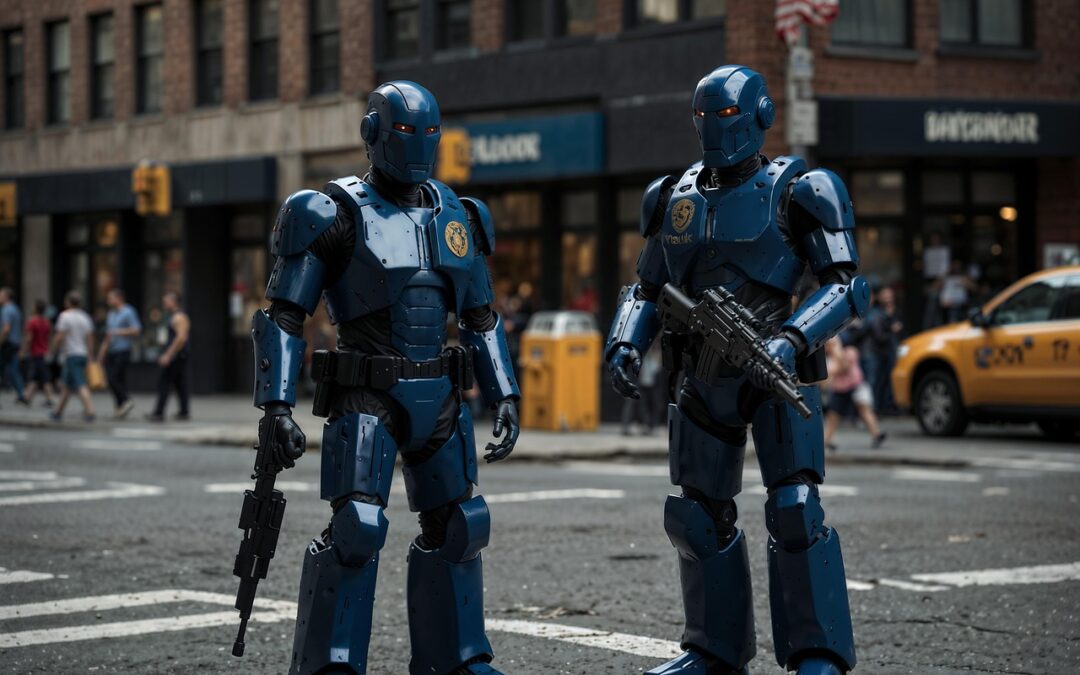
A similar competition is taking place in the field of artificial intelligence. Here, the USA is still ahead in foundational models and software. But China is advancing rapidly. The combination of artificial intelligence and energy could also be decisive. Consider mobile AI systems like humanoid robots. They rely not only on software, but on hardware, manufacturing, and power systems as well (solar energy, batteries, etc.). China’s strength in these areas gives it a structural advantage. Reports that humanoid robots are already being used to patrol cities like Shenzhen show that this technology will have a major impact not only on commercial affairs, but on security and military affairs as well.

It is highly likely that we are on the edge of a new era. It is clear that the USA is heading in the wrong direction. The country’s regime threatens its allies in Canada and Europe and imposes tariffs on them at the same time as being very friendly with Putin's regime in Russia. A major political divide has also opened in the country, where democracy is under pressure from authoritarianism.

Because of these significant changes, Europe and Canada are strengthening their ties with China, India, and South America. This will change global trade and influence for decades to come, and the USA will be the worst affected. The danger is also that, without the leadership of the USA as the champion of democracy, the world order will slip toward authoritarian dominance. History shows that it is a long and violent path, full of oppression, instability, and a terrible human cost. A world shaped by authoritarian power is not a safe or predictable world.

We are late in the game, but it is never truly too late. The USA must rebuild alliances, make serious investments in the technology of the future, and restore trust in itself at home and abroad. We barely survived the nuclear age—through restraint, cooperation, and imperfect institutions. Artificial intelligence could be even more dangerous, especially in the hands of dictators who care only for their own benefit.

The turning point is near us now. How the people of the USA meet this challenge—that is the vital question for us all.


en_USEnglish