Leorghníomh aithreachais!

An Act of Reparation!

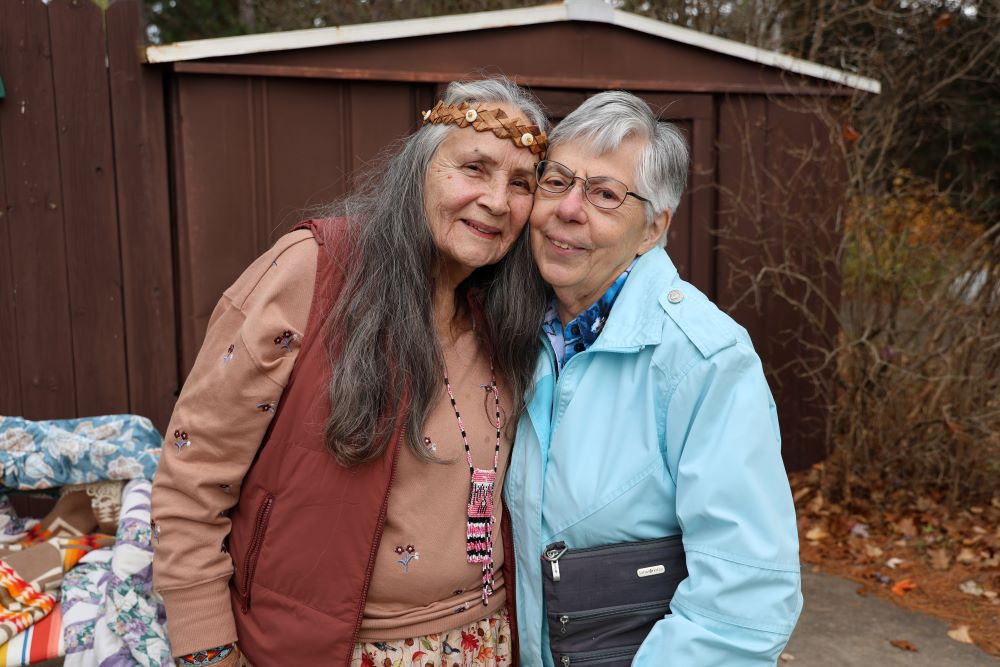
A group of people gathered together beside a lake on a very cold day in October in northern Wisconsin. There was a carpet of multicoloured leaves on the ground. Both nuns and Native Americans from the Lac du Flambeau Band were present.

During the ceremony, the nuns gave the land title to the delegation of Indigenous people. What was involved was two acres of land, which included a cluster of cabins, and a house called the Marywood Franciscan Spirituality Centre. The sale price: $30,000, exactly the amount the order of nuns paid for it 60 years ago. Its valuation today? Around $2.6 million.

In contrast to the land acknowledgement that is common at meetings on stolen land and which is nothing more than a symbolic confession, this was the real thing: the first known case of a Catholic institution in the United States voluntarily returning land to a tribe as an act of reparation.

"We wanted to do more than just say we were sorry."

Sister Eileen McKenzie, president of the Franciscan Sisters of Perpetual Adoration (FSPA), told reporters that the order had spent two years researching the history of the land. They learned that the property was on the traditional territory of the Lac du Flambeau Band, from whom land was stolen through broken treaties.

"We wanted to do more than just say we were sorry," she said. "We wanted to change the story, even in a small way."

The nuns made the decision after painful reflection. FSPA helped run a Catholic boarding school that separated Indigenous children from their families and their culture. That is a shameful legacy not only for FSPA but for Catholics and Protestants throughout North America, as unmarked graves are still being found in every corner of the continent.

"It felt right to give something back," McKenzie said. "This land wasn't ours to begin with anyway."

An emotional homecoming with fond memories

For the Lac du Flambeau Band, there was deep emotion associated with the moment. Tribal President John Johnson Sr. called the act "a step toward restoring balance."

He spoke about elders who remember fishing on that same lake, and about the old paths that used to go through the forests. "When you return to land that knows your name, you feel something inside settling," he said. "That's not a question of ownership. There's a deep connection between our tribe and this place."

The tribe intends to keep the property as a place for healing and cultural renewal — a place where people can gather, stories can be told, and ceremonies can be held on land that is once again under their care.

"It's like a circle closing," Johnson said. "The land remembers us, and now we can remember it."

The quiet revolution called 'Land Back'

Throughout the United States, a growing movement called 'Land Back' is challenging the concept of land ownership. It's considered a critically important effort, and tribes and allies are negotiating, fundraising, and sometimes going to court to reclaim ancestral lands.

What's most striking about this story is the way it happened. It wasn't a government order or a court settlement — but a group of elderly nuns who decided among themselves to do the right thing.

"This changes the moral temperature," said historian and Indigenous rights advocate Nick Estes, who has written extensively on the Land Back movement. "When you see people of faith — people whose institutions benefited from our dispossession — voluntarily giving land back, it opens hearts and possibilities."

More important than just the land

Land is just earth and trees. But for Indigenous Nations, there's memory, language, law, and identity in it. Their culture and the land are interwoven. When they get even a small piece back like this, it makes a huge difference to them, because it begins the reversal of the loss.

Sociologist Dr. Danielle SeeWalker, who studies Indigenous reconciliation efforts, put it simply: "Each acre that's returned is like a heartbeat restarting. You can't measure that in dollars."

For the nuns of FSPA, returning their land to the tribe is an important step. "Francis of Assisi taught us to repair what is broken," Sister McKenzie said. "In this era, perhaps this is what is broken and needs repairing."

A sign, not an ending

This is unlikely to be the end of the story. It's reported that other Catholic communities are doing deep reflection on their own role regarding boarding schools and the land associated with them.

Questions have been put to both the Jesuits and the Benedictines about property that was connected to missions or schools for Indigenous children.

Legal experts believe that voluntary acts like this could influence public policy — showing that reparative transfers like this can be done without ten years in the courts. "An act of reparation like this can be viewed as an act of relationship instead of a political fight," said one law professor.

But the nuns themselves insist they're not seeking praise. "We're not heroes," McKenzie said. "We listened, that's all."

Conclusion

When the ceremony ended, the group formed a small circle, passing around a wooden bowl full of water from the lake. An elder of the tribe blessed the site in his native language - Ojibwe - and the nuns sang a Franciscan hymn. The wind carried their voices over the trees and up into the sky, spreading the hopeful message across the world, without limit, without restraint.

In a country full of empty promises and where money is a false God, an act like this is rare. But by setting down a single example, it's likely that the small group on the edge of the lake has begun inspiring a new movement that will be far greater than they know.

As you reflect on this, think about how we ourselves can do acts like this that will give support to minority and disadvantaged groups in our own country - groups like legal immigrants and the Travelling community.

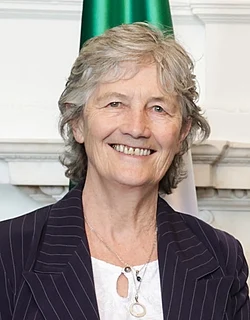
And we can always support efforts that will promote the Irish language and the preservation of our culture. Look at what President Catherine Connolly is doing in Áras an Uachtaráin, for example, regarding the use of the language.

Finally, in the famous words of Margaret Mead: Never doubt that a small group of thoughtful, committed citizens can change the world; indeed, it's the only thing that ever has.


Litir ó Mheiriceá – Cé hé Bernie Sanders?

Letter from America - Who is Bernie Sanders?

Lessons in Equality from America’s Progressive Senator

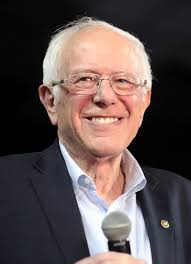
Bernie Sanders is an independent senator from the state of Vermont, and one of the most influential figures in progressive American politics — and, indeed, across the world. He is often described as a democratic socialist. He was born in Brooklyn, New York, in 1941, into a Jewish family. His father — an immigrant from Poland — came in search of a better life. Sanders has spent more than forty years in politics — from his days as mayor of Burlington to his long service in the U.S. Senate.

He was twice a serious contender for the Democratic Party’s presidential nomination (2016 and 2020), and he transformed America’s political conversation by focusing on economic inequality, corporate power, and social rights. He believes that healthcare, education, housing, and a living wage are basic human rights. His message has always been clear: politics should serve all people, not only the wealthy.

The Politics of Economic Inequality

Throughout his political life, Bernie Sanders has defended one principle, tirelessly and without compromise.

“We have a political system controlled by millionaires and billionaires. Our duty is to build an economy and a government that work for ordinary people, not just the wealthy few.”

He believes that the same trends can be seen across the world — from Russia to China, from Hungary to India. Ordinary citizens must break that grip and return political power to the people. His message is simple but strong: the people of Ireland, Europe, and America alike can challenge how wealth and power are distributed.

How the Voice of the Working Class Was Lost

According to Sanders, the Democratic Party traditionally defended the working class in the United States. But in the 1970s, it turned toward the wealthy and the big corporations. Factories closed, union power declined, and working people were left without protection.

“People — and especially working people — didn’t vote for Donald Trump because they wanted billionaires to get richer,” he says. “They voted for him because he said the system was broken — and that he’d do something about it.”

Sanders’s solution is to place working people once again at the heart of politics: good jobs, fair pay, affordable housing, and governance that serves that public.

Universal Rights

At the heart of Sanders’s views lies a firm belief that certain rights belong to everyone, regardless of status or wealth. Among them:
– Healthcare as a human right through a comprehensive public system
– Free third-level education for all
– Affordable housing for everyone
– A Green New Deal linking climate action with job creation

When told that his goals are too ambitious — especially on healthcare — he replies: “If every other advanced country in the world can provide healthcare for its citizens, why can’t we?”

Tax and Power

According to Sanders, the wealthy and large corporations should pay much higher taxes than they do at present. “They can still live quite comfortably,” he says wryly, “even if they pay their taxes.”

For him, this is both a political and an economic issue — one of power and influence. If the wealthy and corporations can shape elections, then what we have is no longer democracy, but oligarchy.

Climate Change

Sanders sees the climate crisis as part of the same unjust system. The wealthy pursue profit regardless of the damage done to the environment. That is why he supports a Green New Deal that connects carbon reduction with the creation of secure and sustainable jobs.

That idea can also be seen in Europe, but Sanders believes we must act on it with greater urgency — as a moral call rather than merely a policy. Countries seeking to move away from fossil fuel industries could learn from his approach: social justice must be at the heart of climate transition.

Patriotism Without Nationalism

Though opposed to American imperialism, Sanders speaks with genuine love for his own country. He is the son of a Jewish immigrant who came to the United States penniless and seized the opportunity to build a new life for his family.

In his speeches, Sanders often quotes Lincoln at Gettysburg, paying tribute to the soldiers who fell in the Union army during the Civil War: “…to ensure that they shall not have died in vain, and that this nation shall have a new birth of freedom — and that government of the people, by the people, for the people, shall not perish from the earth.”

For Sanders, that is true patriotism: balance, fairness, and the chance for everyone to take part in their own government.

Ireland and the Broader Lesson

Ireland’s open economy has grown impressively, yet still struggles with a housing crisis, healthcare pressures, and the high cost of living. It is worth reflecting on a few important questions:
– Wealth and welfare: What benefit does the ordinary citizen gain from economic growth?
– Tax and fairness: Can we find a balance between foreign investment and tax justice?
– Public participation: Can more voices from the working population be brought into political decision-making?

Ireland has a strong tradition of solidarity and compassion, from trade union movements to rural communities. Sanders would say that on such foundations a stable democracy for the future can be built.

Conclusion

At the end of the day, this is the critical question: who truly holds power — the people as a whole, or the wealthy few? From Washington to Moscow, from Dublin to Budapest, the struggle between democracy and oligarchy is the greatest challenge of our time.

According to Sanders, along with democratic government, we must build economic systems that provide dignity, security, and fairness for everyone. “It isn’t a radical idea,” he says calmly, “to demand that everyone be able to live with dignity. It’s simple common sense.”


Uachtarán na hÉireann Catherine Connolly  –	Teanga, Cultúr agus Cothromaíocht

President of Ireland Catherine Connolly - Language, Culture and Balance

When Catherine Connolly was elected President of Ireland in October 2025, it was clear that a significant change was taking place in the political mood of the country, and that new values were being expressed through her victory. Connolly was the first woman ever to serve as Leas-Cheann Comhairle (Deputy Speaker) of the Dáil, and now she becomes the first independent President from Galway. She is a woman who places honesty and openness at the heart of her public life — especially regarding issues connected with the Irish language, Irish unity, the environment, neutrality, and social equality.

Biography and Roots

Catherine Connolly was born in Shantalla, Galway, where she was raised as one of fourteen children. She earned a Master’s degree in Clinical Psychology from the University of Leeds in 1981, before returning to the Claddagh in Galway, where she still lives with her husband Brian and their two adult sons. She later completed a Law degree at the University of Galway in 1989 and was called to the Bar in 1991. Her public life began in 1999 when she was elected to Galway City Council, and a few years later she became Mayor in 2004 — a period that deepened her awareness of Ireland’s cultural and linguistic identity. She was elected as an independent TD in 2016 and as Leas-Cheann Comhairle in 2020, confirming her as one of the most principled and fair-minded voices in Irish politics.

Return to the Irish Language

Connolly was not raised as a fluent Irish speaker. As she herself has said: “I only had the Irish I learned in school. I was embarrassed when I realised I couldn’t speak naturally with people in the Gaeltacht.” During her time as Mayor, after an event in Conamara where she found herself unable to say even a few words in Irish, she promised herself she would change that. She later completed a diploma course in Irish, and as she said afterwards: “I went back and learned it properly. And in the Dáil, from the very first day I was elected, I placed emphasis on Irish — as a living, vibrant language.” Gradually, Irish became a natural part of her daily life. She began using it in her speeches, interviews, and debates in the Dáil. She often reminds the public: “Irish is not a cultural ornament. It lies at the heart of who we are as a people.”

The Irish Language as a National Issue

Connolly’s election revealed how central the Irish language has become in political debate in Ireland today. Emer Higgins, a Fine Gael TD and Minister of State, said after the election that the government should “reflect on how central Irish was in the presidential race.” “I visited a school in Rathcoole,” Higgins said. “A pupil asked me, ‘Do you think Heather will lose because she doesn’t have Irish?’ Only one student in the class was fluent, yet every single one said it would matter to them if a presidential candidate spoke Irish.” For the first time in many years, Irish emerged as a major campaign theme across social media and news sites such as Tuairisc.ie and Extrag.ie. In an Irish Times poll, 3% of respondents said that “a person who speaks Irish” was the most important quality for a presidential candidate. While not a large number, it signaled a growing awareness of the language’s importance in political life. At the start of her campaign, Connolly herself stated: “It is essential that the President has Irish — not as a legal requirement, but as an expression of who we are as a nation.”

From Galway to Áras an Uachtaráin

Connolly’s roots run deep in Galway, a city where art, science, and community spirit meet. Before entering national politics, she worked as a barrister and city councillor and later as Mayor, known for her integrity and independence of mind. In the 2020 general election, she won a seat as an Independent TD for Galway West, and a few months later surprised many when she was elected Leas-Cheann Comhairle with 77 votes to the Government candidate’s 74. “I went for it,” she said, “because I couldn’t demand gender equality and then fail to act on it myself.”

Culture and Identity

For Connolly, language and culture are inseparable. As President, she is expected to emphasise the links between art, education, and language — “the three pillars of human society,” as she calls them. She believes Irish should not be left confined to classrooms or translation desks but returned to the heart of public life. “It is a living, central language. It is not a dead one,” she has said.

The Environment and Natural Balance

Connolly is also a passionate advocate for the environment. She believes it is not merely a technical matter but a moral one. “If we protect the land and the sea, we are protecting our heritage.”

Neutrality and Human Rights

Throughout her career, Connolly has consistently defended Ireland’s neutrality. “Neutrality is not the absence of action,” she said, “but an active commitment to peace.”

Reconciliation and Irish Unity

“We must create spaces where people can feel comfortable with their identity,” she says. “That is the beginning of reconciliation.”

Conclusion

It is a great honour to have Catherine Connolly as our President. She is an Irishwoman through and through, who will represent us with dignity on the national and international stage. At home, she will promote our language and culture. Abroad, she will stand against war, for human rights, and for our neutrality. In her own words: “Irish came back to me through patience, love, and daily use. Anyone can do the same.”

Ceacht an Rúitín Casta

Lesson of the Twisted Ankle

We often think our own way is better than the right way. I've written more than once about walking safety, about checklists and gear, and about the great respect you must always have for mountains. But on a certain evening recently, with an hour or two free, I broke my own rules. I started a walk on a well-known path without hiking boots, without walking poles or a first-aid kit. All I had were worn running shoes and too much self-confidence.

It didn't go well, and I soon learned the lesson.

Falling Slowly

In certain places, the path is steep and covered with fine gravel. It's a multi-use trail, and mountain bikes often scatter the gravel across it, making conditions even worse for walkers. As I was descending a steep part of the path, my right foot slipped unexpectedly to the left, my body fell to the right, and my ankle turned inward and stretched badly under the load.

The fall was like a slow-motion movement, like a tree being felled.

For a second, I was sure I had broken bones. I kept control, and stayed on the ground for a while, breathing slowly and deeply, scanning for blood or anything out of place. I then stood up, and my ankle was very painful, but I was able to walk with a limp and slowly. I began the long walk back to my car.

Temporary First Aid

Back home, I bandaged the ankle, took ibuprofen, and propped my foot up on a pillow. By morning, the situation had worsened. My right foot was badly swollen. Purple bruising appeared on the inside of my foot. Painful blisters appeared on the ankle. I cleaned them and put medical dressing on them.

so he can examine my foot and advise me about it.

Nuair a bhí mé i mo shuí le mo chos ar leac oighir agus mé ag smaoineamh faoi cad a tharla, thuig mé gan mhoill: d’fhéadfaí é seo a sheachaint. Sa deireadh, is ormsa atá an locht.

The Three Essentials I Omitted

I was injured because I didn't have three essentials:

  • Hiking boots — without them, I had no chance. It is crucial to wear hiking boots when you're on the trail.
  • Hiking poles — without them, I didn't always have good balance. Two extra points of contact are the difference between a firm stance and a sprained ankle.
  • First-aid kit — without it, I had no relief in case of an accident. It is useful, not only for serious injuries, but for bee stings or sunburn as well.

Why did I omit the essentials? It happened because of impulsiveness.

People become careless with experience. I knew the path, I had walked it often, and that put me at ease. But I quickly paid for that assumption.

The Broader Lesson

A study published in the American Journal of Emergency Medicine says that almost 40% of walking injuries are related to ankles. The National Park Service also reports that footwear is a factor in more than 60% of these cases.

Every experienced walker, including myself, has heard this advice already. But it needs to be applied every single time, without exception.

As I found out, the time you forget the advice is the time you'll be in trouble.

Moving Forward

The ankle will heal. I will lose a couple of weeks on the trails. But I have learned a lesson. From now on:

  1. I will be using boots and walking poles, and a first-aid kit every time on the path.
  2. The mountain will still be there tomorrow; there's no prize for going out unprepared today.

I hope I have learned the lesson well. Otherwise, the next time could be not only worse, but fateful.

Mistreatment of a Long-Term US resident by immigration officials!

Litir ó Mheiriceá – Gluaiseachtaí Friotaíochta ag Méadú!

Letter from America: Resistance Movements Are Growing!!

Why should Irish people pay attention to America, a country now in turmoil? Because the future of Western democracy is at stake.

Flood the Zone

The Trump administration’s strategy is “Flood the Zone.” It comes directly from the major document Project 2025, published by the right-wing think tank, the Heritage Foundation. Russell Vought wrote an important chapter in it; he is now head of the Office of Budget Management, which oversees a federal budget of $6.75 trillion. Other authors of the document also hold powerful positions: John Ratcliffe as CIA director, Brendan Carr as FCC chairman, and Tom Homan as “Border Czar.”

The core concept of this strategy is a blitzkrieg-style assault on laws and parts of government that do not align with the far right. This approach has worked until now, but at last, it is catching up with them — not only in the courts of law, but in the court of public opinion as well.

Epstein: Secrecy

Nuair a mhoilligh Coiste Maoirseachta an ar na comhaid Epstein a scaoileadh, mhéadaigh an t-amhras. De réir cáipéisí a scaoil Democracy Forward an tseachtain seo caite, d’fhéadfadh Trump a bheith luaite iontu, agus dhiúltaigh Kash Patel, stiúrthóir an FBI, aon fhreagra a thabhairt faoi sin.

The victims did not remain silent. Several came to the Capitol to deliver public statements, demanding the release of the records and accountability for the powerful men involved. The attempted cover-up did not smother the story; on the contrary, it expanded it.

Homan: Bribes

According to internal documents obtained through the Freedom of Information Act, Tom Homan, the “Border Czar,” accepted a $50,000 bribe. At first, the White House did not deny it; then, it flatly rejected the claim. But security experts are highlighting suspicious contracts at Immigration and Customs Enforcement (ICE). The more the denials, the deeper the digging goes.

Venezuela: No Evidence

Trump ordered attacks on Venezuelan fishing boats, claiming they were drug smugglers. No evidence was ever provided. Legal experts say it is highly likely the attacks were unlawful and breached international standards. This sets a precedent in international law and raises major questions about the principles of NATO and the EU.

Intervention in South America

In Brazil, Trump raised tariffs 50% to protect Jair Bolsonaro even after he was convicted of attempting a coup. The United States imposed sanctions on the wife of the judge who led the case. Brazil’s government called it “illegal interference” and has since turned away from Trump.

In Argentina, as reported in The Wall Street Journal last week, Treasury Secretary Scott Bessent claimed the U.S. was sponsoring a financial experiment by President Javier Milei. Argentina is in crisis, and there is little chance Trump can rescue it.

Free Speech: Kimmel

When ABC suspended the comedy show Jimmy Kimmel Live! after he criticized Trump, there was an immediate backlash. Disney’s stock fell, a boycott began, and First Amendment (free speech) voices rose up. Within days, Kimmel was back on the air.

Just like an attempt to silence RTÉ or TG4, this shows that it is public resistance that protects free speech in democracies.

Antifa & Science: Myth Instead of Truth

Trump declared that “antifa” was a terrorist organization, even though the FBI stated it is only an ideology. He also claimed there was a major autism risk from paracetamol use during pregnancy — claims unsupported by any scientific evidence, as AP and The New York Times recently confirmed.

Support Declining

Only 32% of American adults voted for Trump in 2024. A majority of 53% are dissatisfied with his performance, 48% of them strongly so. As analyst G. Elliott Morris wrote last week in Substack 538: every overreach highlights Trump’s weaknesses, not his strengths.

Conclusion: Hope for the West

Ireland itself has learned, through its long history of struggle, that democratic resistance always prevails. We are living through a difficult period. The West is turning toward authoritarianism, and, sadly, especially the United States — which stood for so long as a defender of democracy. But the story is not over.

As partners in the Atlantic alliance and as members of the EU, Ireland has an important role to play in supporting democratic values. And equally, all of us in the Western world must remain hopeful. As the old saying goes: “After darkness comes light.”

Litir ó Mheiriceá – Tugadh drochíde ar chónaitheoir fadtéarmach sna Stáit Aontaithe!

Mistreatment of a Long-Term US resident by immigration officials!

Mistreatment of a Long-Term US resident by immigration officials!

The detention of a longtime U.S. resident at San Francisco airport shows how fragile constitutional protections have become — even for those who have lived legally in America for decades.

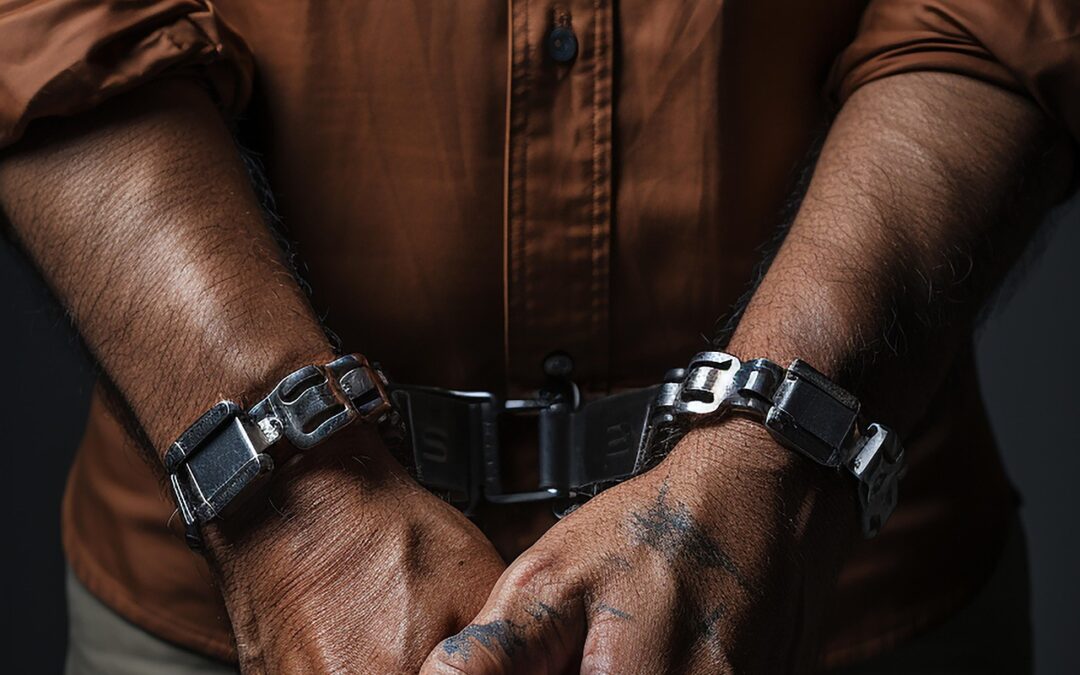
Instead of being greeted by his wife, Victor Varela Avila was met by immigration officers at San Francisco International Airport in California. They pulled him aside, scanned his ID, and took him away.

He was returning from Japan, where he had visited his son — a U.S. Air Force service member stationed overseas. After more than fifty years of faithfully renewing his green card, this father and grandfather was suddenly detained — his most basic rights ignored.

The Fifth and Fourteenth Amendments to the U.S. Constitution guarantee due process to all people within U.S. borders. Permanent residents like Avila are entitled to the same fundamental protections as citizens. Yet he was held for weeks without a clear explanation or immediate judicial review, despite half a century of lawful residency. His case shows us what happens when legal protections are treated as optional.

Avila's life in America

Avila first arrived in San Diego, California, from San Luis, Mexico, in 1967, when he was just sixteen. He worked in the fields beside his father, picking produce in the hot California sun. Over time, he built a career as a legal assistant.

He raised four children and became a grandfather of six. His coworkers describe him as compassionate and reliable, someone who “always put others first.” He has been a green card holder his entire adult life, living, working, and raising his family in the only country he calls home.

Old convictions come to light

Immigration officials justified Avila’s detention by citing a 2009 conviction for DUI and misdemeanor drug possession. He served his 90-day sentence, paid his fines, and moved on. For the next sixteen years, there were no further incidents. His green card was renewed multiple times without issue.

Now, that old offense is being dredged up as grounds for removal. To his family, it feels like punishment without purpose.

“He rebuilt his life with compassion and integrity,” his daughter Carina Mejia said. “My dad’s the most caring person. He’s not a threat, as they are making him out to be.”

Uncertain conditions

After being stopped at the airport, Avila was held in an office without a bed for two weeks. Eventually, he was transferred to the Golden State Annex, an immigrant detention center near Bakersfield, California.

It is a five-hour drive from Chula Vista, California, near the U.S.–Mexico border, making family visits exhausting and infrequent. On Father’s Day, Mejia made the trip. She sat across from him at a bare table as he walked into the room in an orange jumpsuit.

“He comes out and you can see his invisible pain,” she said quietly afterward. “He doesn’t belong there.”

Family Shouldering the Burden

At home in Chula Vista, Avila had been the primary caregiver for his wife, who suffers from chronic health conditions, and for his elderly mother. Neither can drive, and both depended fully on him because of that.

That responsibility now falls to Mejia. She balances caregiving with her job as a clinical social worker and the demands of raising her teenage daughter. “No family should be torn apart like this,” she said. “It is very difficult for us to survive without my father being with us. I just want my dad home again.”

A Community stands with him

Friends, colleagues, and relatives have launched a GoFundMe campaign to cover his legal fees, describing him as “a productive member of society, loved by many.” Supporters argue that keeping him locked up for a nonviolent mistake from sixteen years ago is not justice — it is cruelty.

Avila’s final court date is scheduled for October 2025, when a judge will decide whether he can remain in the United States. This legal hearing will affect not just his future, but that of his entire family.

Broader Implications

But Avila’s case is not just about one man or one family. It reveals a deeper problem: even legal permanent residents are not immune from detention and deportation. A single misstep, no matter how distant or minor, can have a large affect on the whole life of legal residents, on their family stability, and on the whole community.

For Avila and his family, it has been a terrible blow. For the rest of us, it poses a fundamental question: if a man who has lived legally in the United States for more than fifty years — a man who raised children who serve this country, who cared for his wife and mother, and who supported his family through honest work — can be treated without regard for his constitutional rights, who is truly safe?

This erosion of basic human rights is unacceptable in any democracy, and especially in the United States. For decades, America styled itself as the “shining city on a hill,” a beacon of hope and freedom. But when legal residents like Avila can be locked away for an old mistake long since addressed, that vision is tarnished, and it is in danger of collapse.

We must demand that the constitutional rights of all are respected. We must raise our voices, and we must use our votes. When the system can so casually take away Avila’s freedom, it threatens the rights of every one of us.

This should never happen.


Mistreatment of a Long-Term US resident by immigration officials!

en_USEnglish