
Litir ó Mheiriceá- An Garda Náisiúnta: Cnámh Spairne Pholaitiúil?

Letter from America – The National Guard: A Political Battleground?

Letter from America – The National Guard: A Political Battleground?

What is the National Guard?

Every state in the United States has its own National Guard – a part-time force with roots in colonial militias. Normally, they are under the command of state governors. They are deployed to assist with emergencies such as floods, wildfires, or riots.

But the president has the power to “federalize” these units – that is, to place them under federal authority and use them in large national missions. Most are part-time soldiers, training one weekend a month and two weeks a year.

Traditionally, their work supports communities: rescues after hurricanes, evacuations during wildfires, distributing COVID-19 vaccines, and helping during major protests.

From Washington to Los Angeles – and now Chicago?

In August 2025, Trump ordered National Guard units into Washington, D.C. to “preserve law and order.” Armed soldiers manned checkpoints and stood in front of schools, angering parents. The slogan became: “Leave our kids alone.”

The irony: crime in D.C. was at its lowest level in 30 years.

In Los Angeles, the Guard was deployed alongside immigration officials, at checkpoints and detention centers – a controversial expansion of its role.

Now Trump is threatening Chicago, a city where crime has already fallen sharply. New York City has also been mentioned as a target.

Trump’s Executive Orders

On August 25, Trump announced an executive order: he wants the Secretary of Defense to establish “special units” within the National Guard to deal with “public order issues.”

Historians and legal experts warn this is a dangerous step, transforming the Guard from a support force into a domestic police force.

He also claimed he had “saved D.C. from destructive crime,” even though crime rates were at their lowest in a generation. And he went further still: ordering the Department of Justice to impose a one-year prison sentence on anyone who burns a U.S. flag – though he has no authority to do so.

The Facts Trump Ignores

The White House says deployments are needed in response to crime. But the numbers tell a different story:

  • Shootings and homicides in Chicago are down 23–30% this year; 2024 was the safest year in five years.
  • Crime in Washington, D.C. is at its lowest in 30 years.
  • Republican-run cities like Shreveport, Louisiana and Charleston, West Virginia are far more violent – yet no Guard has been sent there.

It’s plain: Democratic cities are being labeled “lawless,” while worse problems exist in Red states.

Red Flags

The 1878 Posse Comitatus Act prohibits regular federal troops from acting as police. While the National Guard is usually under governors’ control, the President can place them under federal command in certain situations.

But usually this happens with the consent of the state itself – not through threats from the White House.

A Strong Response from Pritzker

Illinois Governor J.B. Pritzker left no doubt about his stance after learning of Trump’s threats against Chicago:

“This is a manufactured crisis, not a real one. It has nothing to do with crime. It has everything to do with Donald Trump’s political nightmare.”

He called the move “unconstitutional, illegal, and un-American.”

He emphasized the facts:

  • 13 of the 20 cities with the highest murder rates are under Republican leadership.
  • 8 of the 10 states with the highest murder rates have Republican governors.
  • “Chicago isn’t even on those lists.”

And his strongest message:

“Mr. President, don’t come here to Chicago.

We don’t want you here, and you are not welcome here.”

The Danger of Authoritarianism

Until recently, the United States was viewed as a model of democratic practice.

But when leaders use military force against their own citizens, it signals a slide toward authoritarianism. And once military power is brought into civilian life, it is hard to remove.

Conclusion

The National Guard’s presence in D.C. and Los Angeles reveals a dangerous misuse: soldiers being deployed to police politics instead of protecting people.

By exposing the lies and standing firm, leaders in Chicago remind us of a simple truth: The National Guard was not created to frighten civilians, but to protect them.




Miotais Intleachta Saorga!

AI Myths!

AI Myths: Energy, Water, and Artists

As artificial intelligence (AI) technology rapidly improves, myths and misconceptions about it spread just as quickly. That's not to say everything about AI is perfect, because it's not. But at the same time, it's important to distinguish between fact and fiction. In today's article, we tackle some of the common myths about AI's impact on the environment and its effect on creative industries.

Energy Use in Context

First and foremost, AI's energy consumption is often exaggerated. The challenge is understanding the scale and context of its energy usage. To put things in perspective, the technology sector, which includes all digital technologies, with AI estimated to be about 20% of it, accounts for less than 4% of global energy consumption according to the International Energy Agency's 2023 report.

Since AI often replaces other technologies, the environmental impact of those other technologies must be considered. According to a study in Nature Scientific Reports by Lannelongue et al. (2021), paper-based art could emit between 310-2,900 times more CO₂ than AI-generated art. Additionally, handwriting can be 130-1,500 times more carbon-intensive than typing with AI assistance.

Ongoing innovation is being developed in energy-efficient algorithms and specialized hardware that are already significantly reducing these demands. Without doubt, further improvements will come soon.

Water Usage Is Overstated

Another concern regarding AI technology is its water usage. It's said that data centers consume water to cool their computers, but you need to put this in a broader context to understand it. For example, X.AI (Elon Musk's AI company developing the Grok AI model) has a facility in Texas that used about the same amount of water over a two-year period as the average Texan uses in a single day. Given that Texas receives around 480 trillion liters of rainfall per year, AI's water usage has minimal impact in reality.

Another concern regarding AI technology is its water usage. It's said that data centers consume water to cool their computers, but you need to put this in a broader context to understand it. For example, X.AI (Elon Musk's AI company developing the Grok AI model) has a facility in Texas that used about the same amount of water over a two-year period as the average Texan uses in a single day. Given that Texas receives around 480 trillion liters of rainfall per year, AI's water usage has minimal impact in reality.

AI vs. Creators

Creative industries strongly argue that AI is stealing from artists. They're right when AI breaks legitimate copyright, but this doesn't happen very often. Artists' works are used to train AI, but that's not theft per se. Artists also use other artists' works to learn. Work is currently underway to address this issue. For example, some AI companies are developing systems to identify artists and pay them for their work.

On the other hand, artists can use AI as a tool. Consider independent filmmaker Sarah Rodriguez, who used AI-generated art to secure funding for her documentary. After securing funding, she hired human artists for the final artwork, demonstrating how AI can enhance artists' work rather than replace it.

AI expands access to creative solutions while simultaneously pushing human artists to innovate and redefine their craft.

Change Follows a Pattern

During the 1990s and 2000s, the internet was scrutinized for being wasteful, expensive, and a threat to traditional jobs. The same concerns emerged with the arrival of cell towers, digital cameras, and design software. Over time, significant changes occurred in society, allowing clerks to learn and effectively use Excel, and film photographers learned to master digital editing.

AI represents the next step in this evolution. The key competency for future professionals will be AI literacy, which is the ability to create effective prompts, critically evaluate AI outputs, and integrate AI-generated content with human expertise. AI courses and workshops are available at LinkedIn Learning, Coursera, and other companies to help people who want to develop and improve their AI skills.

AI Is Just a Tool

Perhaps the most critical point about AI is that it's not a person. It's a sophisticated tool that collects digital data to fulfill human requests. Given the amount of information on the internet, such tools are essential.

Creative technologies have always been a cause for concern. But with new creative technologies come new opportunities. Those who oppose technology risk being left behind, similar to the Luddites, those textile workers who protested against machinery during the Industrial Revolution.

Conclusion

The myths surrounding AI have some basis in truth, but they're often exaggerated. When we examine the figures in a broader context, we can extract the truth.

As we look toward the future, new challenges will emerge. Thoughtful policies and ethical frameworks will be needed for issues concerning data privacy, algorithmic bias, and economic displacement. But addressing these challenges requires the precise understanding this article supports. Neither uncritical enthusiasm nor apocalyptic fear will serve us well.

As more AI enters our lives, it's important to learn how to use it effectively. AI can help us in various areas, from creating art to making office work easier.


Bata agus Bóthar!

The Boot!

The recent decision to remove Erika L. McEntarfer, Commissioner of the Bureau of Labor Statistics (BLS), from her position is an extremely irresponsible act that puts the American economy at risk. It is concerning whenever a government puts its thumb on the scale for political purposes. The BLS reports statistics as they are, based on the data it collects. American presidents in the past understood this and did not interfere with these facts. As Janet Yellen, former Treasury Secretary and former Federal Reserve Chair, said, this is "the kind of thing you would expect in a corrupt country."

The Hard Work Behind the Data

The BLS is not run by an individual working on a private spreadsheet. About 40 full-time experts work diligently at the Bureau to issue monthly reports on employment, inflation, and other critical indicators. When a president dismisses the Bureau's Commissioner, it doesn't look good, nor does it change the truth. Such an action can create a crisis of confidence, which brings other major problems.

Unfortunately, the accuracy of the data is already under threat. The BLS budget has been reduced by about 19% in real terms since 2009, according to Axios (a statistical association in America). Additionally, participation in the Bureau's surveys has declined. But there are solutions to these problems: increased investment in the Bureau and a better understanding of the causes of declining participation, to address it effectively. Some critics say the BLS methodology is outdated. But what's needed is additional investment, not political interference, to fix this.

We've Seen This Before

Kevin Hassett, Director of the National Economic Council, recently admitted that the goal is to "put in one of our own people." That should sound every alarm. This is political interference. An important question needs to be answered: Will senior government officials - Bessent, Hassett, and others - set aside the truth for the sake of their own careers?

The Greek government concealed inflation data and budget deficits to meet EU criteria. This resulted in a debt crisis, international bailout, and years of economic crisis. In Argentina, the government falsified inflation figures and gross domestic product (GDP) to hide an economic crisis. As a result, foreign investment declined, interest rates rose sharply, and the peso fell. They are still paying for it.

If tariffs, spending, and supply disruptions are driving inflation, false reports won't stop prices from rising at the store, at the gas station, or in the bond market.

The bond market, in particular, is merciless. If that market loses confidence in the figures published by the BLS, lenders will demand higher interest rates as a result. As Bill Blain, a bond trader in London, wrote in his newsletter 'Blain's Morning Porridge': "August 1, 2025, might be remembered as the day the US bond market died. There was an art to reading US data. It was based on trust. Now that's broken - if you can't trust the data, what else can you believe?"

Jerome Powell

The attacks on Jerome Powell, Chairman of the Federal Reserve, are also dangerous. He is running an independent central bank, and his decisions should be based on data, not political expediency. He cannot be easily removed from his position, but that hasn't stopped the president from putting continuous pressure on him to lower interest rates.

This is not new. Turkey's Erdogan did the same thing, and it created widespread inflation, currency collapse, and economic instability. When loyalty is placed above expertise, disaster always follows.

The Root Problem

Despite his messages, the president's new spending bill (which he himself calls the Big Beautiful Bill) will add another $3.5 trillion to the national debt. Tariffs also carry major risks, including increased inflation rates, and it's not clear what real benefit they provide.

Authoritarianism at the Door?

This is not just about the BLS. A broader perspective needs to be considered: dissent is being punished, human rights are being revoked without due process, and electoral districts are being distorted. If critics are silenced and independent information is blocked, what will stop the next step?

Look at Ortega in Nicaragua: critics forced into exile, citizenship revoked, journalists killed. It starts with small steps. It ends in disaster. Blain imagined a future where a "Ministry of Economic Truth" would issue press releases: "Under the President's leadership, the US economy continues to grow at an unprecedented rate. Payroll data from the Ministry of Truth shows full employment across America." If nothing is done to address this, the same will happen in America. It begins when information is distorted to serve the president.

A Call to Action for Americans

It's uncertain whether the United States will have democracy or authoritarianism in the future. Democracy is a fragile system, and the public needs to be informed about it and participate in it. I hope every American will be ready to defend their system. Write to your elected representatives, participate in awareness campaigns, and support organizations that protect government transparency. Organizations like Project On Government Oversight (POGO) and Open The Government – these are organizations working diligently to protect government transparency and ensure accurate data for citizens. Every citizen will have the opportunity to cast their vote in next year's midterm election, and to elect representatives who will work for them, not for authoritarianism.

Good advice can be found in the West Point Cadets' prayer (training center): "Take the right but difficult choice instead of the wrong but easy one." This principle is not being applied at all by the current US government. If the administration's behavior continues in this way, we are not far from an America we don't recognize.

If the opportunity to stop this foolishness is lost, truth will be lost. If truth is lost, democracy will be lost.


Litir ó Mheiriceá – Caillteanas sa Chainneon Mór

Letter from America - Loss in the Grand Canyon!

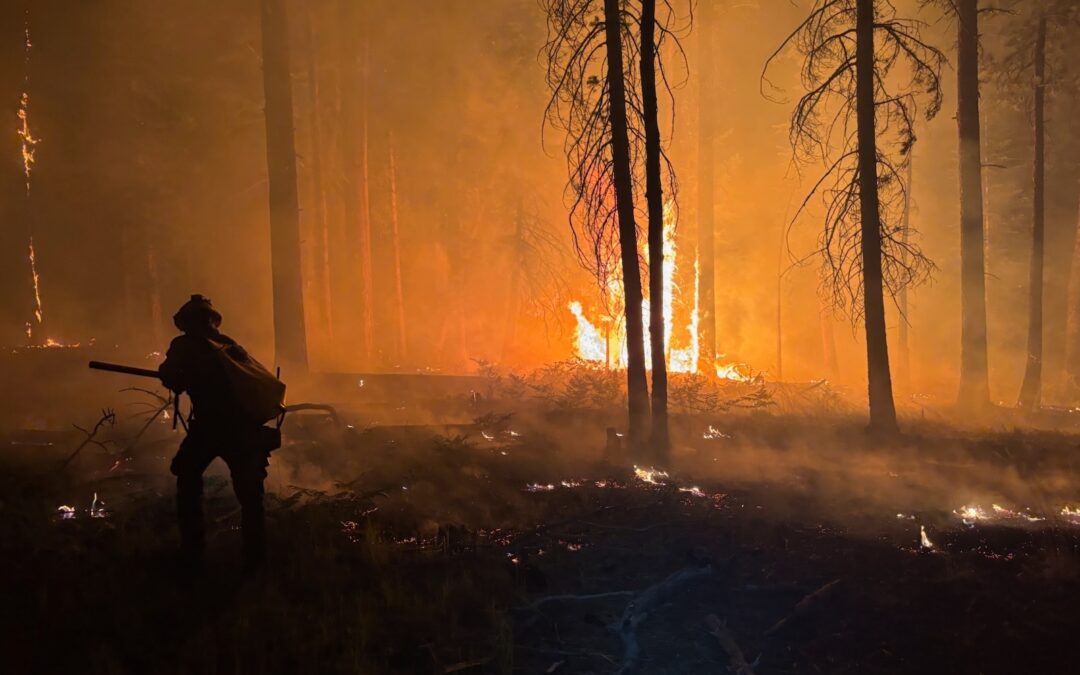
With wildfires spreading across northern Arizona, smoke clouds rose over the Kaibab Plateau. Within a few hours, flames reached the North Rim of the Grand Canyon, and by evening the Grand Canyon Lodge was on fire — the heart of the North Rim community for over ninety years, and a cherished piece of U.S. national heritage under the care of the National Park Service (NPS).

The Lodge was built in 1928 and later granted National Historic Landmark status. Designed by renowned architect Gilbert Stanley Underwood, it was constructed using local materials — Kaibab limestone, Arizona ponderosa pine, and Douglas fir — to blend into the natural landscape. For nearly a century, it opened its doors to visitors from every corner of the world. The building itself stood as a living symbol of cultural conservation and architecture suited to nature.

Its loss is devastating — not only for tourism and the local economy but for cultural heritage in the United States. The Grand Canyon was visible through the large windows in the sunroom. Large hand-carved beams were part of the interior design. A large fire burned in the stone hearth to welcome visitors. It was impossible to imagine the North Rim experience without spending a night in a wooden cabin beside the Lodge. It was central to the North Rim experience. Its destruction leaves a gap impossible to fill in the nation's cultural and architectural landscape.

Treasure at Risk

The Lodge stood as a living symbol of the principles of the first generation of conservationists. Located 1,000 feet higher than the South Rim, it always offered a quieter, more personal experience on the North Rim.

But that remoteness comes at a cost. Fire crews must travel far from their bases. Electronic communication is not widely available — in particular, mobile phone coverage is not reliable. Emergency responses are slower, and decisions often have to be made quickly and with limited information.

“I worked at the Lodge for three summers in the 1990s,” says Maria Sanchez, a former NPS seasonal employee. “We were worried about fire even then. We had regular drills, but we always understood we’d be left on our own if a big fire spread.”

According to the NPS, on July 10, 2025 lightning struck a dry forest nearby and began the Dragon Bravo fire. Although teams were monitoring it, it was initially not seen as an immediate threat. Inaction occurred because their trust was based on inadequate models. But then the wind shifted suddenly and the fire spread rapidly. Ground and aerial crews made seven determined attempts to control it, but they failed — it was too late by then. Everyone moved out of the Lodge in time, but the Lodge itself burned to the ground, along with most cabins and other buildings.

System in Disrepair

This was not just a natural disaster. The NPS has been under pressure for years. According to the Public Lands Alliance, the NPS lost nearly 3,000 full-time jobs over the past decade. Seasonal hiring has also declined, and there isn’t enough firefighting equipment available.

A 2023 Government Accountability Office (GAO) report claimed that officials were not properly prepared to deal with wildfires in national parks — including the Grand Canyon. They recommended better inter-agency coordination, reduced fire risk, and greater investment in protective infrastructure. But most of those recommendations were shelved.

The same report mentioned delays in updating evacuation protocols and failure to develop aid agreements between parks and local authorities. Historic buildings in high-risk areas — including the North Rim Lodge — were left without sprinkler systems, shelters, or comprehensive disaster plans.

Lessons Still to be learned

This tragedy echoes past failures: the Yellowstone fires in 1988 and Chimney Tops 2 in Great Smoky Mountains National Park in 2016. The risk was clear then too, but the response was inadequate.

When the alarm came this time, NPS teams were already dealing with other fires in Arizona. Internal sources show there were unusual delays in dealing with the Dragon Bravo fire. Meanwhile, some lodges like the Ahwahnee Hotel in Yosemite are well-prepared, with sprinkler systems, fire-retardant roofing, and cleared surroundings. It’s clear that standards vary between parks. Why isn’t the same standard applied across the board?

“There Must Be an Investigation”

Arizona Governor Katie Hobbs said bluntly after seeing the burned Lodge:

“There must be an independent investigation. We cannot allow historic landmarks like this to disappear without accountability.”

She’s right. We must ask the crucial questions: Why was expert advice ignored? Why weren’t precautions taken?

Climate crises are increasing. 2023 was one of the driest years ever on the Kaibab Plateau, yet funding for the agencies responsible for protecting our parks and heritage continues to be cut.

If we love the Grand Canyon, we must protect it — with firm action, not quiet memories.

What Happens Now?

The extent of the damage is still being assessed. Rebuilding is not ruled out but will be challenging. If it could be built once a hundred years ago, why not again now?

Fundraising has already begun by former employees and North Rim friends. But rebuilding alone isn’t enough. We need a strategic reassessment of how we safeguard our heritage.

Recommendations for the Future

To protect our National Parks into the future, clear and practical steps must be taken:
• Install water sprinkler systems and fire-retardant roofing on historic buildings
• Maintain cleared buffer zones around structures
• Implement forest management based on environmental, economic, and cultural criteria
• Share real-time data among agencies
• Deploy early-warning systems including satellites and drones
• Ensure strong, well-equipped firefighting teams are immediately available
• Conduct yearly risk reviews and protective planning in heritage zones

National Responsibility

Congress must pass a National Parks Emergency Act. This would allocate $500 million for wildfire prevention and infrastructure repair in at-risk parks, prioritizing protection of historic buildings like the Lodge.

The Lodge’s destruction isn’t just a loss — it’s a warning. If resource cuts continue, more tragedies are inevitable.


Litir ó Mheiriceá – Tuilte i Texas!

Letter from America - Floods in Texas!

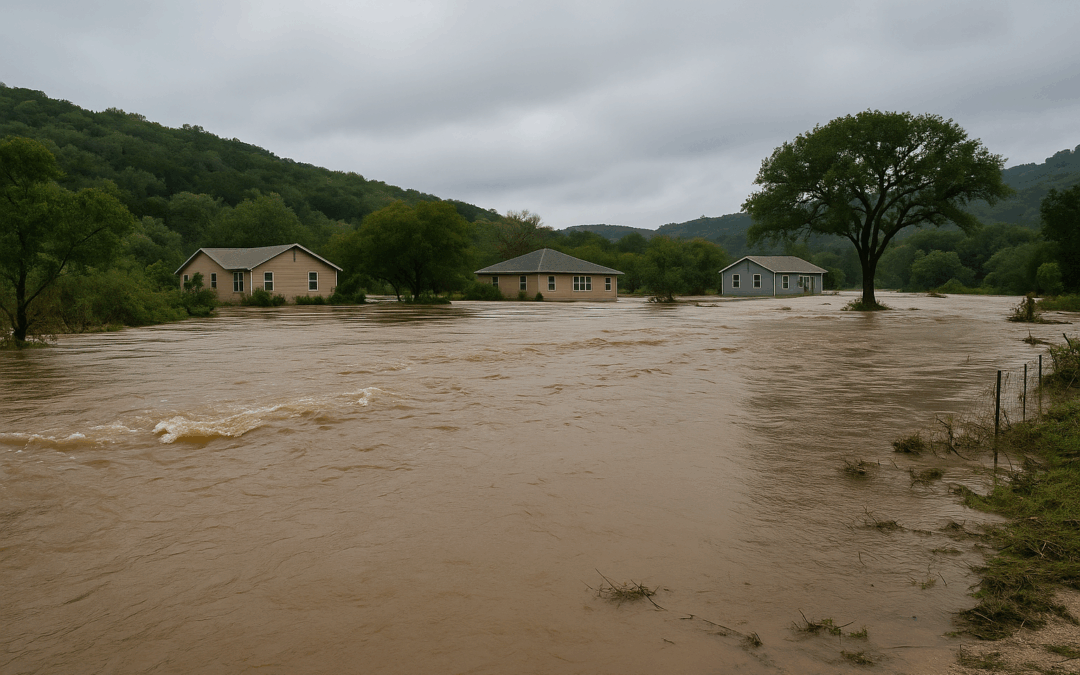
More than 120 people have died so far and a significant number are still missing after catastrophic flash floods swept through central Texas, USA, on the morning of July 4. Communities along the Guadalupe River, particularly in Kerr County, in the heart of a region known as the Hill Country, have been hardest hit by the flooding.

A terrible tragedy struck Camp Mystic, a summer camp for girls near Hunt, Texas. Located directly on the banks of the Guadalupe River, the camp was overwhelmed early on July 4th when the river rose more than 26 feet in less than an hour. The cabins were submerged before staff could put evacuation plans into effect in time. Not only were the old cabins not moved from the banks of the Guadalupe, but during a 2019 expansion, new cabins were allowed to be built in other areas of the camp, some in areas that were still at risk of flooding. The cabins closest to the river remained in place, despite being located in areas known as “floodways,” areas that are off-limits in many other states. No relocation strategy was devised. The most at-risk buildings were still in use when the disaster struck.

As of July 8, at least 27 campers and counselors have been confirmed dead, including the camp’s longtime director, Richard “Dick” Eastland. 10 other girls and one staff member are still missing.

While some people believe that little could be done given the speed of the flood, the story at Camp Mystic tells a different story. Some cabins were located on slightly higher ground, about 400 meters from the lower ones. The girls in the upper cabins survived. Only those in the lower cabins were lost. If they had had even five minutes of warning, they might have been able to initiate a partial evacuation, or at least alert the staff. The people did not fail. The system failed.

We extend our heartfelt condolences to all the families affected in any way. This is a time of grief and sorrow. Still, we must ask and answer hard questions openly, if we are to be better prepared for the next such disaster.

The Case of Kerr County: No Sirens, No Warning

Like much of the Hill Country, the people of Kerr County have a long history of flash floods. The area is so prone to flooding that it has been nicknamed "Flash Flood Alley." With steep limestone terrain, shallow soils and narrow rivers, it is susceptible to sudden bursts of water, especially when moist air moves in from the Gulf of Mexico, as happened with the recent Barry storm.

But despite the ongoing risk, Kerr County still doesn't have a siren. "We don't have a warning system," County Judge Rob Kelly said bluntly at a press conference. Nearby counties, such as Comal and Guadalupe, have had sirens installed for years. In New Braunfels, about 60 miles away, the warning system is tested monthly. A similar system was considered in Kerr County back in 2016, but Commissioner Buster Baldwin rejected a $50,000 engineering study, saying: “I see the word ‘sirens’ and all that stuff here.” Now, families are asking why that decision was never revisited, especially after the floods in 2018 and 2021 that exposed the same vulnerability. An online petition on Change.org is demanding a modern warning system. Nicole Wilson, who lives in San Antonio and grew up in Kentucky, said: “They know it’s needed. They’ve acknowledged it. They’ve just never been able to implement it.”

Texas Lieutenant Governor Dan Patrick went even further, referring to the upcoming special session of the legislature: “If the city can’t do it, let us do it… If there was a siren, it could make a difference.” For some Camp Mystic families, five minutes could have been the difference between life and death.

Flaws in the response system that saves lives

Lack of Sirens: Kerr County didn’t have a siren system. Many people, including those in Camp Mystic, received no warning before the flood hit.

Weaknesses in Digital Alerts: Warnings were sent via text and apps, but people were asleep or in areas without coverage. Timely warnings weren’t given until water was in homes.

Poor Coordination Between Agencies: There was a breakdown in communication between rescue teams and emergency services. Air rescues were called twice, and some responses were severely delayed.

Failure of Regulation and Planning: Local authorities allowed buildings to remain and new ones to be built in areas at high risk of flooding. They left cabins near the river even though they knew there was a risk of disaster. No steps were taken to protect people.


Steps to be taken

  1. Warning System: Every county with a history of flooding must have a warning system. If counties don’t have the resources themselves, the state or federal government should pay for one.
  2. Comprehensive Alert System: Text messages alone aren’t enough. The public needs to receive alerts via sirens, radios, cell phones, and if necessary, person-to-person.
  3. Shared Tracking and Planning Systems: Emergency agencies need to be able to easily share real-time data and mapping. Everyone needs to be on the same page.
  4. Stricter Rules: Local and state governments need to tighten building regulations in high-risk areas, especially in “floodways.” Cabins of any kind should not be allowed in the most vulnerable areas without independent review.

Missed Opportunity — or one Still to Be Seized?

Last March, House Bill 13 was introduced in the legislature. It proposed a plan for a statewide warning system and funding for rural counties. It failed. It was said to be too expensive.

But now, the cost is being measured in lives instead of money.

The Test Ahead                    

This disaster clearly shows what happens when human life is not prioritized. The upcoming special session in Texas can fix this. I urge them: Fund the sirens. Close the communication gaps. Coordinate the response. Enact the right legislation.

Every state and country has a lesson to learn: Prepare for climate disasters in advance, and provide the right funding at all levels. If we ignore this lesson, it will come back again and again – until it is learned.

Saoire ar Árainn – Cuid 2!

Saoire ar Árainn – Cuid 2!

During our previous visits, I was determined to speak Irish to the locals. Although they spoke Irish, they only spoke English to me – in the shops, in the restaurants, in the pub. It really bothered me that I was treated that way. I couldn't understand why the locals wouldn't speak Irish to me. I was disappointed, as I thought Irish would be the normal language of the island.

I understand now. Árainn is crowded with visitors during the summer, boat after boat discharging crowds of passengers non-stop, from the beginning to the end of the season. Tourists come from all over the world, speaking many different languages. English is the main language of world commerce – on Árainn too. In addition, many people working in the services on the island do not speak a word of Irish. For these reasons, the islanders only speak English to visitors. When they talk to each other, they speak Irish. And if they know you well, they speak Irish to you without issue. I think they do not know that they have this habit, and that it is a practical thing that has happened over time, and is now part of their culture.

This trip, we had a great week on the island. We were busy the whole time - between walks, cycling, seeing the sights, and meeting people. Here is a little taste of the fun that we had.

Blowholes
We rented a couple of bikes. Cars are not usually allowed from the mainland. You see a lot of people on bikes on the island, especially when the weather is nice. The weather was not bad during our visit and we walked and cycled every day. Our first adventure was to visit blowholes. There are a few places on the island that have blowholes, and we went to the closest ones. These holes are formed by sea caves that have tunnels up to the surface, and when the sea is rough, they blow water up through the holes. We cycled to the beginning of a path next to the low road and walked down to the bottom of the beach. There was a sudden drop in the limestone at the edge of the shore, and a little further back, the holes were visible in the stone. Looking down into them, you could see the tidal water below them. Every time the waves came in, the water rose in the holes, and blew out through the holes and up into the air. There was a terrible noise to be heard – a crashing and throbbing that occurred between the limestone and the sea below. One can only imagine what it would be like in rough weather.

Dúchathair Fort

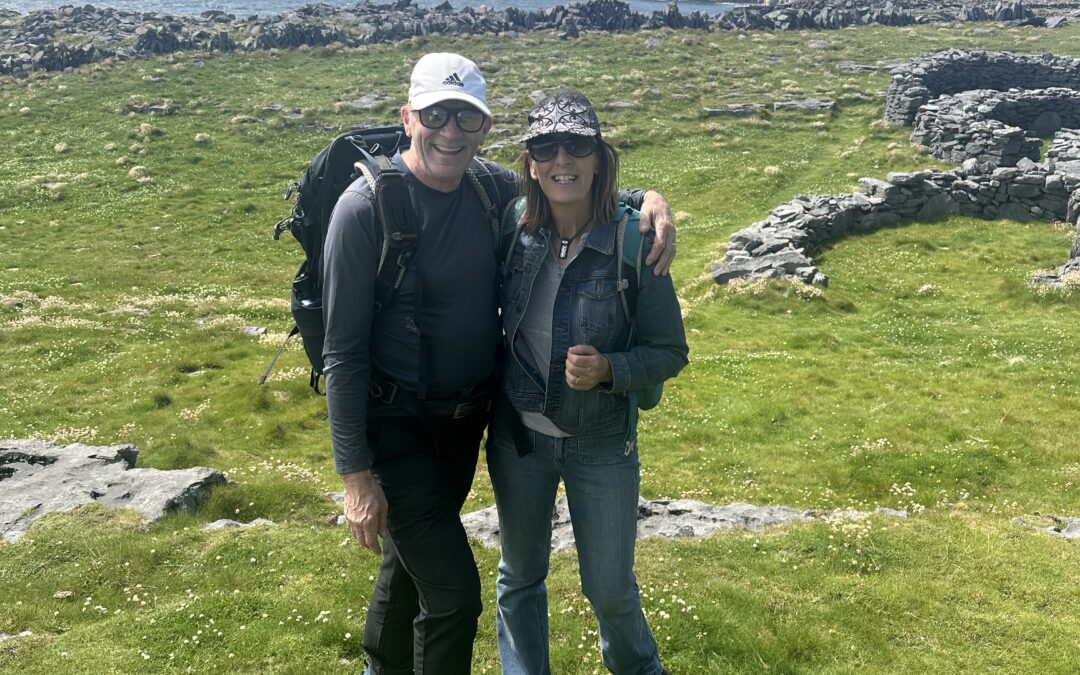
Another fine day, we cycled to the start of the path to Dún Dúchathair and walked the steep path up to the fort. Although this fort does not have a visitor centre, unlike Dún Aonghasa, it is just as impressive in some ways.

It is set high on the cliffs above the sea and has a beautiful expansive view along the coast. You can climb over the walls of the fort and enter the inner courtyard. The courtyard is surrounded by the fort on one side and by large cliffs on the other. Spend some time in Dún Dúchathair if you get the chance.

Aran Sheep: Aransheep.ie by Máirtín Ó Flaithearta

On the path to Dún Dúchathair, there is a sign outside a house: Aransheep.ie. We know the owner, Máirtín Ó Flaithearta and he made us very welcome. He showed us around his shop, which is also a museum, in reality. There was a lot to see and Máirtín had yarn from different breeds of sheep. There are Aran sweaters, blankets and caps on display, as well as a collection of different yarns. There are interesting maps and posters on the walls, showing all sorts of things about sheep, including the distribution of sheep in different parts of the world and different breeds of sheep. There is a big screen in the room and also plenty of chairs, for playing a video or giving a lecture. Máirtín is building another room, so that he has more space. We were there for over an hour, and we really enjoyed it. It is well worth a visit if you have the chance.

Midsummer's Eve

Midsummer's Eve is celebrated on July 23rd, a day when bonfires are lit on the island. It is a remnant of an ancient pagan festival, which used to be a midsummer celebration, associated with the fertility of the land and the worship of the sun. The fire is the heart of the celebration as it is a symbol of brightness. There were specific rituals associated with the celebration but I don't have the space here to discuss them.

Anyway, we visited Seán who had a bonfire lit, which he does year after year. People were coming and going all the time, and it was a great social event. There was a nice smell of peat from the fire, and the weather was reasonably good. Seán offered us drinks and snacks, and we had a nice chat.

There were more cars than usual driving around the High Road. As it turned out, the famous actor Patrick Duffy, the star of the TV series Dallas, was on the island, and according to the rumor he was in Bunghabhla. We didn’t stand idly by either. Curiosity got the better of us, and Seán drove us around the island looking at all the other fires. Quite by accident, we drove through Bunghabhla, but there was no sign or report of the star. But of course, it was a great evening, celebrating ancient traditions with the islanders, and searching for Patrick Duffy!

Conclusion

That’s just a small taste of what we did during our visit to the island. While the island itself is excellent in terms of natural beauty and archaeology, the people of the island are the heart of the place. If you get the chance, visit Árainn – you won’t regret it.


en_USEnglish