Athbhliain faoi mhaise dhaoibh

Happy New Year to you all

Every year without fail, on New Year's Eve, my father used to go out the front door for a short while and then come back in again. I didn’t know why, and I never asked him about it either. But after reading one of his columns recently, I finally think I know now what it was all about. It relates to his own family history, and the best thing for me to do now is to step aside and let you read that column for yourself. Here it is.

At this time of year, old people go down memory lane, because they realize that the years are slipping away from them like the wind, and that another bead on their rosary has passed through their fingers, a bead that will not return, and I suppose that reminds them of their own mortality, if nothing else succeeds in doing so. For my part, I realize that it does a person no good at all to be worried or sad about such matters, for all he can do is apply a poultice of forgetfulness to it, and prepare himself for the new year that is stretching out before him, just as a challenging journey stretches before a pilgrim, enticing and encouraging him forward again.

When I think of this time of year myself, my memory goes back immediately to the place where I was born, in Erris, County Mayo—yes, back to that land that stretches from "Cnocán a’ Líne until you go to Fál Mór." I think, first of all, of that beautiful countryside, with its bare, bleak fields; stubble here, and cut ridges in another place; pools of water over there, and grassy swathes over here; but through it all, everything looked as though the land spread out before you wasn't too fertile, although there was every appearance that any arable land available in the area was being intensely cultivated. Out on the horizon, the islands were anchored firmly in a heaving, rough, volatile sea.

New Year Memories

But, above all else, I think of New Year's Eve, and of the customs and practices associated with that interesting festival.

What are the customs I am talking about?

In the first place, there were the native customs, customs like the New Year's resolutions that were made widely at that time. It was a common topic of conversation among the ordinary people back then. 

"What New Year's resolution have you made for yourself for the coming year?" 

"Well, I have decided to give up this devil of a pipe, that is if God leaves me my health."

Another man or woman would say that they were determined to go to Scotland, to earn a few pennies in the new year, to do this or that. There was another custom among people at that time: getting rid of the dirt of the year that was on its last breath. Yes, they would clean and scrub themselves, so that they would be clean and neat crossing the threshold into the new year. People used not to be willing to spend any money on New Year’s Day, for they believed if they did, they would continue that same habit throughout the year ahead. Oh, I forgot! They had another strange custom back in our midst at that time too, and that was the parade through the town, starting at the stroke of midnight. The young people of the village would gather together first, and anyone who had any musical ability would be there with some musical instrument, and then the music would start and the parade would go from one end of the village to the other, making music and a racket as they welcomed the new year. On their way back, they would go into a house here and there and would be welcomed, and their thirst would be quenched after the fatigue of the marching! 

Foreign Customs

As well as those customs, we also had in our midst some customs that were brought in from abroad.

How did such a thing happen?

Well! At that time, a good number of the local people used to go to Scotland to pick potatoes for the big farmers of that country. They were migratory laborers (spailpíní), and it goes without saying that they didn't live the life of luxury over there. One only needs to mention the "Kirkintulloch Disaster" to drive that home to anyone who spent time as a "Tatie Hoker" over there. But that is not my point, but rather this. Often the potato pickers would stay over for a period after they had finished picking the potatoes. They would go navvying, usually, and so they would be in Scotland for the biggest festival the Scots have, that is, "Hogmanay," or New Year's Eve, and in that way, they picked up the New Year customs of that country. My father spent a good number of years over there during his youth, and so, it was no surprise that special emphasis was placed on "Hogmanay" in our house. The custom of the "First Footer" was the first of those customs that made an impression on me while I was growing up in the west. That was the custom they had of giving a special welcome to the first man who crossed the threshold to them on New Year's Day (Lá Coille). Now, don't think I am saying that a woman would bring misfortune, or bad luck, on a household if she happened to be the first visitor to cross the threshold on New Year's Day, but doesn’t everyone know that this is how things were in the West of Ireland at that time. I saw it myself, with my own two eyes, two fishermen turning on their heels back home because a woman was the first person they met on their way to the sea. That was how the world was at that time. Young men used to take advantage of that custom, and they would go around the village, so that they would be doing quite well [with food/drink] by the time they had completed the circuit of the village. I had a cousin myself, and he had his own custom to welcome the new year. He had an old bottle with no bottom, and around midnight, he would come out to the gable of his house and blow three ear-splitting blasts out of it—blasts that would remind a person of the Barr Bua (Horn of Victory) that the Fianna used to blow long ago—bidding farewell to the old year, and welcoming the new year; a custom, he used to say, that he learned during his youth, and he didn't have the heart to break that same custom for his whole life. We understood that this was a Scottish custom as well.

New Customs

All those customs belonged to a life that is past, mourned, and buried now, but that is not to say that people don't have their own customs in this day and age, for they do, even if they are completely different from the customs they had long ago; but at the same time, you will see that there are similarities between them too. Take for example people blowing their car horns at midnight on New Year's Eve, isn't it like my cousin's custom? And what about the custom of fireworks that are shot up into the sky, and the bells that are rung, to make noise and a racket, to welcome the new year? Are there not similarities between that and the music and racket the youth of our village used to make, long ago, welcoming the new year in their own day? I don't know if anyone makes a New Year's resolution in this day and age, but I'd say there are people who follow that same custom too. But who cares about that, for every one of us has a kind of fear as we hit the road into the fresh territories of the new year. Therefore, at this time of year, I pray for success and happiness for every one of my readers. 

A Happy New Year to you all, and may we all be seven times better a year from tonight. 

Gluais: Bóithrín na smaointe, memory lane;  so-mharfacht, mortality;  talamh cuir, arable land;  ar an gcéad ásc, in the first place;  gleáradh, racket;  Lá Coille, New Year’s Day;  san athbhliain, in the new year;  “Tatie Hokers”, potato pickers.

Nollaig  Shona  Dhaoibh  Uilig

Merry Christmas to You All

Introduction

My father was under the spell of Christmas every year of his life. It is a significant coincidence that he himself passed away at Christmastime, six years ago, at the age of ninety-four. Therefore, I remember him in a special way at this time of year. I think it is a fitting tribute to that wonderful writer, Peadar Bairéad, to celebrate the Christmas season with him as best we can—that is to say, in his own words. Here is a column he wrote some years ago, which is as fresh today as it was when he wrote it.

Happy Christmas All

Yes, that time of year has come around to us again, that time that gives us all a chance to show peace and goodwill to the whole wide world outside of ourselves. Yes, and that time also gives us a chance to walk back down memory lane, to those days long ago when we stood looking in wonder at the beautiful Crib, arranged nicely and peacefully in the Church. And further back still, to the first Manger in Royal Bethlehem, in the Holy Land itself, at the beginning of the era of Christianity, when Jesus was born in the Stable because there was no place to be found for his mother, Mary, or for Joseph in the town’s Inn that holy night.

Christmas Night

Look at how the poet, Máire Mhac an tSaoi, put it in her poem "Oíche Nollag" (Christmas Eve), saying that the wealthy had shelter in that same Inn that night, but the Virgin and her spouse were left with no room to be found, except in the old stable of the animals...

The lights were all lighting in that little hostel,

There were generous servings of victuals and wine,

For merchants of silk, for merchants of woollens,

But Jesus will lie in this household tonight.

Tá an file ag tagairt don nós a bhí beo, i measc Gael, an tráth úd, go mbíodh an Teaghlach Naofa ag fánaíocht timpeall an oíche sin, agus iad ag iarraidh bheith istigh a fháil i dteach eicínt, agus b’in an fáth a d’fhágtaí an doras ar leathadh, coinneall na Nollag ar lasadh, agus áit socraithe réidh dóibh ag an mbord, ag súil go dtiocfaidís ar chuairt chucu, an oíche bheannaithe sin. Féach arís mar a chuireann Máire Mhac an tSaoi é, i véarsa eile, sa dán céanna sin…..


Leave all the doors wide open before her,

The Virgin who’ll come with the child on her breast,

Grant that you’ll stop here tonight, Holy Mary,

That Jesus a while in this household may rest.

Níl dabht ar domhan, ach gur éirigh leis an bhfile, dearcadh agus creideamh na cosmhuintire a thuiscint, agus a léiriú, i véarsaí an dáin álainn sin,  “Oíche Nollag”.

A Vigil kept

It was not the custom of the people in the west to go overboard that night with food or drink, for they were waiting for the arrival of the Holy Family to visit them. They would have an ordinary supper—potatoes and fish, perhaps, or something of that sort—because they wouldn't have the big Christmas dinner to prepare until the following morning, that is, after Mass. That morning, every priest had the custom of saying three Masses, and because of that, they would start quite early in the morning, at half-past eight perhaps. Those people would be home again around ten o'clock, and then they would start preparing the dinner. Yes, upon my soul, and consider that they didn't have modern cooking appliances at that time—indeed they did not! They had nothing but the three-legged pot-oven and a pot, and they had to work those implements on the open fire. A big difference between yesterday and today! 

How about toys then?

What about the boy and girls then?

I’ll bet it wouldn't take them long to open their Christmas gifts, for it wouldn't take two people to load them onto a cart! I am talking about my own native place, back in Erris in County Mayo, of course. The boys would get nothing but a little "guinnín" (pop-gun), perhaps, and a little car or the like, yes, and a lock of sweets and fruit to fill the stocking. And what about the girls? Well, usually they would get dolls, and sweets and fruit too, perhaps. We would spend a while playing with those Christmas gifts, and then some of us would go out hunting the wren, or we would be getting ready for Wren Day (St. Stephen's Day), which was the day after Christmas Day. If we didn't succeed in finding a wren that day—and I promise you that those same wrens knew we were hunting them that particular day, for they would clear off out of our way quite early that morning! Well, if we didn't succeed in finding one, what we would do then was wait until nightfall, and then it wouldn't be too hard to find a sleepy sparrow in the eaves of the thatch. He would do the job for us the following day, provided we didn't let anyone get too close to the little bird we had covered well in a cage!

Memories

There is no doubt but that a swarm of memories returns to me at this time of year, as I go back down that distressed, twisting, interesting road of thoughts. Here is how I spoke about some of those thoughts in a little poem I composed myself last year...


A treasure of accumulated memories

In the cupboard of bundled memories,

Going out with a Wren, early Mass,

Angels and Shepherds visiting


Sharing nice things generously,

Roasting delicious foods,

Christmas treats given with heart,

And Jesus’ birthday being celebrated.


They Chose a Goose.

They Chose a Goose It wasn't a turkey they used to roast for the occasion at that time, indeed not, but a goose. Yes, a fine, plucky, Irish Goose for Christmas. And didn't we get plenty of juice and smoke out of that same poor goose! And in the end, when its bones were picked cleverly and carefully by us, we wouldn't throw those bones away idly either—indeed we wouldn't! For we had the greatest desire in the world for the big bones of the wings. By cutting them carefully, we could make "goose guns" (pop-guns) out of them. Then we wanted nothing but a little wooden plunger that would go through the heart of that bone, and a potato, to start firing shots at everyone all over the house. Didn't we have the sport! I’ll bet we got as much fun out of those same goose guns as the children of today get out of their PlayStations and the like! Yes, a big difference between yesterday and today. 

But to put a fitting end to this week's piece, perhaps it wouldn't be a bad idea to wish a happy and prosperous Christmas to every one of my readers, and may every one of you be seven times better a year from tonight. And yes, may we be alive at this time again.


Birth in the Stable

The Christmas season is upon us,

And white snowflakes coming down

Like a bright, holy, shining cloak,

Hiding grime and dirt for us.


But inside my heart, with enthusiasm,

I will prepare a manger, with effort,

and I will clear away the grime of the years

From the old stable of my hard soul


The Christmas season is upon us,

And the holy, Heavenly Infant, coming down

Is washing, and saving the Clan of Eve,

And hiding sin and trouble for us.


Beithilín, a Crib;  máinséar, manger;  teach aíochta, an Inn;  Teaghlach Naofa, the Holy Family;  girseacha, young girls;  guinnín, a little gun;  sa bhundlaoi, in the eave of the house; creimthe, picked;  cálóga bána, white flakes (of snow)


Ar Sciatháin Túis Nua

The Wings of a New Beginning

“Send these, the homeless, tempest-tossed to me,

I lift my lamp beside the golden door!"

  • Inscription on the Statue of Liberty, New York.

We should all, especially the President and government of the United States of America (USA), always keep those important words in mind. Currently, however, the government is ignoring them. For example, ICE (immigration law enforcement agency) and the National Guard (military force) are mistreating many people in the country, including citizens. We all saw the recordings: masked men jump out of a van and grab people from the street, and some of them are never seen again because they are placed in a detention centre somewhere. We must tackle such behaviour and restore our core principles.

The following true and historical story demonstrates the values of the USA as they were and as they should be again.

Thanks to Nancy Kramer (an American living in Julian, San Diego, in the United States) for sharing her own story with us. She is an inspiration and a role model for us, as we too can be true to our word. Here is the question for us who live in democratic countries: What can I do today to improve our country and ensure fair play for everyone currently here, regardless of the colour of their skin or their religion.

The Wings of a New Beginning by Nancy Kramer

As a Pan Am flight attendant, I've seen all kinds of passengers—many memorable Hollywood stars, popular bands, government officials—and I've even helped with onboard marriage proposals. However, my favorite flights were those on which we boarded groups of refugees in Manila and Bangkok.

In our crew briefing, we were informed that the back part of our airplane would be filled with refugees, organized by the U.S. government and resettlement agencies like the IRC. We were advised to expect passengers with limited English who might need help with basics like seat belts and lavatories.

As the bus doors opened at the foot of our 747, families stepped out, blinking into the sun, mothers gripping small hands. Most had never set foot on an airplane before. I watched a little girl frozen at the bottom of the blue Pan Am stairs, terrified by the sound from the engines, clinging to her father's pants.

They arrived in small, quiet groups—Southeast Asian refugees, some with babies strapped to their backs in cloth carriers, others with hollow eyes that spoke of horrors we couldn't imagine, shepherded by young volunteers wearing International Rescue Committee badges. Each family clutched identical canvas tote bags—stark white with bold blue letters: IRC. Those little bags held their only belongings.

Departing families were issued travel-appropriate Western attire to help them look "presentable" upon arrival in Western countries, as agencies knew first impressions could affect how refugees were treated in their new communities. They wore mostly outdated Western-style clothing donated by IRC and faith-based charities: button-up shirts and slacks for men, modest dresses or blouses and skirts for women, along with light jackets or sweaters for the cooler U.S. weather—and secondhand shoes or sandals with socks.

Once on board, we helped them settle into the back rows of seats. The cabin smelled faintly of unfamiliar spices and wood smoke, as if the journey from the camps in Thailand had come with them. I heard many utter a quiet "Cảm ơn" or "thank you" when I showed them how to fasten their seat belts.

During takeoff, many passengers gasped or cried softly as we left the ground. The children’s eyes were wide, torn between wonder and fear. For the adults, the roar of takeoff symbolized both hope and heartbreaking finality. Would they ever see their war-torn homeland again?

After leveling off, we prepared to serve them special rice dishes, which they were more familiar with than our Western foods. We poured them cups of tea, in which some put their wrapped pat of butter. I had read that the Nepalese drank yak butter tea, so I wasn’t sure if that was intentional or if they just didn’t know what butter was.

A young mother with an infant gestured for help in warming a bottle. I carried it to the galley, and when I returned, she bowed her head, tears streaming down her cheeks. They were all so shy, timid, extremely polite, and very grateful. I gave the children plastic Pan Am wing pins, providing a fleeting moment of joy on their frightening and emotional journey.

Some passengers dozed fitfully, jolting awake with every bump of turbulence, while others sat stiff and silent for hours, clutching the IRC bags in their laps like life preservers. These bags were distributed in the refugee camps as part of their travel preparation. The bags contained essential documents like I-94 forms, medical records, sponsorship papers, and a few personal items, such as photos, traditional clothing, or a family keepsake.

As we approached Los Angeles, the dawn light broke over the Pacific, flooding the cabin in gold. For the first time, I saw faint smiles and heard whispers of excitement. The volunteers moved through the aisles, explaining what would happen at the airport: there would be men and women waiting to welcome them, take them to homes, and help them start over.

When we landed at LAX, the plane erupted in applause—a soft, scattered clapping of relief and disbelief. As we taxied to the gate, I looked out at the tarmac, where a group of Americans waited with blankets, signs, and stuffed animals. I took a deep breath, trying to hold back my tears.

I had always loved flying because it connected people and places. But on those flights, I understood that an airplane could carry not just passengers but entire futures.


Cothromaíocht Oibre agus Saoil – Bernie Clarke

Work-Life Balance - Bernie Clarke

Note to the reader: Not everything in this story is true. For example, there might have been a small problem with a chemistry experiment once or twice, but that’s about it. As teenage boys, our imaginations tended to run wild. So, parts of the story are based on our subjective impressions rather than on bare facts.

There were wonderful teachers in St Kieran’s College, and they were all very different from one another. Every one of them influenced me in some way. I would like now to talk about a particular teacher who demonstrated the balance between work and personal life — Bernie Clarke.

Bernie Clarke was a young teacher at the time — perhaps he was in his early thirties. He was a relaxed, gentle, and stylish man. Although he was not a tall man, he drew attention nonetheless. He was always neatly dressed, wearing some kind of sports jacket, often one with a check pattern. His hair was as black as coal. Furthermore, there were no wrinkles on his face, as he was a calm person who did not get worried easily.

While many of the other teachers were putting in some extra time on school matters, Bernie did not generally do the same. Despite that, he was a very good teacher — a very pleasant person. There wasn’t the threat of the strap in his class, and he never used corporal punishment or harsh language on us. We took advantage of that knowledge — we weren't overly well-behaved in his class! We, the students, were a lively bunch, and sometimes it was difficult to hear what Bernie was saying in the class. Another thing we liked was that, unlike some other teachers, Bernie didn't give us any homework at all. We were very grateful for that, as we already had too much homework. School was on every day, except Sunday, at that time — a half-day on Wednesday and Saturday. And we had to study at night every single day for about two or three hours. But we were constantly busy with homework in the other subjects, and it was difficult for us to finish everything on time.

Chemistry with a Fireball

Bernie taught us chemistry, a subject that was not too interesting to us at first. In his classes, we used to laugh and jeer, throwing paper balls at each other when Bernie wasn't looking. Occasionally, Bernie's patience broke, and he would raise his voice:

“Ah now, lads, cool it there!”

We would be quiet for a little while, but before long the commotion would start again.

But you could hear a pin drop any time Bernie got a test tube, or a jar, or chemicals. He was about to do a chemistry experiment. Everyone knew what would happen then. Every experiment failed disastrously! Dangerous results — an explosion, or a strange smell, or even a fireball! We couldn't control ourselves; it was so funny. In the end, this is what Bernie would say:

“Ah well, lads, you get the main idea, anyway!”

I clearly remember the time one student tried to imitate Bernie. The student stole a glass (jar) containing potassium. He went to the toilet, and threw a piece of it into a toilet bowl. There was a huge explosion, and the toilet seat was thrown up into the air with the force of the blast. Everything that was in the bowl was spilled as well. The poor student came out of the toilet in distress, and he was wet with water and whatever else was in the bowl. He also lost his hearing for a little while. The college was not too happy either, and he was nearly expelled from the school because of that awful misbehaviour. The chemistry lab was locked after that, and the like never happened again.

Doing Two Things at Once

Apart from the chemistry experiments, there were other occasions that captured our attention in the class. In the days just before school exams, Bernie would summarise everything he had taught us that term. But everyone and their uncle knew that Bernie would give the class hints about the questions that would be on the exam paper. We didn't want to let Bernie down either, and so we would spend some time studying our notes from the last classes of the term. We never let him down, not even once.

As for Bernie's passion, you would have to go out onto the golf course to see that. My father told me about Bernie, as my father also played golf, on the same course. He told me that Bernie had a handicap of about five.

“Only the best amateurs in the sport have a handicap like that,” my father said.

I understood then what Bernie's passion was — golf. He was out on the course every chance he had, improving his skills, God bless him.

I learned a lot from Bernie in addition to chemistry. I learned that you get the results you want when you focus your attention and energy on your passion, and you have a more worthwhile and satisfying life as a result. That's not to say that you don't do anything else — definitely, you do. You are able to do other things excellently too when you put the right structure in place.

That is exactly what Bernie did. He knew that his true passion was golf. As a teacher, he was able to be on the course every day during the holidays, especially in the summer. His passion and his career came together wonderfully for him, and he was able to handle both at the same time.

I am certain that Bernie retired from teaching many years ago. I would bet, however, that he is still playing golf!

Mistreatment of a Long-Term US resident by immigration officials!

Turas Siúlóra – Ó Bhriseadh go Biseach

A Hiker's Journey - From Fracture to Recovery

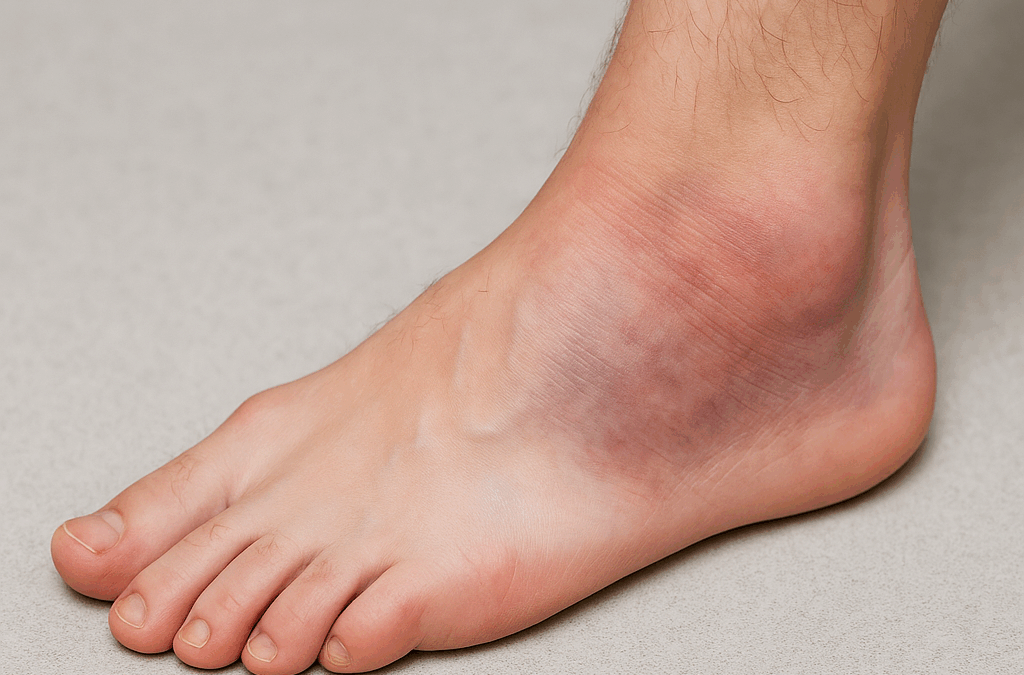
The X-ray results were devastating — a broken tibia, right at the point where it connects to the ankle. I had suspected that it was something more serious than just an injured foot, as there was sharp pain in my leg, especially at night. But I had been denying the truth, which was now staring me in the face.

Accepting the Truth

Normally, recovery from a sprained ankle takes six to eight weeks, but a fracture takes almost twice as long — up to four months. Oh, damn it!

The medical boot on my leg means I won't be walking or driving until I get permission from the doctor — which places a heavy restriction on me for a long time. I feel like someone who has been sentenced to a prison term. "Four months!" says the judge, hammering his gavel on the table.

The sight of the boot reminds me of my school days in Kieran’s College, where hurling players were occasionally injured, wearing plaster of Paris covered with graffiti. Injury was a natural part of that sporting life. But I never played hurling on a team, and so I was never injured — until now.

Modern medicine has come a long way. Instead of plaster of Paris, I have a medical boot that is much easier to wear. Unlike plaster, I can remove the boot in bed.

I have lightweight aluminum crutches and a small knee scooter too — essential tools to keep weight off the leg until the bone has healed back together.

Unfamiliar Territory

I've never broken a bone before, so this whole process is completely new territory for me. Beyond the worry about the condition of the injury itself, I was concerned that I wouldn't be able to do any exercise for a while.

The irony isn't lost on me either. I had planned to take a rest day on the day of the accident. But when I was near a small mountain, I couldn't resist going up it immediately. It was meant to be an easy walk — nothing like many other hikes I've done: across the Grand Canyon and in the Pyrenees, the Alps and the Himalayas, for example. It's embarrassing that this accident happened on a small local path — but, in another way, perhaps it's a good thing too, as I managed to get down to my car, albeit walking with a limp.

The Medical Verdict

The orthopedist gave me news that was both good and bad. Fortunately, the bone fragment hadn't moved and was still in contact with the tibia. So, surgery wasn't necessary. But I wouldn't be able to put any weight on the injured leg for at least a month. If I follow his instructions carefully, however, I'll be back to my old self eventually — able to do everything as well as I could before the accident. I will achieve that goal, so that I can be back in the mountains again before long.

Different Opinions

People have different opinions regarding what happened to me. For example, my wife and I recently met a friend for lunch, with me wearing a boot and walking with crutches.

She told me that an accident like this would "humble" a person. She also said that she had told her friends about me, and they said: "Mick fell? Mick? How could Mick fall?" Those are the thoughts that stayed with me, stuck in the back of my mind.

I wasn't humbled by the accident at all. But I did regret what happened, as I had acted impulsively, and so wasn't properly prepared for the walk.

It's clear from the question "How could Mick fall" that the people who said this had unreasonable opinions. Where did they get such an idea? – not from me! In any case, anyone can be injured, no matter how much experience they have. The athlete who is never injured is a rare individual. By the way, I've fallen often on paths over the years; the difference this time is that the consequences are more severe and more visible to other people.

Every Cloud Has a Silver Lining

For the first time, I'll be living with a disability. Although I'm very fortunate that I'll make a complete recovery, this disability will give me a valuable perspective.

I'll have a flexible approach, being disabled for a period after the accident. I'm determined to do my utmost not to waste any time. I'll be busy with more reading and writing in Irish and English. I'll be able to spend more time learning how to play the guitar. I'll have more time to take breaks and reflect. But also, I'll have a new life — a different life — as a person with a disability. I'll have a lot to learn about that life, and I'll share those lessons with you over time.

And when I finally return to the path again with renewed energy, I hope that it won't just be my bones that are stronger — but my spirit too.


Mistreatment of a Long-Term US resident by immigration officials!

Mícheál Ó Duibhir, Fíor-Fhear na hAthbheochana

Michael O'Dwyer, True Renaissance Man

I was very happy to be a student at St Kieran’s College in Kilkenny. As a child, I had a natural curiosity about the world and the stars above. From the moment I opened a book about planets, stars, and galaxies, I was completely enchanted. In my young mind, Newton, Galileo, Descartes, and Einstein were wizards who had uncovered the hidden laws and principles of the universe. To me, science was a kind of magic—only better, because it was true and could be proven. It’s no surprise, then, that when I began my first classes in the College, I was thrilled to find physics and chemistry on the curriculum.

Although almost every teacher in the school was excellent—knowledgeable and passionate about their subjects—one stood out as the person who opened doors of possibility for me: our physics teacher, Mr. Mícheál O’Dwyer.

He began teaching at St Kieran’s College in 1967, after ten years teaching in Downpatrick, County Down. In all, he spent thirty-four years working at St Kieran’s—a long career that left a deep mark on generations of students. When I was a teenager, he was like a high priest at the altar of science.

Master Craftsman

Mr. O’Dwyer was a modest, sturdy man, full of energy and quick, playful wit. Unlike many teachers of that era, he never used corporal punishment. He created a safe space where we felt free to think independently. That’s not to say he couldn’t maintain discipline—he certainly could. He used humor and gentle mockery when needed.

I remember one day when I was chatting and laughing uncontrollably in his class while he was trying to teach. He looked straight at me, a serious gleam in his eye, and said, enunciating every word slowly and clearly:

“Now, Michael—just because your father is the vice-principal…”

He didn’t need to finish the sentence. The entire class burst out laughing; I turned crimson with embarrassment. From that day on, I was as quiet as a ghost in the physics lab.

He didn’t need to finish the sentence. The entire class burst out laughing; I turned crimson with embarrassment. From that day on, I was as quiet as a ghost in the physics lab.

When he taught us about focal length in a lens, he didn’t start with equations but with the stories of the scientists who shaped our understanding: Kepler, Huygens, Newton, Descartes, and Gauss. He impressed upon us that we were inheriting a magnificent intellectual tradition. Then he drew a clean diagram on the board, showing how parallel rays of light bend through a lens and converge, before deriving the thin-lens formula for focal length.

Watching him work was like observing a skilled craftsman at his bench—precise, patient, and completely absorbed in his subject.

The Scientific Method

He never left theory as something abstract. In the case of focal length, he divided us into pairs, each with a lens, an object, and a screen. Our task: measure, record, calculate; then test whether our result matched the formula.

In this way, the lesson wasn’t only about optics—it was about the scientific method itself: forming hypotheses, testing them rigorously, and drawing conclusions from tangible evidence. He also taught us the importance of teamwork and cooperation.

Those lessons went far beyond physics; they taught us how to approach problems methodically and how to work together effectively.

Looking back, I can say with confidence that Michael helped shape my path. He lit sparks of curiosity in me—not by telling, but by showing how the principles of physics worked.

He had a profound influence on me at a decisive moment in my life. It’s no accident that I went on to study Physics at University College Dublin, then Electrical Engineering, and finally earned a Master’s degree in Electrical and Computer Engineering at the University of California, San Diego.

I spent most of my career in research and development in the field of wireless communications. My professional journey traces its roots directly back to those early lessons in the physics lab—and to our teacher, Mícheál O’Dwyer.

Scientist and Historian

Many years later, I met Míchael again. By that time, I was closer to the end of my working life than the beginning. I told him plainly what he had done for me and how much he had influenced my life. He was gentle and humble, but I could see quiet gratitude in his eyes.

During that visit, he revealed his second passion: he had become an accomplished local historian. In his retirement, he devoted himself to writing about the history of Kilkenny, uncovering little-known aspects of its past.

Among his works was The History of Cricket in County Kilkenny: The Forgotten Game, a book offering a fascinating insight into the evolution of the GAA. He examined the upper classes of Kilkenny society and wrote about the very area where he himself had grown up. I was delighted to discover that the man who had once shown me the beauty of light and motion was now illuminating hidden corners of our cultural heritage.

True Renaissance Man

News of Mícheál’s passing caused me great sadness—he went on the ‘path of truth’ in February 2025. Those words “path of truth” seem fitting, for he had taught us in his classes what truth meant in science, and how that truth could be proven.

His image remains vivid in my mind—clear and precise, as if it were yesterday: standing at the front of the physics lab, chalk in hand, that kind smile on his face before the words I’ll never forget—

“Now Michael…”

I’m deeply grateful that I had the chance to thank him personally for what he had done for me, and for the lasting, positive influence he had on my life.

Reflecting on his life, I see clearly that few teachers like him exist. Forty-four years of teaching testify to his dedication. He believed passionately in the power of education to change not only the lives of his students but society itself.

I learned physics easily in his class—but I also learned something deeper: how to think logically and practically. That has served me well in every aspect of my life. Even now, when I sit down to write, I still hear echoes of his lessons—his voice in my ear offering quiet advice:

“Be precise and clear. Think logically. Approach every problem with curiosity and respect for the truth.”

As Máirtín Ó Néill wrote in an obituary in the Record 2025 (St Kieran’s College), Míchael O’Dwyer was “a Kieran’s man with many parts —a scientist and historian, truly a Renaissance man.”

Teachers rarely make headlines, but they change the world quietly and profoundly—mind by mind, generation after generation. Míchael stood as the model of a great teacher—a guiding star of knowledge for me always. I will never forget him for as long as I live.


Mistreatment of a Long-Term US resident by immigration officials!

en_USEnglish